
The phenomenon of de la Fuente: the coach who built Spain for 13 years
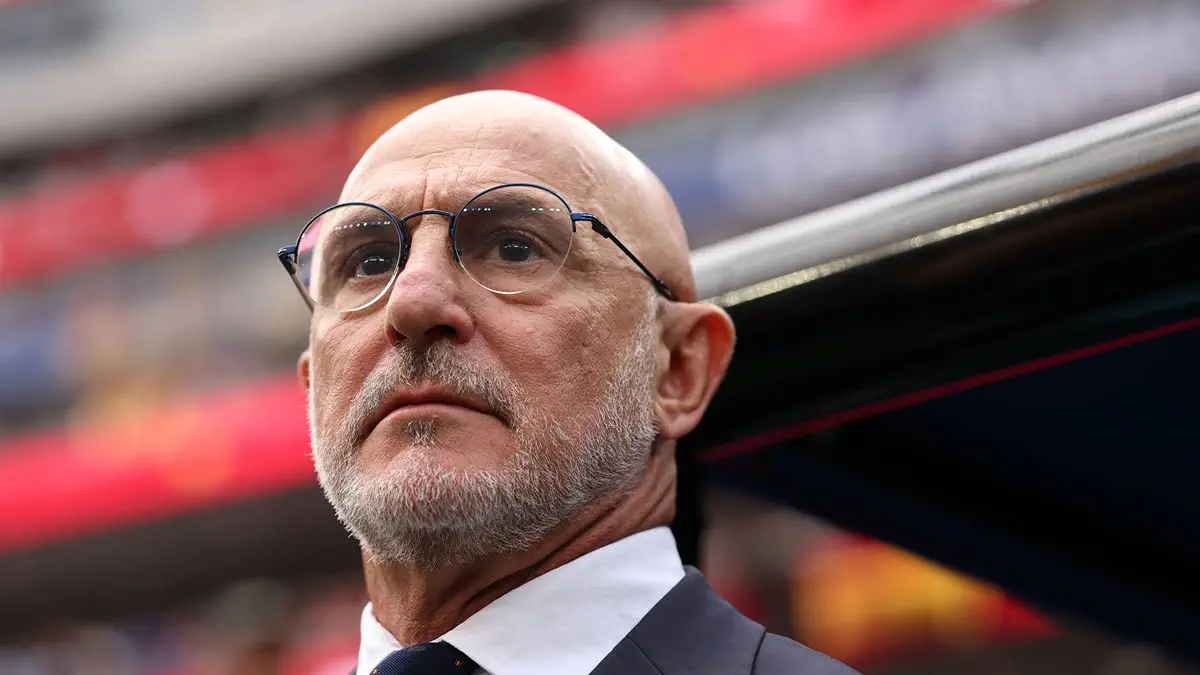
On the eve of the World Cup final against Argentina, Luis de la Fuente stands just one match away from football’s ultimate prize. But today’s Spain wasn’t handed to him ready-made: the coach has been nurturing this team since 2013, guiding many of the same players from youth tournaments all the way to the game’s grandest stage. Now, he’s set to face Lionel Scaloni—the man he once mentored in the coaching craft.
A national team coach rarely has enough time.
A handful of training sessions in autumn, a few more in spring, a brief camp before a major tournament—and in just days, the need to mold a squad from players who spend most of the year competing for different clubs, in different countries, and under different tactical systems.
Luis de la Fuente chose a different path.
He didn’t arrive for the Spanish national team as a famous savior. He didn’t try to create a new footballing world in just a few weeks. He’s simply been alongside these players for a very long time.
De la Fuente joined the Spanish national team setup in 2013. Back then, Lamine Yamal was just five years old, Rodri hadn’t played a single senior match, and Marc Cucurella was only starting out at Barcelona’s academy.
Thirteen years on, all of them are in the World Cup final.
On July 19 at New York–New Jersey Stadium, Spain will face Argentina. The European champions against the reigning world champions. Yamal versus Lionel Messi. De la Fuente against his former pupil, Scaloni.
But the main storyline of this final isn’t just about the clash of stars and managers.
This is the story of a man who’s been assembling his team not for a month or a year, but for nearly half the professional lives of some of his players.
The man from Haro overlooked by the footballing elite

Luis de la Fuente was born on June 21, 1961, in Haro—a small town in the wine region of La Rioja.
As a footballer, he was reliable, disciplined, and far from a media figure. A left back who could do his job quietly, he spent nine seasons and 234 official matches with Athletic. With the Bilbao club, he won La Liga, the Copa del Rey, and the Spanish Super Cup. He also played for Sevilla and Alavés.
De la Fuente never played for the senior Spanish national team, though he did represent his country at youth, U21, and Olympic levels.
His coaching career looked even more modest for a long time.
Portugalete, Aurrerá, youth work with Sevilla and Athletic, the reserves for Bilbao, a spell as first-team delegate, then Alavés in the third division. No Champions Leagues. No multimillion-euro transfers.
Before de la Fuente started winning international tournaments regularly, his top professional qualities weren’t genius or revolution, but patience, integrity, and an ability to work with young players.
As it turned out, that was more than enough for the national team.
78 Mondays without a team

On October 16, 2011, Alavés sacked de la Fuente after 11 rounds.
The team sat eighth in their Segunda B group. With four wins, three draws, and four losses, the board—hoping for promotion—decided not to wait.
After his dismissal came 18 months out of work.
The Spanish press later dubbed this period “78 Mondays in the sun.” Seventy-eight times, de la Fuente woke up at the start of a new week with no next match, no training session, and no certainty that his career would go on at all.
It was especially tough because he was already 50 at the time. In football, that can be a coach’s prime—but only if you have a name, connections, or a headline résumé. De la Fuente had none of these.
He had a family, a shrinking bank account, and a fear of being left behind in football. But he didn’t let himself disappear.
De la Fuente attended other teams’ sessions, talked with colleagues, went to matches, and kept updating his knowledge. He paid close attention to Marcelo Bielsa’s work at Athletic. While he couldn’t coach himself, he became a student again.
In May 2013, a vacancy opened with Spain’s youth national team. Thanks to a recommendation from his former Athletic teammate Iñaki Sáez, de la Fuente met RFEF youth coordinator Ginés Meléndez.
The first contract was only for three months.
But the coach believed so strongly he’d stay that he immediately began looking for housing in Madrid. Thirteen years later, the former temp led Spain to the World Cup final.
The journey from unemployment to the biggest game on earth is often chalked up to fate. With de la Fuente, something else matters more: when football spent 78 Mondays not needing him, he never stopped needing football.
3 ➔ 5 ➔ 8 ➔ 15: De la Fuente’s perfect system

The true phenomenon of de la Fuente is best explained by four numbers:
three, five, eight, fifteen.
That’s how many players from Spain’s current squad accompanied him in his previous major finals.
2015—three players
In the de la Fuente side that won the U19 European Championship were:
Rodri, Mikel Merino, and Unai Simón.
Spain beat Russia, and de la Fuente claimed his first major international trophy. After the final, he called his team “insatiable”—the players always wanted to win and took defeats hard.
The scale of the tournaments has changed since then, but not that quality.
2019—five players
In the U21 Euro final squad, there were already five players from this World Cup team:
Fabián Ruiz, Dani Olmo, Mikel Oyarzabal, Unai Simón, and Mikel Merino.
Spain beat Germany 2-1. Fabián opened the scoring, Olmo netted the second, and Fabián was later named player of the tournament.
By then, this generation was no longer just promising—they were learning to win.
2021—eight players
In the Olympic final lost to Brazil in Tokyo, eight current squad members took part:
Simón, Cucurella, Eric García, Martín Zubimendi, Pedri, Merino, Olmo, and Oyarzabal.
Spain fell in extra time, but even that defeat became part of the journey.
De la Fuente saw how his players handled not only gold medals but also the pain of the toughest loss.
2024—fifteen players
From the team that won the European Championship, 15 players are now at this World Cup:
Unai Simón, Aymeric Laporte, Marc Cucurella, Rodri, Dani Olmo, Fabián Ruiz, Nico Williams, Lamine Yamal, David Raya, Alejandro Grimaldo, Martín Zubimendi, Mikel Merino, Álex Baena, Mikel Oyarzabal, and Ferran Torres.
The progression is almost perfect:
2015—3 players.
2019—5.
2021—8.
2024—15.
And Unai Simón and Mikel Merino are present at every step.
This is more than continuity—it’s collective memory.
De la Fuente knows how Merino reacts to bad games. He remembers Olmo before he became a European star. He witnessed Oyarzabal’s transformation from a talented youngster to a national team leader. He trusted Simón long before he became Spain’s number one.
While most national coaches have to explain their demands to players, de la Fuente can just remind them of a conversation from seven or ten years ago.
The man who wins trophies

De la Fuente has climbed almost every rung of Spain’s national team ladder.
He has won:
- the U19 European Championship in 2015;
- the Mediterranean Games with the U18s in 2018;
- the U21 European Championship in 2019;
- the Nations League with the senior team in 2023;
- the European Championship in 2024.
Between those triumphs came Olympic silver in Tokyo. In 2025, Spain reached the Nations League final again but lost to Portugal on penalties. Now, de la Fuente has led the team to the World Cup final.
The tournaments changed, players grew older, stadiums got bigger, pressure intensified. But the man on the touchline stayed the same.
De la Fuente has won European Championships with teenagers, with U21s, and with seniors. He’s reached finals with players just preparing for pro football—and with the same group, reached a World Cup final.
You can’t explain this collection by a lucky tournament draw. You can’t chalk it up to a single golden generation: the squad kept evolving. Nor is it the result of a short-lived emotional surge—there are 11 years between his first and last final.
De la Fuente’s main trophy isn’t even five gold medals. The real prize is the system itself, where the path from youth squad to national team is no longer a leap into the unknown.
An advantage you can’t train in two weeks
At club level, a coach works with his team every day. With the national team, he has a handful of sessions before a match and a short camp before a major tournament.
That’s why national teams depend so much on simplicity of ideas, trust, and mutual understanding.
For Spain, that trust didn’t appear at this World Cup. It was built in youth team hotels, at U21 Euros, in the Tokyo Olympic village, after victorious finals and painful defeats.
De la Fuente didn’t have to get to know half his squad. He watched them grow up.
This doesn’t mean places are handed out for past achievements. On the contrary, the coach regularly makes tough decisions, leaves big names out, and changes the hierarchy.
But the players know: his choices are based not only on club status or fame.
He knows not just the player’s position, but the person.
Álex Baena said that during the World Cup, de la Fuente sometimes paid more attention to injured players working separately than to the main group.
That’s telling for a footballer. When you’re healthy and on the pitch, everyone’s around you. When you’re injured, the crowd shrinks fast.
At those moments, de la Fuente draws closer.
According to Baena, in a short tournament, it’s especially important to manage emotions, keep unity, and ensure no one falls out of the collective.
“Luis is the best at that,” said the Atlético midfielder.
“Family” as a tactical concept
The word “family” has become a football cliché.
It crops up after wins, in celebratory videos and post-match dressing room posts. But for de la Fuente, it has a practical function.
In his squad, everyone must feel important—even those who didn’t get on the pitch. After the semifinal win over France, the coach singled out the substitutes who went straight to training after the match.
For him, that’s the team’s character: players who didn’t play a minute in the biggest game of their careers don’t distance themselves or turn personal disappointment into a group problem.
De la Fuente always talks about choosing the right travel companions. In a month-long tournament, it’s not enough to assemble 26 strong players. You need 26 people who can handle others’ success, their own bench time, injuries, fatigue, and pressure.
Spain conceded just one goal on the road to the final. In the semifinal, they beat France 2-0, almost neutralizing an attack that had scored 16 goals in the tournament. Yet after the match, de la Fuente again focused not on tactics, but on solidarity, humility, and the absence of ego.
For him, team relationships aren’t an add-on to tactics. They’re part of the tactics.
No tiki-taka museum
To reduce Spain’s success to possession football alone would be too simple.
De la Fuente has preserved the core of Spanish football—controlling the match through passing. But he’s not trying to recreate the 2008–2012 team in its original form.
His Spain plays wider, faster, more vertically.
They use the flanks more, aren’t afraid of early forward passes, can launch a counterattack, and don’t see a long ball as heresy.
De la Fuente hasn’t destroyed tiki-taka. He’s added to it.
That’s how the speed of Yamal, the bursts of Nico Williams, Cucurella’s overlapping runs, Oyarzabal’s movement, and Rodri’s vertical passing have stormed into Spanish football.
At the same time, the team can adjust to opponents. Spain can dominate possession or play more direct. They can press high or survive spells without the ball. They can use a classic striker or a mobile Oyarzabal, freeing space for others.
For de la Fuente, style isn’t a religion—it’s a language. The team must be able to speak it in long combinations or in a single sharp vertical pass.
From stopgap to permanent finalist

De la Fuente’s appointment as senior national coach in December 2022 didn’t cause a national stir in Spain.
After the World Cup exit to Morocco, Luis Enrique left. The federation could have sought a big name but instead promoted the U21 coach.
Many saw him as a convenient internal solution: someone who knew the structure, wouldn’t demand revolution, and could calmly prepare the team for the next phase.
In just his second official match, Spain lost to Scotland.
Doubts appeared instantly. Could a coach without a serious club career handle the stars? Did he have enough authority? Was the jump from youth to senior football too great?
A few months later, Spain won the Nations League.
A year after that—they won the Euros, triumphing in all seven matches.
In 2025, they reached the Nations League final again. In 2026, they’re in the World Cup final.
De la Fuente’s career long looked like a waiting room. It seemed the door would open any moment and the federation would invite someone more famous, younger, louder, or trendier.
But tournaments passed, bosses changed, players grew up—and in the end, it turned out the most important person in the room had been there all along.
The coach of coaches: how de la Fuente taught Scaloni

The Spain-Argentina final might sound too much like fiction, if it weren’t real.
In 2017, de la Fuente was teaching at the Spanish FA’s coaching school in Las Rozas. Among the students was Lionel Scaloni, who had just ended his playing career.
The future world champion was only beginning his transition from player to coach.
De la Fuente was one of the people who helped him turn his accumulated playing experience into a real understanding of the profession. Scaloni later recalled that the Spaniard was a great help to that class, and the two kept a warm relationship.
Of course, it would be an exaggeration to say de la Fuente single-handedly created Scaloni the coach. The Argentine built his own champion team, overcame doubts, pressure, and several big tournaments.
But the Spaniard really was one of his teachers.
Now, their final exam won’t be in a classroom in Las Rozas—it’ll be before a global audience of billions.
The student can defend his World Cup title by beating his teacher. The teacher can complete a 13-year program with football’s greatest prize.
Before the final, Scaloni called de la Fuente a wonderful man and said Spain plays exactly the kind of football the Argentine staff would like to see from their own team.
A final that could be inked on Cucurella and Baena

Marc Cucurella knows that sometimes, football promises have to be kept.
Before the decisive stages of Euro 2024, the defender announced he’d dye his famous curly hair red if Spain won the title.
Spain did—and Cucurella made good on his word.
Before the World Cup, he raised the stakes.
The defender promised to get a small tattoo of Luis de la Fuente’s face if Spain lifted the World Cup. What started as one of Cucurella’s playful jokes has now become almost a team pact.
Álex Baena joined the promise.
The midfielder already sports tattoos of trophies he’s won in his career and hopes to add the World Cup to them. Asked if he’d also ink the coach’s face, Baena replied:
“I joined the group that made the promise. I won’t leave Cucu alone.”
So, if Spain win, de la Fuente’s face could end up on two players. For a man who spent most of his career away from the limelight, it’s hard to imagine a more unusual tribute.
At first, it seemed his face would only appear in team photos with trophies. Now, it could be immortalized on the skin of players he’s guided at every stage of their careers.
De la Fuente led Cucurella to Olympic silver, made him a European champion, and now takes him to a World Cup final.
He’s trusted Baena since the youth teams—even when, by the player’s own admission, few thought he deserved a call-up.
Spain may not yet have a second star above their badge. But their coach could soon have two living monuments.
Calm before the final showdown
On the eve of the final, de la Fuente remains just as he was at previous tournaments.
He praises Argentina, speaks warmly of Scaloni, and refuses to turn the meeting into a personal duel. When it comes to Messi, he avoids grand declarations: Spain will keep a close eye on him, but won’t destroy their structure for man-marking.
Asked about nerves, de la Fuente replied that the only thing that makes him anxious is the helicopter ride after the press conference.
“Nothing else. I’m absolutely calm,” the coach joked.
That line sums up his entire phenomenon.
De la Fuente doesn’t seem like a man who should be at the heart of the world’s biggest football event.
He doesn’t build a cult around himself. He doesn’t try to win every press conference. He doesn’t turn every decision into a philosophical manifesto. He doesn’t claim to have reinvented football. He’s simply been working with this team for a very long time.
The teacher’s final exam
In 2015, three current squad members were by de la Fuente’s side.
In 2019—five.
In 2021—eight.
In 2024—fifteen.
In 2026, together they’ve reached the World Cup final.
That’s why a possible Spanish victory wouldn’t be a miracle born in a single month in North America.
It would be the result of thousands of training sessions, conversations, observations, and decisions made over 13 years.
The result of 78 Mondays without a team.
The result of a willingness to become a student again, when no one wanted to see him as a coach.
The result of a youth European title, a U21 Euro, Olympic heartbreak, the Nations League, and triumph in Berlin.
The result of patience from a man who never tried to rush his team’s maturity.
Now, standing opposite him will be Scaloni—a former student from his coaching course, a world champion, and one of the best of his generation.
Next to him are players de la Fuente has known since they were teenagers.
And ahead—the decisive match of the 2026 World Cup.
Luis de la Fuente didn’t assemble a champion team. He waited for it to grow up.
 Steven Perez
Dailysports's expert
Steven Perez
Dailysports's expert