
Who was Jorge Messi? The man who led Lionel Messi from Rosario to footballing immortality
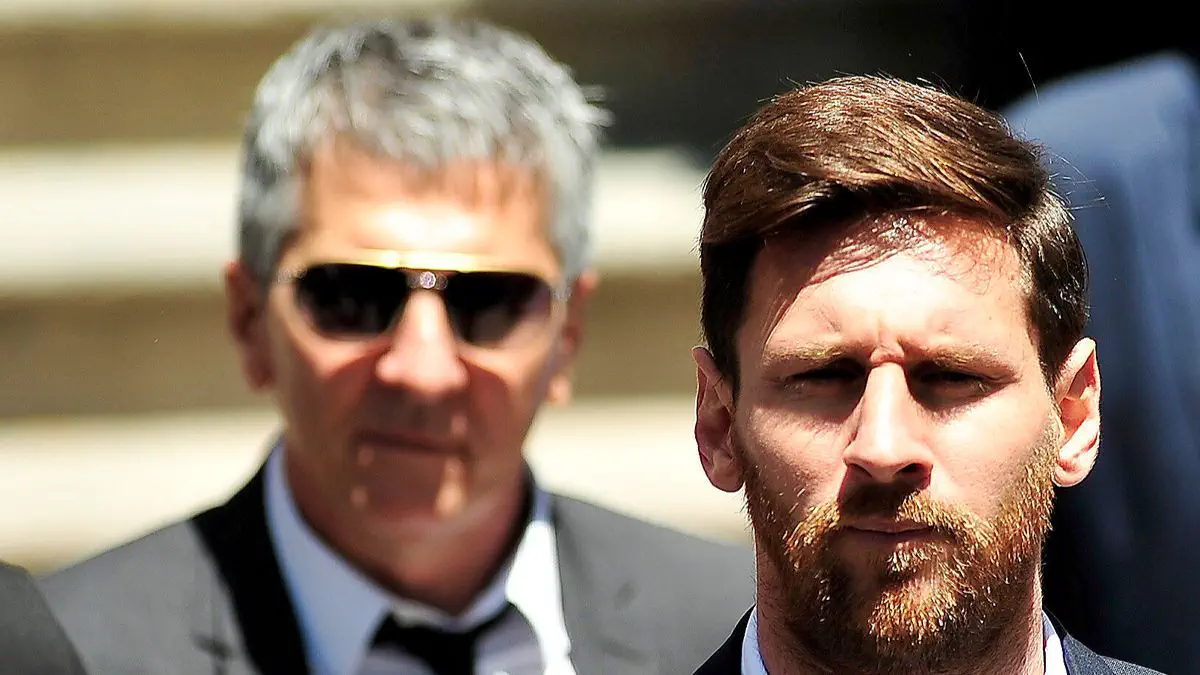
He was his son’s first coach, gave up his familiar life for Lionel’s future in Barcelona, spent years negotiating contracts, and transformed himself from a worker at an Argentine steel plant into one of the most influential figures behind the scenes of world football. The story of Jorge Messi is that of a man who didn’t create Lionel’s genius, but did everything to ensure that genius had the chance to flourish.
The Argentine outlet Infobae reported that Jorge Horacio Messi, father and long-time representative of Lionel Messi, passed away in Rosario on the evening of August 7 at the age of 68 after a prolonged illness.
- Also read: Clash of titans: Manchester United vs PSG. Who will come out on top? Match preview for August 8.
To the football world, Jorge Messi was first and foremost “Leo’s father”—the man seen for decades by the superstar’s side at negotiations, ceremonies, and the most pivotal moments of his career. But that definition vastly underestimates his true role.
He was Lionel’s first coach, the man who sought ways to pay for his treatment, took his 13-year-old son across the Atlantic, stayed with him alone in a foreign land, gradually took charge of his professional affairs, negotiated with Barcelona presidents, was involved in Lionel’s most dramatic conflict with the Catalan club, discussed a move to PSG, and spent years in talks with Inter Miami’s owners.
The professional biography of the greatest footballer of his era is, in fact, almost inseparable from his father’s own story.
A worker from Rosario and father of four
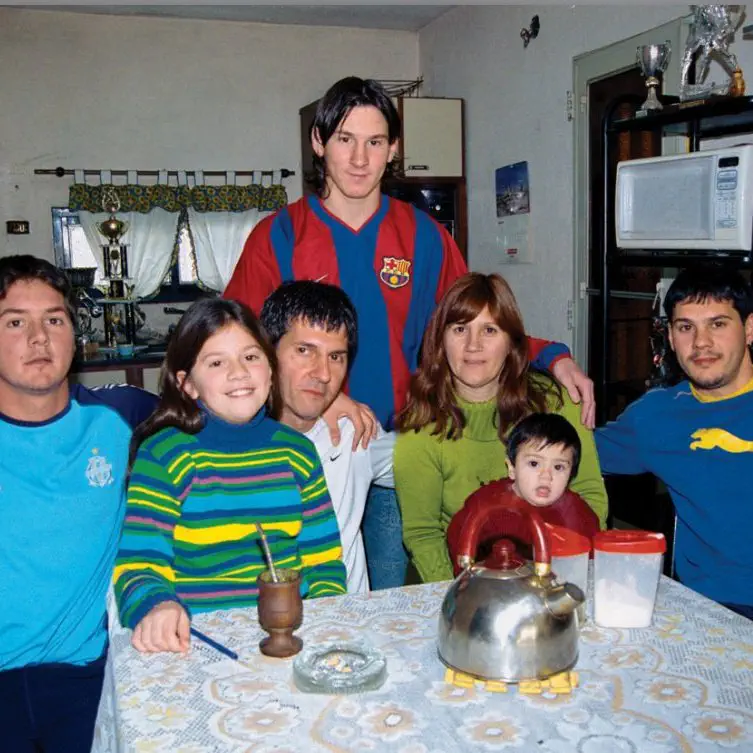
Jorge Messi wasn’t born an agent, a lawyer, or a major businessman.
He grew up in Rosario, played football himself, and as a young man featured as a midfielder in the Newell’s Old Boys system, though he never built a professional career. One turning point was his military service, after which football remained part of his life, but no longer as a profession. Later, Jorge qualified as a chemical technician and worked at the major steel company Acindar, where he eventually rose to a managerial position.
Together with Celia Cuccittini, he raised four children—Rodrigo, Matías, Lionel, and María Sol. The family led an ordinary life in Rosario, and at that time, nothing hinted that the Messi name would one day become one of the most commercially valuable in global sports.
Football, however, was always close at hand.
It was Jorge who became one of little Leo’s first coaches. In the mid-1990s, he worked with the children’s team Grandoli, where his son played. Even then, the difference between Lionel and most of his peers was obvious. The boy then moved to Newell’s Old Boys, with his father regularly accompanying him to matches and training sessions.
Later, people who watched the young Messi recalled Jorge’s distinctive whistle from the stands—a way to instantly catch his son’s attention amidst the noise around the pitch.
But the true scale of the father’s role didn’t show itself when Lionel was scoring tens of goals for youth teams.
It appeared when football itself was under threat.
A diagnosis that changed the family’s life
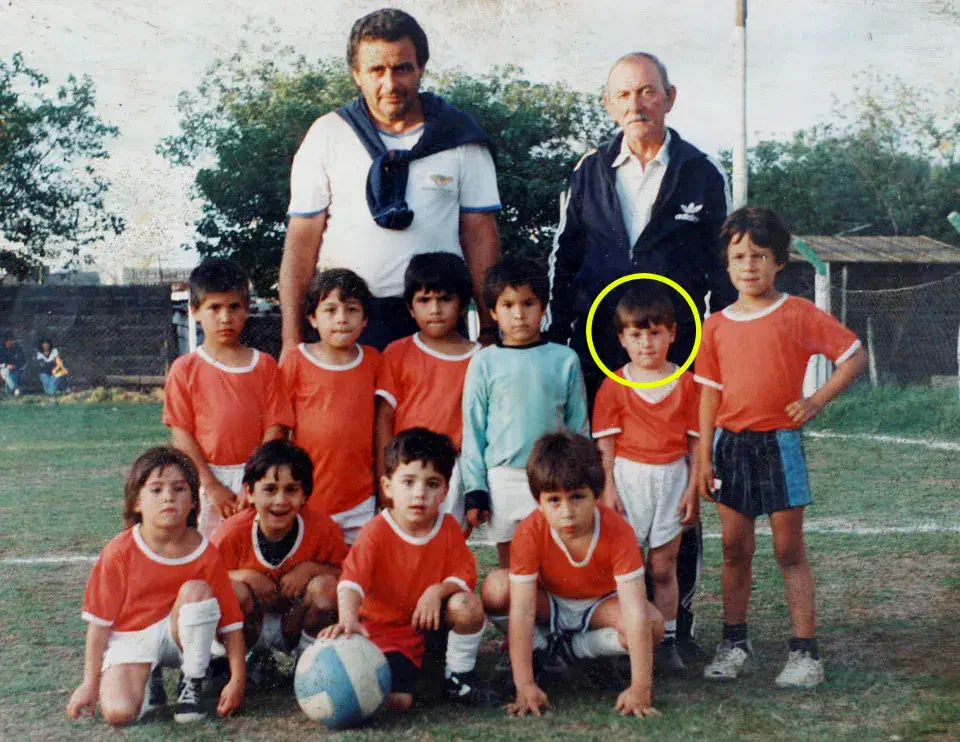
As a child, Messi was diagnosed with a growth hormone deficiency. Lionel required long-term hormone therapy, the cost of which was a serious burden for the family.
From that moment, Jorge ceased to be just the father of a talented child.
He had to become the man searching for a club, money, and a system that could not only give his son a football education, but also provide the medical treatment he needed.
Newell’s couldn’t ultimately solve this problem. Jorge took Lionel to trial at River Plate, but a move didn’t happen. Meanwhile, thanks to intermediaries, a European option emerged—Barcelona. For the Argentine family, this was a whole new level of risk: Messi was only 13, and a potential move meant essentially starting life over on another continent.
But it was the medical aspect that made the Catalans’ offer unique.
Barcelona agreed to cover the costs associated with the hormone therapy. Years later, Lionel himself said that the Catalan club was the only one to offer a complete solution to this issue. Official Barcelona materials also confirm that the club paid for the necessary treatment.
Without this decision, football history might have looked entirely different.
And the person who had to secure this decision for a 13-year-old boy was Jorge.
Barcelona, an ultimatum, and the famous napkin
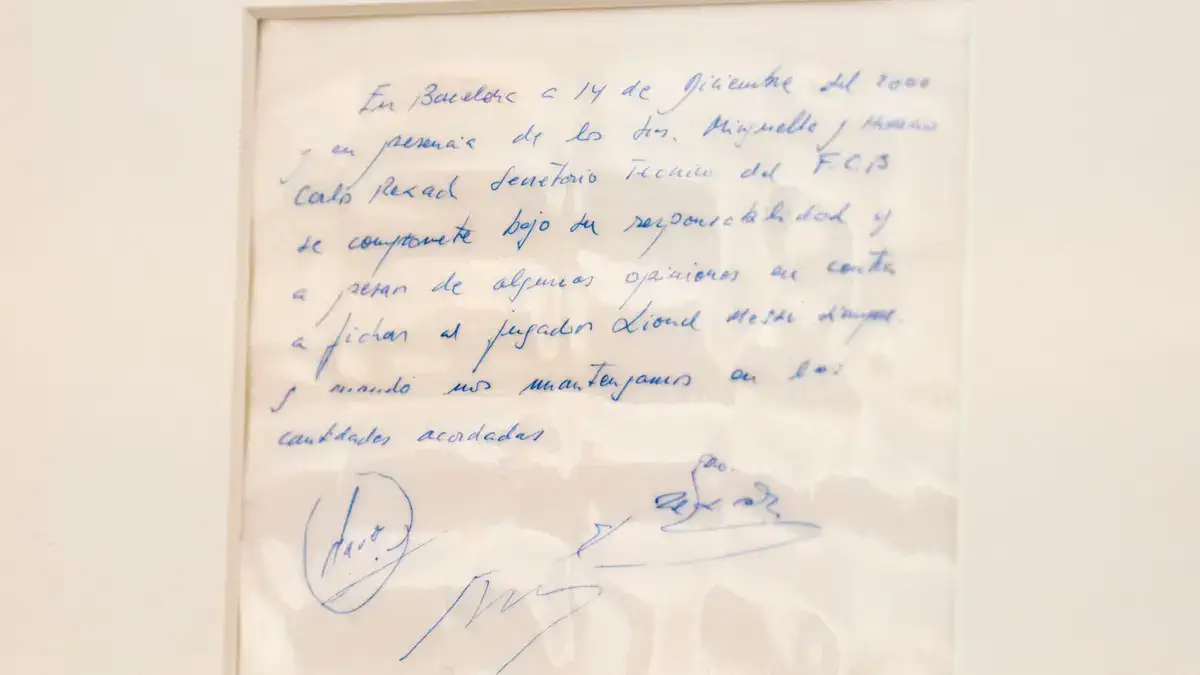
Today, the story of Messi’s first agreement with Barcelona has become almost a footballing myth.
In December 2000, the Catalans’ sporting director Carles Rexach wrote on an ordinary paper napkin a commitment to sign the young Argentine at the Pompeia tennis club.
But the popular phrase “Messi signed a contract with Barcelona on a napkin” isn’t entirely accurate.
Neither Lionel nor Jorge signed that napkin. The signatures belonged to Rexach, agent Horacio Gaggioli, and Josep Maria Minguella. It wasn’t a full employment contract, but a written confirmation of Barcelona’s intentions—necessary above all because the Messi family was fed up with uncertainty. The formal contract would come later.
And it was the pressure from Lionel’s camp, including Jorge, that became a key element in this story.
Barcelona had hesitated for a long time. Signing a 13-year-old foreigner meant not just inviting a promising player to the academy. The club would have to help the family relocate, provide financial support, and cover medical treatment.
According to Messi’s biographers, Jorge fought for a whole package of guarantees: medical support for his son, a salary, and living conditions that would allow the family to stay in Catalonia, and later—clear agreements over football and image rights.
He had to negotiate virtually without professional experience in football business—up against people who had been making such deals for years.
And in the end, he achieved the main thing: Lionel got the chance to stay at Barcelona.
The toughest decision: father and son left alone
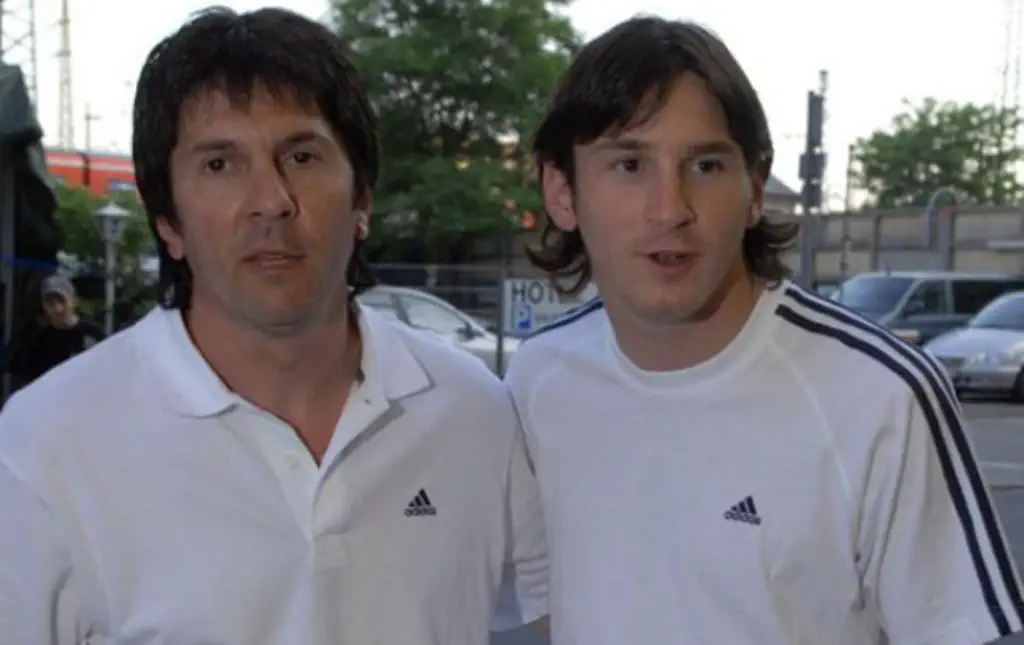
The move to Spain didn’t become a fairy tale right after the paperwork was signed.
The family faced adaptation, homesickness, and uncertainty. After a while, Celia and the other children returned to Rosario.
Jorge stayed in Barcelona with Lionel.
Essentially, it was just the two of them—a father and a teenager who had to prove to a huge European club every day that the exceptional steps taken for him were truly justified.
Later, Messi recalled that the period was so tough that both he and his father would cry, trying not to show it to each other. At one point, Jorge directly asked his son if he wanted to continue or return to Argentina.
Lionel chose to stay. And Jorge stayed alongside him.
Arguably, this was one of the most important decisions of Messi’s entire career—long before Ballon d’Ors, Champions League finals, and the World Cup.
Jorge couldn’t guarantee his son success. He simply agreed to share the risk with him.
How the father became the agent
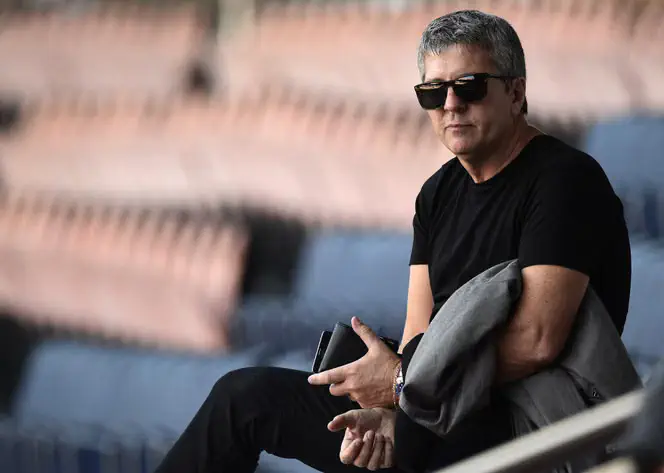
In the early days of Messi’s Spanish career, the family depended on intermediaries who helped arrange trials and negotiate with Barcelona.
But Jorge quickly realized he wanted to manage his son’s affairs himself.
According to Messi’s biographical materials, even during the first negotiations over new terms in Catalonia, the father had questions about the intermediaries’ work. Gradually, he took control of Lionel’s career and became his de facto representative.
Thus, a former Acindar employee found himself in an entirely new profession.
Over time, a full-fledged structure grew around Messi—lawyers, financial advisors, communications and commercial specialists. But the person through whom all major decisions passed remained the same. That was Jorge.
As late as 2026, Forbes still called him Lionel’s agent and business manager. He took part not only in club negotiations, but also in managing the commercial side of the career, image rights, and player partnerships.
The significance of this work is hard to overstate.
Messi gradually evolved from a phenomenal footballer into a global brand. Adidas, Pepsi, Budweiser, and many other international companies built long-term relationships with him. Projects outside football appeared—investments, licensing deals, and charitable initiatives.
Of course, it was Lionel’s performances that built the commercial value in the first place.
Jorge’s task was different: to create a system around that success and decide whom to let close to his son, whom to negotiate with, and which offers to turn down.
He became a kind of filter between Messi and an industry eager to claim a piece of his time, name, and image.
Not only success: the tax case that hit the family
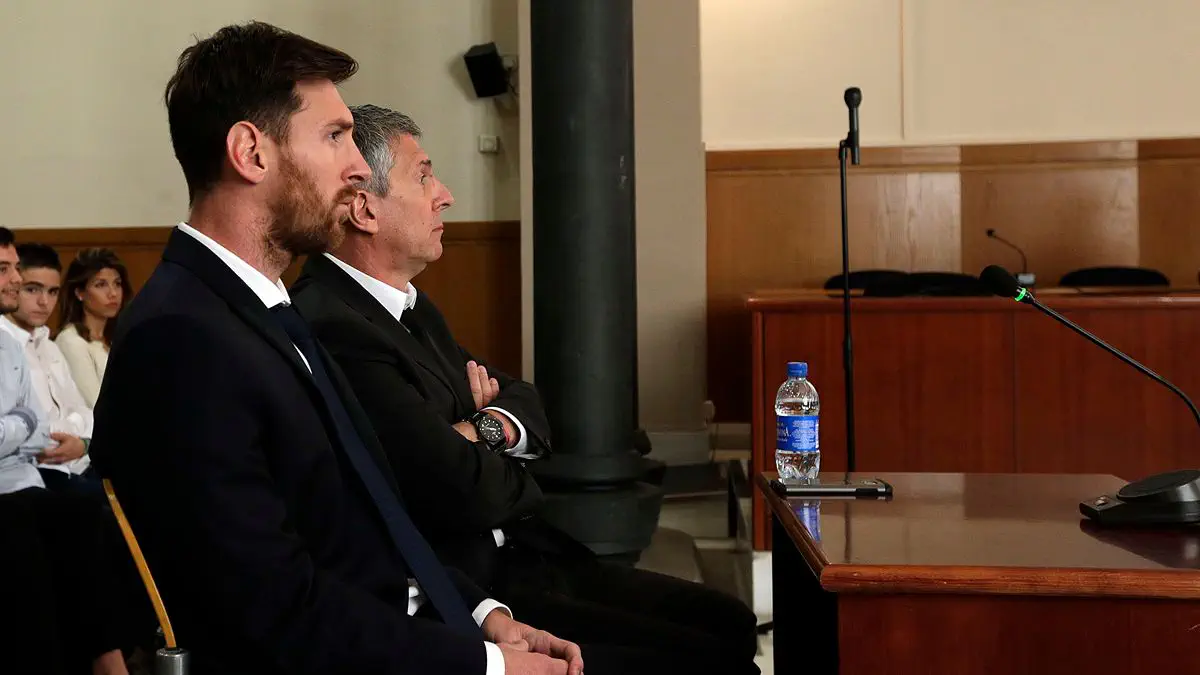
The story of managing Messi’s career wasn’t flawless.
The most serious episode was the tax case in Spain.
In 2016, a court found Lionel and Jorge Messi guilty on three counts of tax fraud related to image rights income from 2007–2009. The case involved roughly €4.1–4.2 million in unpaid taxes and the use of corporate structures outside Spain. Initially, both father and son were sentenced to 21 months in prison and substantial fines.
This process is particularly telling in understanding Jorge’s role in his son’s career.
Lionel told the court he focused on football and trusted financial matters to his father. Jorge, in turn, said he relied on professional consultants.
Subsequently, Spain’s Supreme Court upheld Lionel’s sentence, while Jorge’s was reduced to 15 months. Neither actually served jail time—the sentences were replaced with fines.
This episode was the flip side of the family management model.
Jorge wanted to shield his son from everything unrelated to football. But with great control came great legal responsibility.
2020: Jorge vs. Barcelona’s management
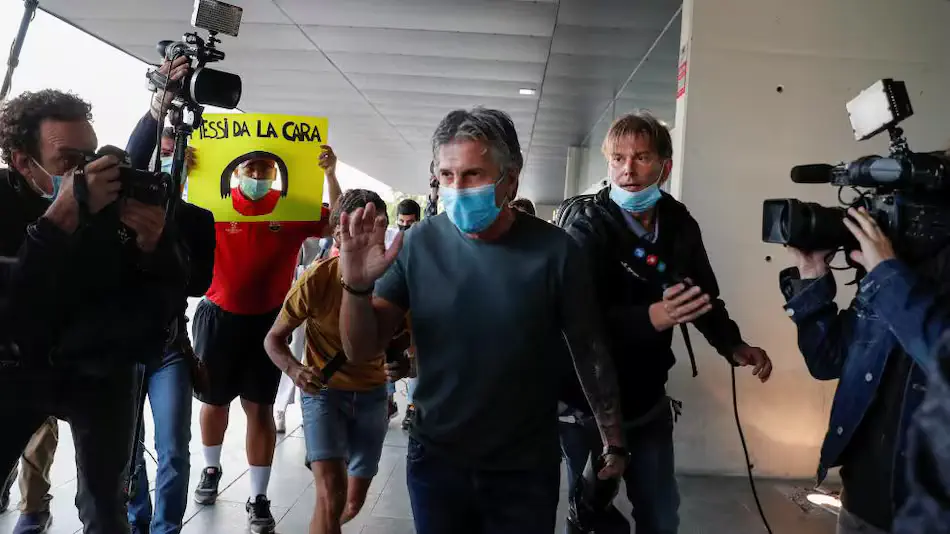
By the late 2010s, Messi was already indisputably the greatest player in Barcelona’s history—and perhaps in football history itself.
But once again, it was his father at the heart of the action when the player’s relationship with the club reached breaking point.
In the summer of 2020, after a difficult season and a humiliating 2–8 defeat to Bayern Munich in the Champions League, Lionel sent the club the famous burofax, announcing his intention to use a contract clause that, according to his camp, allowed him to leave for free.
Barcelona and La Liga interpreted the agreement differently, insisting on the existing €700 million release clause.
Jorge was among those negotiating with club president Josep Maria Bartomeu.
In early September, he flew to Barcelona specifically for talks. When asked by journalists about his son’s future at the club, Jorge replied it would be difficult. Then Messi’s representatives and Bartomeu held lengthy negotiations, but no compromise was found.
In the end, Lionel stayed for another season, to avoid a legal war with the club of his life.
But the very fact that Jorge was the one sitting across from the Barcelona president at the most tense moment of Messi’s relationship with the club says everything about his position.
He had long since ceased to be just the parent of a famous footballer. He represented one of the most powerful interests in world football.
2021: Jorge negotiates a new deal—then orchestrates the end of an era
After Joan Laporta’s return, it seemed the conflict had been overcome.
Messi wanted to stay at Barcelona, the club wanted to keep him, and Jorge was negotiating the next contract with the new-old president.
By July 2021, a basic agreement had been reached.
The problem was less the family’s negotiations with the club, and more Barcelona’s financial situation and La Liga’s registration rules. On August 5, it became clear: the club could not register the contract under the agreed terms. Barcelona officially announced the departure of the greatest player in its history.
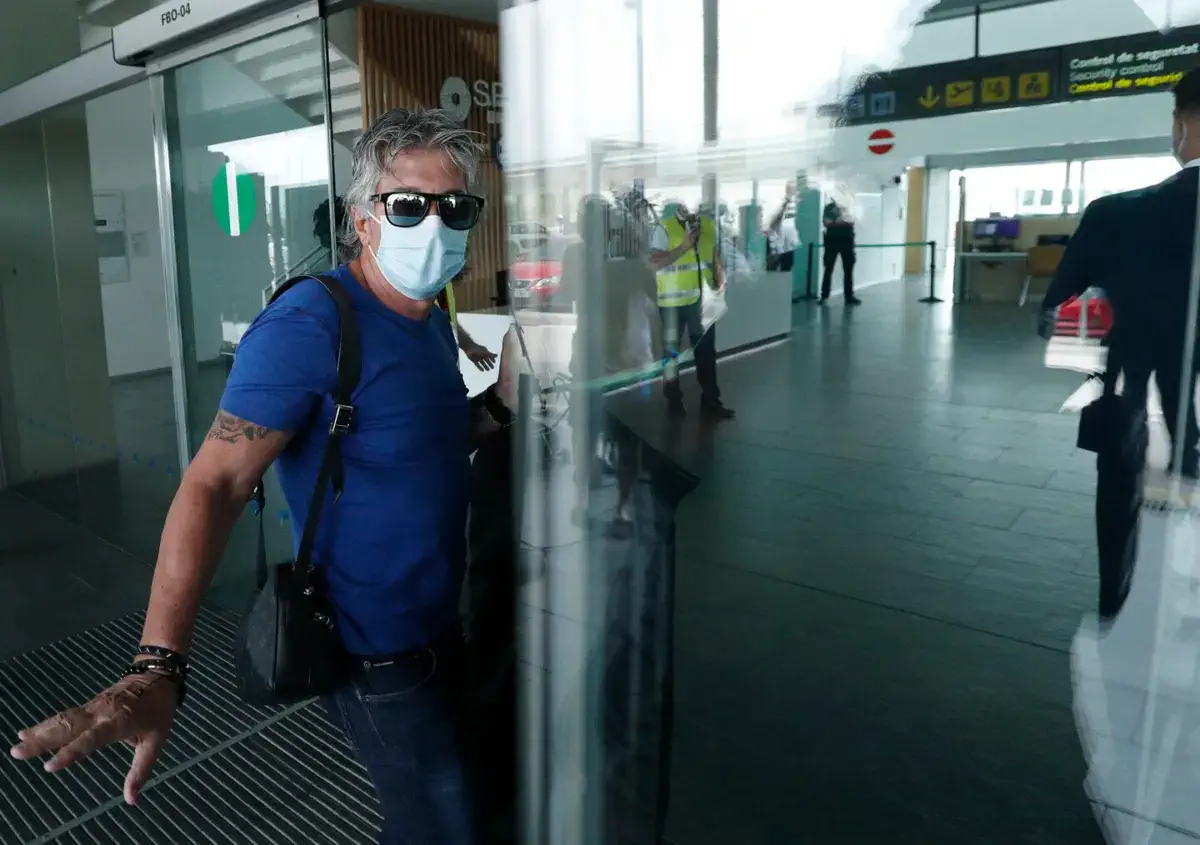
Just days later, it was Jorge who confirmed the next step to journalists at the airport.
Lionel Messi was heading to Paris to sign with PSG.
In a matter of days, the father went from trying to keep his son at the club where he’d spent almost his entire adult life to organizing the most emotional transfer in modern football history.
PSG, a return to Barcelona, and the American dream
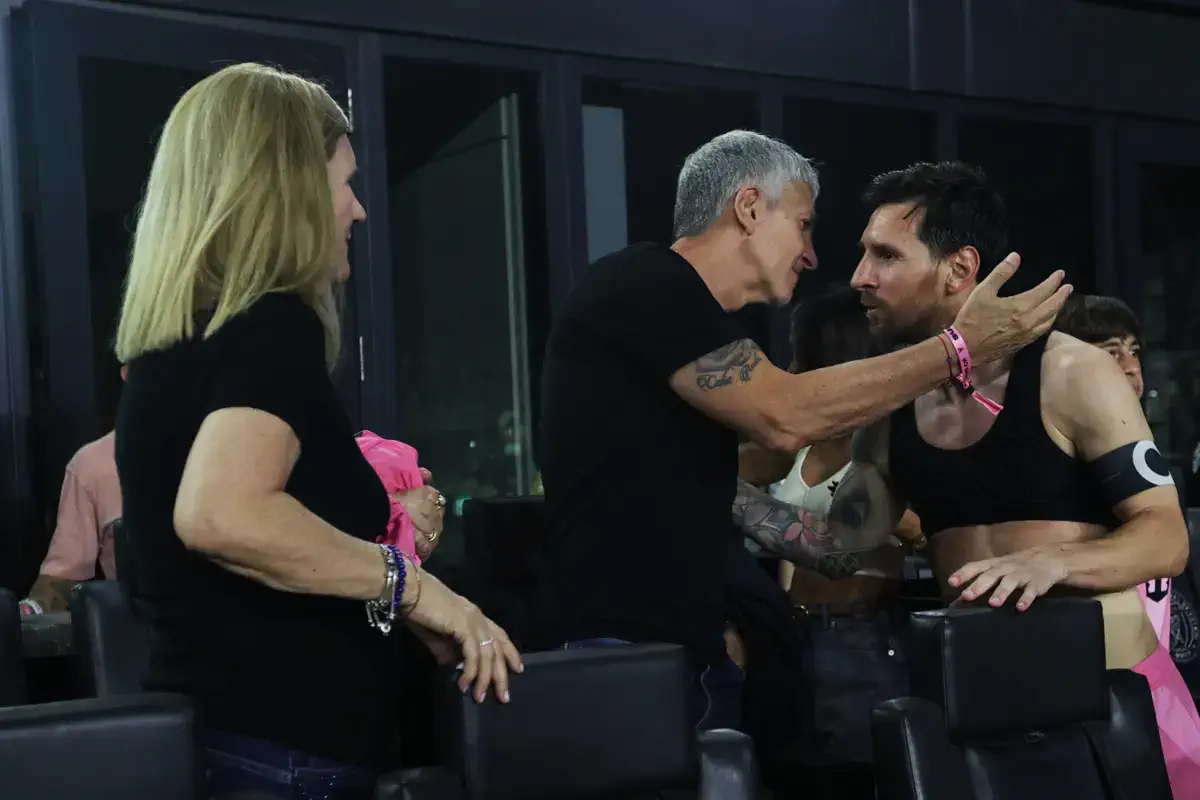
The Paris chapter lasted two seasons.
And in spring 2023, Jorge once again found himself at the center of a transfer chess match.
Three paths essentially opened up for Messi.
The first: stay at the highest European level and attempt a return to Barcelona.
The second: accept an extremely lucrative offer from Saudi Arabia.
The third: head to the USA and join the Inter Miami project.
Jorge took part in these negotiations personally.
The most emotional option remained Barcelona. On June 5, 2023, Jorge met with Laporta, and later it was he who informed the Catalan president that Lionel had chosen Inter Miami. Barcelona officially confirmed this conversation in its statement.
But the Miami decision wasn’t made in a matter of days.
Inter Miami co-owner Jorge Mas later said that work on Messi’s transfer had been ongoing for about three years, and became especially intense about a year and a half before the deal was signed. A significant part of these negotiations was handled directly with Jorge Messi. The parties met in various cities and negotiated not only salary, but also a far more complex commercial structure for one of the biggest moves in MLS history.
On July 15, 2023, Inter Miami officially announced the signing of Messi.
This became the last great twist in his club career, with his father once again playing a central backstage role.
Jorge didn’t sell his son’s talent—he protected the space around him
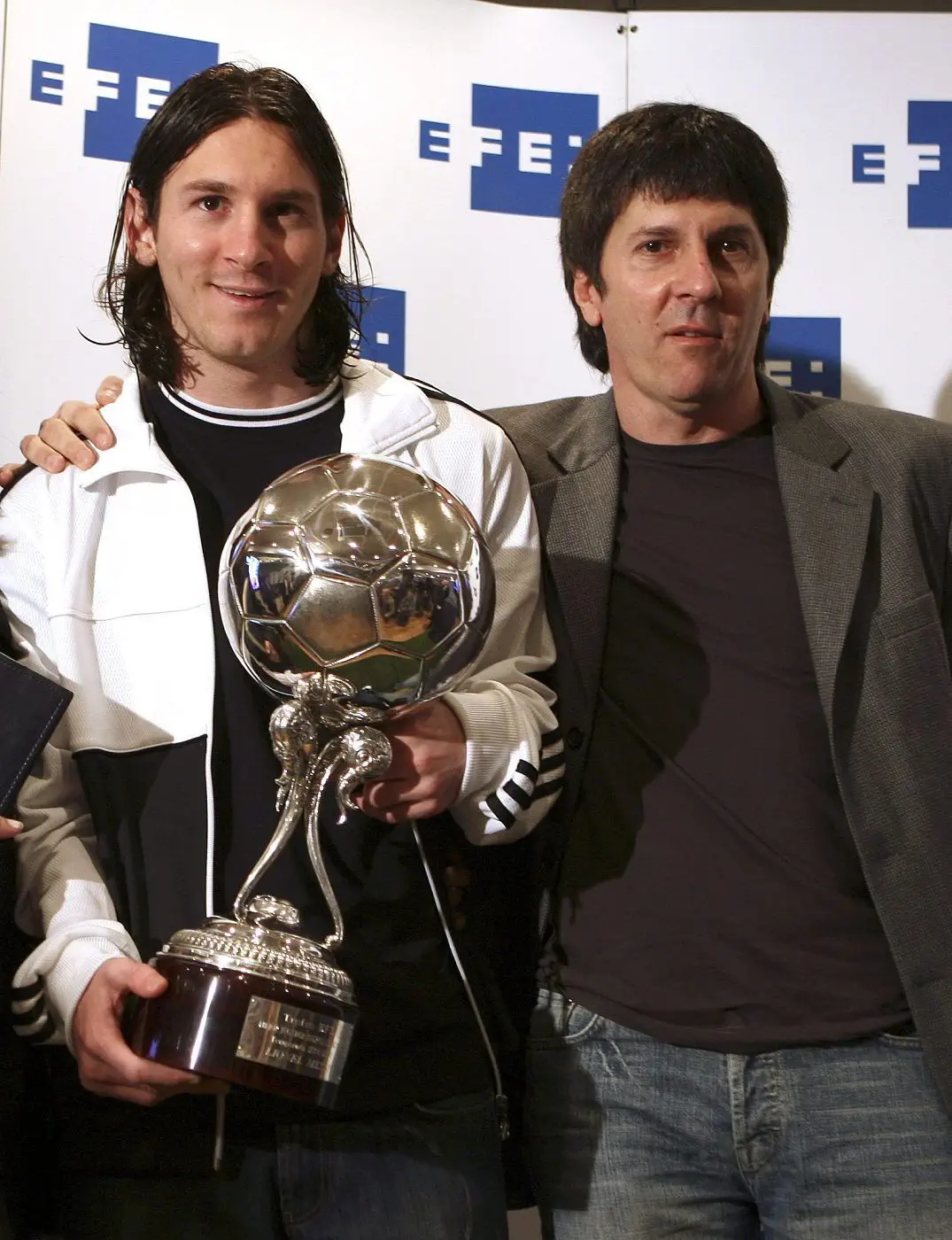
Sometimes the influence of great athletes’ parents is oversimplified. Either they’re credited with almost all of the child’s success, or their role is reduced to serving an already established star. Jorge’s story is more nuanced.
He didn’t teach Lionel to dribble past five defenders, didn’t score in finals for him, didn’t win his eight Ballon d’Ors, didn’t lift the World Cup in his son’s place.
But at every stage, when footballing talent alone wasn’t enough, his father was there.
When money was needed for treatment—Jorge found a solution.
When Argentina no longer offered enough guarantees for development—Jorge took his son to Europe.
When Barcelona hesitated—Messi’s entourage forced the club to give written guarantees. When part of the family couldn’t handle life away from home—Jorge stayed in Catalonia with 13-year-old Leo.
When his interests needed defending at the negotiating table—the father became an agent.
When a huge commercial business sprang up around Messi—Jorge built a team of specialists and remained the person through whom key decisions passed.
When relations with Barcelona broke down—he sat across from Bartomeu at the table.
When a deal with Laporta in 2021 proved impossible—he helped organize the move to Paris.
And when Europe, Saudi Arabia, and the USA vied for Messi in 2023, Jorge was once again at the negotiating table.
The final years and health struggles
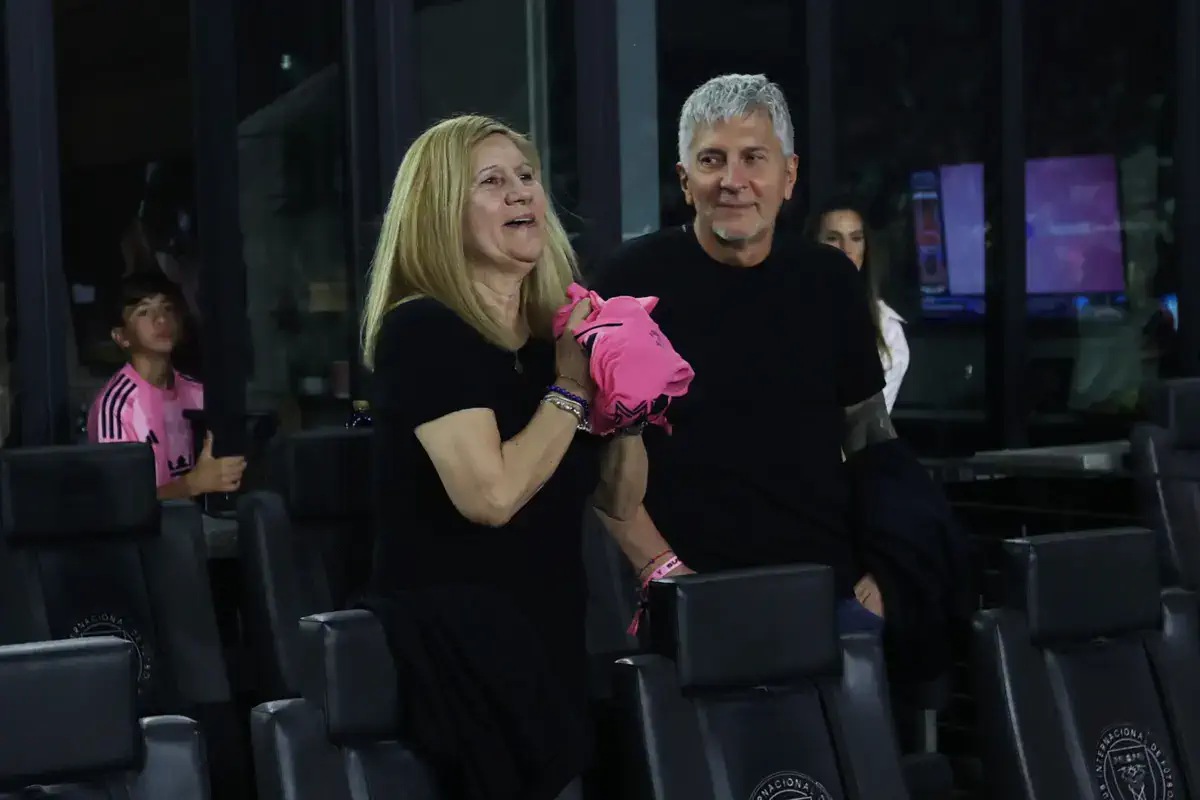
In his final months, Jorge appeared in public less and less.
In June 2026, his health became the subject of numerous reports in the Argentine media. At that time, even false news of his death circulated. The family responded officially: Jorge was indeed experiencing health problems and was under medical supervision, but reports of his death were untrue. Relatives asked for privacy and for unverified information not to be spread unless it came from the family.
The exact diagnosis was never made public.
Now Infobae reports that Jorge died on August 7 in Rosario after a long illness.
The man who once told his son to keep going
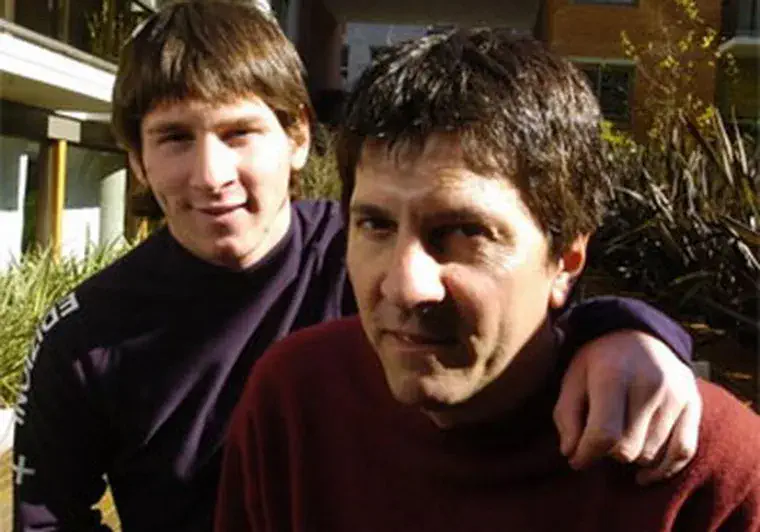
Lionel Messi’s footballing immortality is usually measured in numbers, goals, assists, Ballon d’Ors, trophies with Barcelona, Copa América, and finally the World Cup—after which the argument about the only missing title vanished forever.
But the road to that immortality began much earlier—not at Camp Nou, nor at Lusail Stadium. It started in Rosario, where an ordinary family recognized an extraordinary talent and risked almost everything so that talent wouldn’t disappear because of money, illness, or distance.
Jorge Messi was the man who, for more than a quarter of a century, did everything so the greatest talent in his family could focus above all on the ball.
He didn’t create the footballer Lionel Messi. But he built the conditions around his son that allowed him to become a football god. That is his place in football history.
 Steven Perez
Dailysports's expert
Steven Perez
Dailysports's expert