UEFA Nations League 2026/27: groups, schedule, format and biggest storylines
The UEFA Nations League returns on September 24. Defending champions Portugal begin their title defence with a new coach and a 41-year-old Cristiano Ronaldo, Spain enter their first tournament since winning the World Cup, while Germany, the Netherlands and France are set to discover what will change under Jürgen Klopp, Xavi and Zinedine Zidane.
For many national teams, this will be the first test of a new-look squad, the first step towards Euro 2028 and the final edition of the Nations League in its familiar four-division format.
Zidane, Klopp, Mancini and Xavi: four new projects

Germany: Klopp begins the rebuild. Germany were knocked out of the World Cup in the round of 32, losing to Paraguay on penalties. Klopp has made a statement from the outset, naming 44 players across two squads for four autumn fixtures. Potential debutants Hannes Behrens, Younes Ebnoutalib and Finn Jeltsch have all been given an opportunity. The coach sees Joshua Kimmich in central midfield, while Marc-André ter Stegen will start the first match in goal. Klopp's task is bigger than simply adding his trademark pressing: he must quickly give Germany stability without the ball and determine who is ready to form the team's core for years to come. His debut comes on September 24 in Amsterdam against the Netherlands.
Netherlands: Xavi begins by choosing between experience and renewal. Ronald Koeman's team were eliminated in the round of 32 at the World Cup after a penalty shoot-out defeat by Morocco. Xavi has kept captain Virgil van Dijk in the squad, recalled Jeremie Frimpong and called up two possible debutants — Ruben van Bommel and Jivay Zechiël. However, the Netherlands' all-time leading scorer, Memphis Depay, was left out of the first squad. The Spaniard has spoken about the closeness of his ideas to the Dutch football school. Now the key question is how quickly the team will start dominating possession and imposing its own tempo on opponents. The test arrives immediately: Xavi's first match is against Klopp's Germany.
France: Zidane already has a strong foundation. Didier Deschamps' side reached the World Cup semi-finals, where they lost to Spain. Kylian Mbappé remains captain, but Zidane's first squad was not limited to the familiar leaders: it also included, among others, young defender Jérémy Jacquet and striker Esteban Lepaul. The new coach is expected to answer the question of how to combine France's best attacking players into a functioning system. He will begin away to Türkiye on September 25, before facing Belgium just three days later.
Italy: Mancini returns in search of another triumph. The coach who led Italy to victory at Euro 2020 is beginning his second spell in charge of the national team. He still has familiar leaders at his disposal — Gianluigi Donnarumma, Nicolò Barella, Alessandro Bastoni and Giovanni Di Lorenzo. But Mancini must also find room for the next generation: young striker Pio Esposito has already scored five goals in nine matches for Italy. The opening fixture against Belgium on September 25 will show how quickly the coach can blend experience and youth.
Other national teams have also undergone changes. Mark van Bommel has taken charge of Belgium, while Portugal, two-time Nations League winners, have entrusted their title defence to Jorge Jesus. The appointment is particularly intriguing for Ronaldo, as the pair have already worked together at Al-Nassr. Spain, led by Luis de la Fuente, have taken the opposite path: they are world champions and must now prove they can maintain their level without changing course.
Best groups: where the battle starts on matchday one
Group A1 — France, Italy, Belgium, Türkiye. There is almost no time to ease into the competition: Italy host Belgium on September 25, while Türkiye welcome France. Three days later, Belgium will face Zidane's team. France have squad depth but a new coach, Italy are returning to Mancini, Belgium are testing themselves under van Bommel, while Türkiye, following promotion to the elite division, will look to transform themselves from an awkward opponent into a genuine quarter-final contender. A poor opening result is not fatal, but the packed schedule makes correcting mistakes especially difficult.
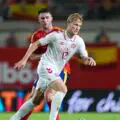
Group A3 — Spain, England, Croatia, Czechia. Wembley will host England against Spain on September 26 — a repeat of the Euro 2024 final. This time, England's opponents are also the reigning world champions. Thomas Tuchel's team have returned to League A after promotion, while Croatia, with Martin Baturina and Luka Modrić, can make life difficult for any favourite. Czechia, who won their League B group last season, begin life at the new level against Croatia. Spain face a different challenge: can the world champions maintain their intensity after a long summer tournament?
There are also must-watch fixtures outside these two groups. In A2, the opening night will bring Xavi and Klopp face to face, while in A4 Norway, led by Erling Haaland, and defending champions Portugal will meet as early as September 27.
Players to watch

Lamine Yamal, Spain. At 19, he begins the Nations League as a world champion and the player setting the tempo for Barcelona's attack. By mid-September, he had already registered an incredible eight goals and six assists in eight matches this season. The question now is whether he can carry that club form into games against England and Croatia and help Spain reclaim the trophy they won in 2023.
Kylian Mbappé, France. The captain begins Zidane's cycle after reaching the World Cup semi-finals and becoming the tournament's all-time leading scorer. He already has eight goals and two assists this season. His role is beyond question, but his positioning is a matter for the new coach: should Mbappé's pace be used from the wing, or should he be trusted more often to finish attacks through the middle? The captain has a chance to lead France to a second Nations League title.
Erling Haaland, Norway. Norway qualified for the World Cup for the first time in decades and reached the quarter-finals; now they face their League A debut. Haaland scored seven goals in the previous edition and, with 19 goals, remains the Nations League's all-time leading scorer. The test is clear: can he maintain that scoring rate against Portugal and Denmark now that the level of opposition has risen?
Jude Bellingham, England. The World Cup semi-finalists have started the season brightly, with three goals and two assists in their first seven league matches. England must overcome opponents who are comfortable in possession, above all Spain. Bellingham could become the key player in the transition phases.
Arda Güler, Türkiye. The Real Madrid midfielder has one goal and three assists in six league matches at the start of the season. For Türkiye, his ability to create chances will be especially important when opponents control possession. Matches against France, Italy and Belgium will show whether Güler can become a leader for his country among Europe's strongest national teams.
Cristiano Ronaldo, Portugal. At 41, he remains part of the reigning champions' squad, while his familiarity with new coach Jorge Jesus adds another layer of intrigue to the story. After yet another unconvincing World Cup, Ronaldo is under immense pressure. Questions are being asked about whether the national team needs him at all. But the more important issue is this: what role will he be given during a demanding opening stretch featuring four matches, and can he help Portugal defend their title?
Viktor Gyökeres, Sweden. His nine goals made him the top scorer of the previous edition, in which Sweden won their League C group. The striker's situation is different now: he has not registered a single goal or assist and is not currently an undisputed starter. Sweden will play in League B against Poland, Bosnia and Herzegovina and Romania. For Gyökeres, this is a chance to rediscover his rhythm, prove his finishing against stronger opponents and lead Sweden to a second consecutive promotion.
Who can surprise?

Greece. Under Ivan Jovanović, the team reached League A for the first time, completing their promotion with a 3-0 away win over Scotland in the play-offs. The generation led by Konstantinos Karetsas, Giannis Konstantelias and Christos Tzolis faces a stern examination against Germany, the Netherlands and Serbia. The coach himself has set staying in the top tier as the objective. But if this young team can survive the opening four rounds, they could even enter the race for second place.
Norway. Until recently, Norway had not qualified for a World Cup since 1998; this summer, they reached the quarter-finals after beating Brazil in the round of 16. Winning their League B group has earned them fixtures against Portugal, Denmark and Wales. Haaland and Martin Ødegaard will now be expected to deliver consistently against the strongest opposition. Reaching the Nations League quarter-finals would confirm that their summer success was another step in their development.
Türkiye. Promotion to League A via a play-off against Hungary opens a new level of competition for Arda Güler and his teammates. Six matches against France, Italy and Belgium will provide a precise measure of how far the team has progressed. After their failure at the 2026 World Cup, Türkiye must prove their quality. The minimum objective is to stay in the elite; the maximum is to finish above at least two opponents and reach the quarter-finals.
Sweden. Gyökeres' nine goals and Sweden's League C group win made last season almost flawless. Graham Potter's arrival has had a hugely positive impact on the team. But Group B4 brings clashes with Poland, Bosnia and Herzegovina and Romania, with Poland aiming to return to the elite. For Sweden, the fight for top spot will test whether their rapid rise can be turned into sustained success.
Format and schedule: what has changed
In the 2026/27 season, the national teams are divided into four leagues — A, B, C and D. The first three feature four groups of four teams; League D has two groups of three. Teams play each other home and away: sides in Leagues A–C have six group matches, while League D teams play four. The group winners and runners-up in League A advance to two-legged quarter-finals in March 2027. The four winners will compete in the final tournament from June 9–13, 2027.
The schedule is unusually packed. The first four rounds will be played from September 24 to October 6, 2026, with the remaining two taking place on November 12–17. The quarter-finals and main promotion and relegation play-offs are scheduled for March 25–30, 2027. As a result, squad depth and the ability to manage workloads could prove just as important in this edition as the starting XI.
UEFA adjusted the promotion and relegation system in September. The winners of the League B and C groups move up, but the status of teams finishing third and fourth in League A depends on comparing results across the groups: some will stay up, some will play in the relegation play-offs, and the two worst fourth-placed teams will be relegated automatically. League D teams will be promoted to League C after this season. The reason for the reform has already been confirmed: from the 2028/29 season, the Nations League will consist of three divisions instead of four, with 18 teams in each.
Why is the Nations League important for Euro 2028?

Winning a group this season could provide a backdoor route to the European Championship. Under the approved qualification regulations, 12 group winners and the eight best runners-up will qualify directly for Euro 2028. Two more places are reserved for the hosts if they fail to qualify; the remaining berths will be decided in the play-offs.
Depending on the hosts' results and the qualification configuration, between four and nine play-off places will be allocated to the winners of the League A, B and C groups in the 2026/27 Nations League who have not already qualified for the Euros or reached the play-offs through the main qualifying campaign. If there are not enough such teams, the regulations provide for further allocation based on the Nations League ranking, starting with the best League D group winner. Finishing top of a Nations League group does not itself guarantee a place at the Euros, but it can preserve a team's chance even after a disappointing qualifying campaign.
That is why the September kickoff matters to both the favourites and the teams from the second tier.
 Steven Perez
Dailysports's expert
Steven Perez
Dailysports's expert