
Is FIFA favoring Argentina? All the controversial decisions from the last two World Cups
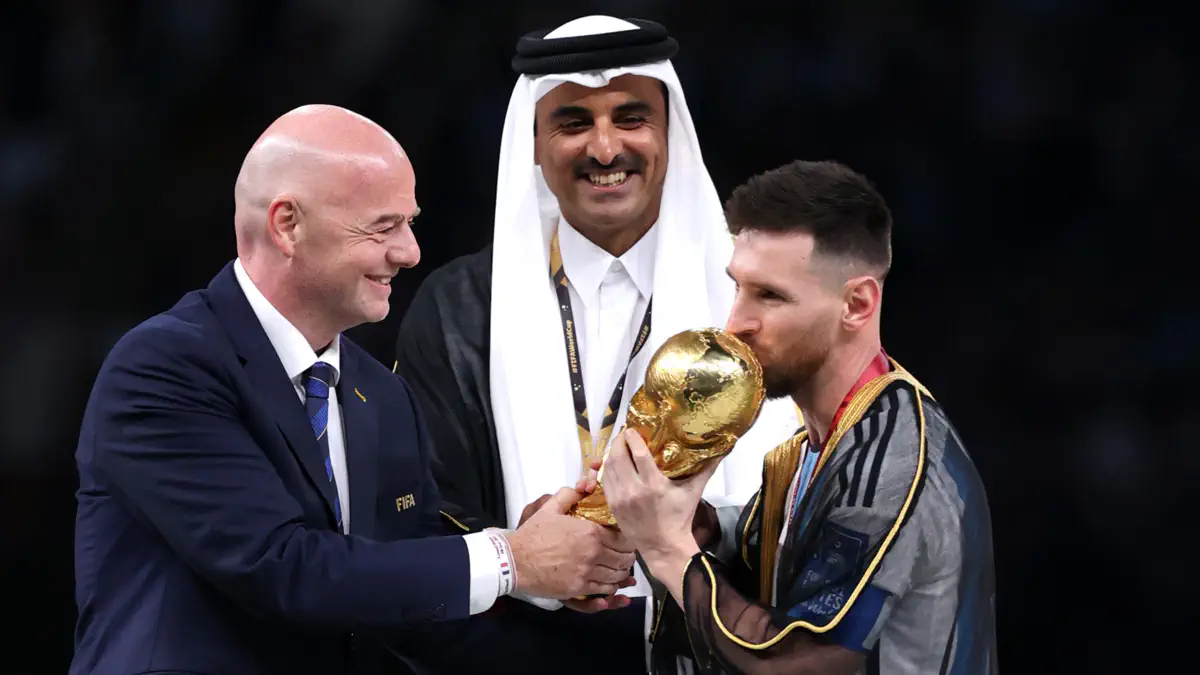
From five penalties in Qatar to complaints from Algeria and Egypt, and the unprecedented second yellow for Embolo — we've compiled the most controversial moments from the 2022 and 2026 World Cups, all of which seemed to benefit the Albiceleste.
Talks of possible refereeing favoritism towards Argentina reignited after the 2026 World Cup quarterfinal against Switzerland. Just five minutes after the Europeans equalized, VAR overturned Leandro Paredes’ yellow card and instead handed a second booking to Breel Embolo. Down to ten men, the Swiss held out until extra time but ultimately lost 3-1.
Below, we break down the key contentious calls and game-changing moments from the last two World Cups that went Argentina’s way. The very existence of debate doesn’t necessarily mean every decision was a mistake or evidence of a conspiracy.
World Cup 2022: A record five penalties in seven matches
On their way to the title, Argentina were awarded five penalties: against Saudi Arabia, Poland, the Netherlands, Croatia, and France. No other team in World Cup history has taken as many spot-kicks in a single tournament. Some were clear-cut, but nearly every one sparked debates about soft contact or inconsistent officiating.
World Cup 2022. Argentina vs. Saudi Arabia: Paredes held off the ball

Argentina got their first penalty in the opening match. After a corner, Saud Abdulhamid grabbed Leandro Paredes in the box. The referee initially missed the incident, but VAR called him to the monitor and a penalty was awarded. Lionel Messi converted it in the 10th minute.
There was contact, but the ball was heading elsewhere, and similar grappling during set-pieces usually involves multiple players. The decision was called extremely harsh and linked to FIFA’s directive to crack down on holding in the box. Ultimately, it didn’t help Argentina — Saudi Arabia won 2-1.
Poland vs. Argentina: Szczęsny’s glove and one of the softest penalties of the tournament

In the 36th minute, Wojciech Szczęsny came out to punch the ball. Messi headed it, and the keeper’s glove lightly brushed the Argentine’s face.
Referee Danny Makkelie initially let play continue, but after a VAR review, awarded the penalty. Many pundits called it the softest spot-kick of the World Cup: Messi had already played the ball, the contact was minimal, and Szczęsny didn’t impede his shot. The Polish keeper restored justice in the eyes of critics by saving Messi’s penalty.
Netherlands vs. Argentina: Penalty on Acuña

In the 71st minute, Denzel Dumfries tried to stop Marcos Acuña on the edge of the box. The Argentine knocked the ball past and went down after contact with the defender’s leg. Referee Antonio Mateu Lahoz immediately pointed to the spot, and VAR upheld the decision. Messi converted to make it 2-0.
Of Argentina’s five penalties, this was one of the least controversial, but it still fueled the larger debate: the contact was light, occurred right on the line, and Acuña began falling at the first touch.
Messi handled the ball and escaped a booking

In the second half, Messi deliberately blocked a pass with his hand in midfield. The referee awarded a free-kick but didn’t book the Argentine captain.
Deliberate handball doesn’t always mean a yellow card — for instance, if it prevents a promising attack. But the lack of a booking raised eyebrows among the Dutch and neutral pundits alike.
In stoppage time, Messi was eventually booked for dissent. Had Mateu Lahoz cautioned him for the handball, the late booking would have been his second, and the Argentina captain wouldn’t have finished the match. Nathan Aké admitted postgame he couldn’t explain why Messi escaped punishment.
Paredes fouled and blasted the ball at the Dutch bench

Near the end of regulation, Leandro Paredes took down Nathan Aké with a rough tackle, then booted the ball at the Dutch bench after the whistle. Substitutes stormed the pitch, and Virgil van Dijk shoved the Argentine, sparking a mass confrontation.
In one sequence, Paredes committed a reckless foul and then deliberately kicked the ball at people on the sideline. The referee settled for a single yellow card. Many felt he should’ve been sent off directly or received two bookings in quick succession.
Argentina vs. Croatia: Livaković penalty

The key moment of the semifinal came in the 32nd minute. Julián Álvarez knocked the ball past Dominik Livaković and then collided with the keeper. Referee Daniele Orsato awarded a penalty and booked the Croatian. Messi converted and Argentina soon scored a second.
Expert opinions were split. Some argued Livaković stuck out his leg and blocked Álvarez’s path. Others pointed out the keeper stopped, held his ground, and didn’t move toward the striker, while Álvarez crashed into him after misplaying the ball.
The lack of a VAR review was especially controversial: Orsato didn’t check the monitor, even though the decision essentially set the semifinal’s course.
Argentina vs. France: Soft penalty on Di María

In the 21st minute of the final, Ángel Di María burst into the box and fell after contact from Ousmane Dembélé. The Frenchman did clip the Argentine from behind, but the contact was brief and barely forceful.
Szymon Marciniak instantly pointed to the spot, and VAR didn’t intervene. Messi scored from 12 yards. The decision was deemed technically correct, but labeled soft — especially compared to the next controversial fall in Argentina’s own box.
Thuram went down after contact with Enzo and was booked for simulation

In the 87th minute, Marcus Thuram entered the box and hit the deck near Enzo Fernández. Marciniak not only waved away penalty appeals, but also booked the Frenchman for simulation.
Replays showed Thuram was looking for Fernández’s leg, so most referee analysts backed the call. Still, in France, the incident was compared to Di María’s penalty: both involved minimal contact, but one resulted in a penalty for Argentina, the other a yellow for their opponent.
Argentina subs entered the pitch before Messi’s goal

In the 108th minute, Messi slotted home to put Argentina ahead 3-2. On the broadcast, at least two Argentina substitutes could be seen celebrating and crossing the touchline before the ball fully crossed the line.
French outlet L’Équipe cited the then-current wording of Law 3: if a substitute from the scoring team is on the pitch during a goal, the referee must disallow it.
Marciniak responded with a photo showing French subs also on the pitch during one of Kylian Mbappé’s goals. The referee ruled that the players didn’t interfere with play. In the next IFAB rule update, it was clarified that such infractions must impact play for a goal to be disallowed.
Emiliano Martínez’s psychological games in the shootout

After saving from Kingsley Coman in the shootout, Emiliano Martínez resorted to psychological tactics. Before Aurélien Tchouaméni’s attempt, he deliberately tossed the ball away, forcing the young Frenchman to fetch it. Tchouaméni then missed wide.
The keeper kept provoking the French, but was only booked before Randal Kolo Muani’s penalty — by then, two crucial French spot-kicks had already been missed. The referee even had to physically move Martínez away from the next taker.
After the 2022 World Cup, FIFA had to explicitly ban such goalkeeper behavior in the laws of the game.
World Cup 2026: New refereeing controversies
Algeria’s complaint after Messi hat-trick

Argentina began their title defense with a 3-0 win over Algeria, Messi scoring a hat-trick. But after the match, the Algerian Football Federation lodged an official complaint with FIFA.
Their main grievance was a 30th-minute incident: Messi stamped on Aïssa Mandi’s calf from behind. The Argentine’s foot was high, contact was clear, and Polish referee Szymon Marciniak was just a meter away. Messi wasn’t even booked.
Argentina vs. Austria: Mac Allister’s foul before the goal

In the next match, Messi missed an early penalty but then scored both goals, becoming the all-time top scorer in World Cup history.
Before the first goal, Alexis Mac Allister brought down Xaver Schlager from behind. Play continued, Argentina kept possession, and Messi finished the move. VAR didn’t go back to review the foul.
Former Denmark keeper Peter Schmeichel said Mac Allister clearly fouled his opponent, so the goal should have been disallowed. He called VAR’s failure to intervene a blatant error.
Argentina vs. Cape Verde: Messi’s quick free-kick during wall setup

Another incident occurred when Messi tried to take a quick free-kick while Cape Verde keeper Vozinha was organizing his wall. The keeper reacted in time and saved the shot.
Fans accused Messi of trying to exploit the opponent’s lack of readiness. But quick restarts are allowed unless the referee signals that play will resume only on the whistle. So the controversy centered on the referee’s actions and whether the set-piece was declared ceremonial.
Argentina vs. Egypt: Zizo’s disallowed goal

With Egypt leading 1-0, Mostafa Zizo finished a swift attack and scored. After a lengthy VAR review, the goal was disallowed for a Marwan Attia foul on Lisandro Martínez much earlier — in the buildup phase.
The Egyptian FA called the contact non-existent and filed an official protest. The frustration grew over how far VAR traced the play back.
FIFA refereeing chief Pierluigi Collina defended the decision: he said the foul was correctly identified, and protocol allows reviewing the entire relevant attacking phase. Five minutes later, Zizo scored again to make it 2-0.
Egypt denied penalty before Argentina’s winning goal

In stoppage time, with the score 2-2, Mohamed Salah went down after a tussle with Julián Álvarez in the Argentina box. Egypt appealed for a penalty, but play continued. Argentina counterattacked and Enzo Fernández scored the winner.
Egypt also pointed to Hamdi Fathi being held by Mac Allister and a possible foul by an Argentine at the very start of the decisive counter. The Egyptian bench protested so furiously that there were cards and a staff member was sent off after the final whistle.
Collina said Álvarez played the ball first, and the subsequent contact with Salah was a normal football collision.
Argentina vs. Switzerland: VAR turns Paredes’ card into Embolo’s second yellow

In the 67th minute, Dan Ndoye equalized at 1-1. Switzerland seized momentum, but just five minutes later were down to ten.
Breel Embolo broke away from Leandro Paredes and fell after a sliding tackle. João Pinheiro stopped play and booked Paredes. But VAR Guillermo Pacheco Larios initiated a review for “mistaken identity.”
Replays showed Embolo began falling before major contact with Paredes. The referee rescinded the Argentine’s booking and instead gave Embolo a yellow for simulation — his second, resulting in a sending-off.
Before 2026, IFAB expanded VAR’s powers: it can now intervene if a card is issued to a player from one team when the foul was actually committed by an opponent. Previously, mistaken identity reviews were mostly for confusing two players from the same team.
Swiss coach Murat Yakin called the decision baffling and said the new rule “destroyed the game.” Remo Freuler also couldn’t understand why VAR intervened in an ordinary challenge, when there had been plenty similar in the first half.
Switzerland played the rest of regulation and all of extra time a man down. In the 112th minute, Julián Álvarez put Argentina ahead, and Lautaro Martínez sealed the 3-1 scoreline.
 Steven Perez
Dailysports's expert
Steven Perez
Dailysports's expert