
Why is Athletic Pubalgia (aka “sports hernia”) trending in injury prevalence right now?
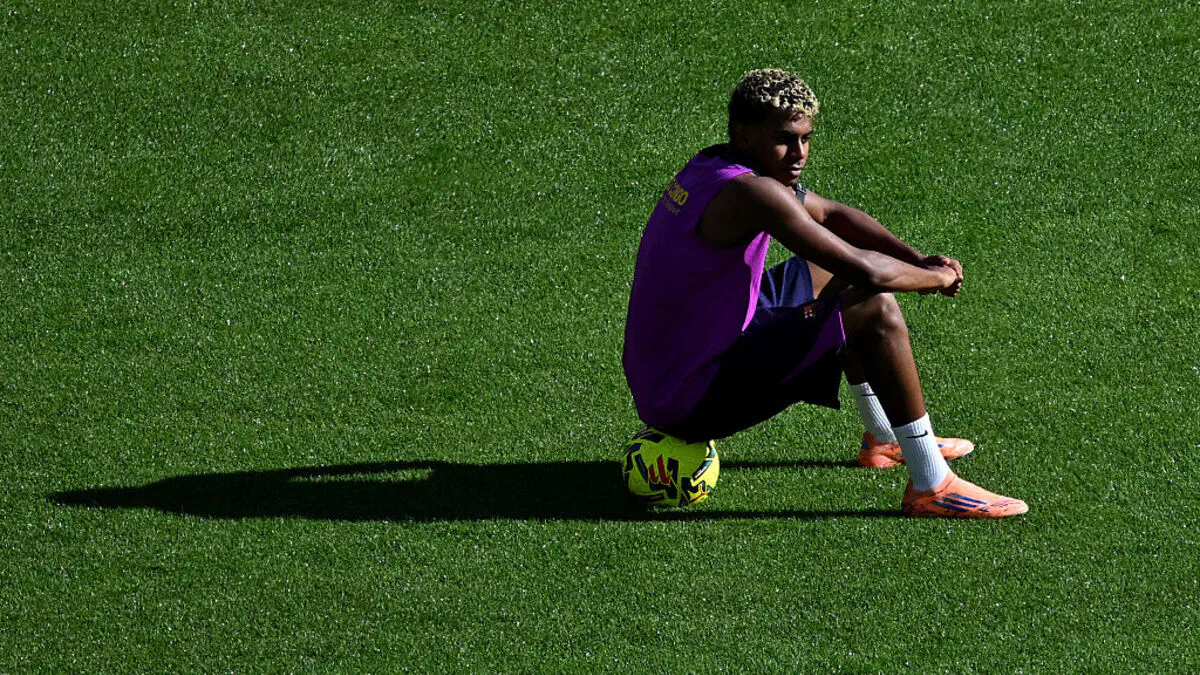
Why this now? Because a cluster of young stars (e.g., Lamine Yamal, Claudio Echeverri/Mastantuono, Nico Williams, and Cole Palmer) are feeling the same problem at the same place: the core–groin “junction.” It steals explosiveness, lingers through fixture congestion, and doesn’t respond to “two weeks off and hope.”
What is Athletic Pubalgia?
A core–groin overload injury caused by repeated cuts, decelerations, and ball-strikes. These actions create a constant tug-of-war where lower abs (rectus abdominis) meet inner-thigh tendons (adductors) near the pubic bone.
- Often called a “sports hernia.” There’s no true hernia/bulge - it’s irritated soft tissue from overload.
- Main hotspot: the shared tendon sheet (aponeurosis) between rectus abdominis and adductor longus. Shear can also irritate the pubic symphysis.
On-pitch effect: pain with cutting/turning, drop in top-end acceleration, and duller ball-striking power. Left alone, it becomes chronic. You don’t want to get to that stage..
Anatomy In Action
- Rectus abdominis (lower abs) pulls up, adductor longus (groin pulls down → constant opposing forces at the pubic junction.
- Repeated high-speed actions (cut → brake → strike) drive eccentric demand and shear across the aponeurosis (around the muscle junction) symphysis.
- The athlete “feels it” on: tight turns, step-downs, adduction exercises, sometimes even sit-up/curl-up actions, and powerful shots.
Case Studies
Lamine Yamal
- What we’re hearing: he was initially out for a two-week layoff for groin pain; he returned still not fully fit. Ongoing athletic pubalgia symptoms reported: discomfort, reduced pop.
- Read: short rest ≠ treatment. This condition needs graded strengthening + controlled re-exposure over weeks, not a quick pause-and-play cycle.
Cole Palmer
- Initial line: 2–3 weeks for a groin issue → later extended by ~6 more weeks.
- Interpretation: more complex than a simple adductor strain; pattern fits athletic pubalgia, with potential osteitis pubis if overload persisted.
- Implication: success depends on progressive strength rebuild + sport-specific loading, not just time away.
(Mastantuono / Nico Williams show similar junction-load stories this season, young, high-exposure players in congested schedules.)
Why it’s showing up more in young athletes now
- More games, less base: Strength foundations (adductors/core/hip) don’t always keep pace with match exposure, especially in the increased load for younger athletes, without the required strength to match their growth..
- Early specialisation & year-round play: Fewer true off-seasons = fewer windows to build tissue capacity and fix imbalances.
- Growth spurts: Rapid height changes alter pelvis/hip mechanics; tendons lag behind bone growth, so the rectus–adductor junction gets tugged harder.
- Modern tactics = more high-risk actions. Pressing, repeated short decels, and frequent ball-strikes/inswingers load the groin junction more than slower, possession-only styles.
What does rehab look like?
1. Calm symptoms → pain-free adductor/core activation.
2. Strength phase → adductor longus, lower abs, obliques, hip flexors/extensors; restore pelvic control.
3. On-grass progressions → linear running → controlled decel → change-of-direction → ball-striking at increasing speeds.
4. No spikes in sprinting/kicking volume; load climbs gradually.
5. Clear to return when:
- Adductor/core strength symmetrical (within accepted % thresholds),
- Pain-free max-speed cuts & strikes,
- No next-day flare.
Typical elite timeline: ~6–12 weeks when criteria are hit cleanly; longer if symptoms were simmering for months.
Selection Risk & Call-Ups
- Yamal is reportedly operating at ~50% with pain limiting movement/striking—classic ongoing pubalgia picture.
- Two weeks off rarely solves junction overload. Graded strength + controlled re-exposure is the way.
- International travel + fixture congestion = more flare risk, especially in developing athletes.
- Availability today vs. performance the next 6–8 weeks is the real trade-off.
In Summary
- Not just “a groin strain.” It’s a junction overload problem.
- Rest alone doesn’t fix it. Strength + staged football actions do.
Athletic pubalgia is a systems load issue, not a willpower test. Address the core-adductor strength balance, control re-exposure to cuts/strikes, and judge return by criteria, not dates.
Follow PhysioScout on X and Instagram if you love stuff like this!
 Physio Scout
Dailysports's expert
Physio Scout
Dailysports's expert