

Breaking Point: Inside the Premier League’s December Muscle-Injury Spike
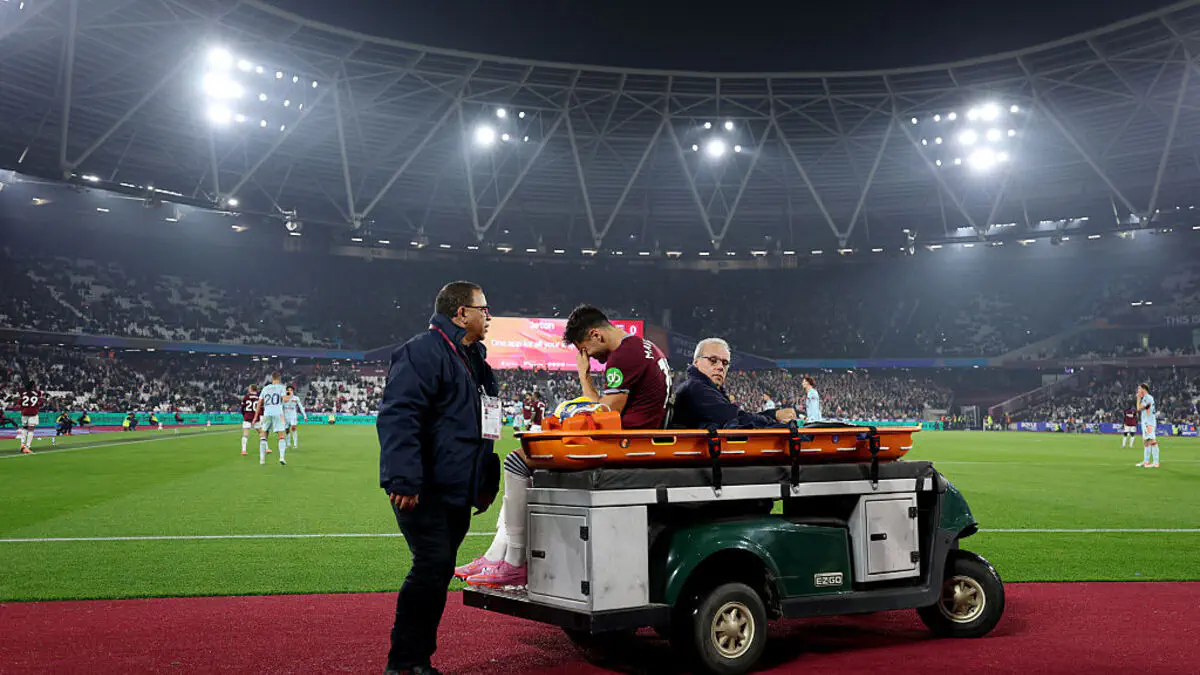
As fixtures stack up through November into December, let’s unpack what usually happens and how teams can prepare, because muscle injuries will start to hit now.
Meta description (SEO): Premier League muscle injuries surge by ~50% from November to December. We explain the science, the schedule, and the signals performance data flags before breakdowns happen — plus what clubs can actually do about it.
TL;DR
Pattern: Muscle injuries rise by ~50% from November to December.
Why: Fixture congestion shrinks recovery time; braking, reactivity, and power decline.
Signals: Midweek dips in force-absorption and jump metrics → higher soft-tissue risk.
Fix: Smarter rotation, tactical load management, and evidence-based recovery windows.
Setting the Scene
Every winter, the Premier League becomes both a spectacle and a stress test. The football is relentless; the margins, microscopic. And the athletic toll? Predictable. Across multiple seasons, soft-tissue injuries climb sharply as the calendar flips from November to December.
This isn’t superstition or scapegoating. It’s a convergence of biology and scheduling: more matches, less time to recover, and neuromuscular systems that can adapt, but not endlessly.
What the Data Says
High-performance testing (think: jump assessments, force plates, asymmetry checks) paints the same picture each year:
- Braking ability drops. Players become less efficient at absorbing force when they cut, land, or decelerate.
- Reactivity slows. More time spent on the ground per step/jump, less elastic “bounce.”
- Explosive power dips. Jump height and peak output sag through December.
Put together, those trends put more strain on hamstrings, groin, and knees. Meaning more hamstring strains, quad strains, and potential ACL injuries, etc. Cue the spike.
Why December Is Different
1) Congestion compresses recovery
The issue isn’t just “more games.” There’s less recovery between them. Micro-damage doesn’t fully repair, so players start the next match a little less resilient.
Midweek is the trap: Data often shows the lowest braking scores on
Tuesdays/Wednesdays, right when clubs squeeze in extra fixtures, whether that be extra Premier League games, or Champions League games.
2) Fatigue hides in milliseconds
You won’t always see it with the naked eye. But reactivity metrics (e.g., flight-time:contact-time) tell you when players are staying on the ground longer. That small delay multiplies forces through the lower limb, rep after rep.
3) Power lags behind “how you feel”
Athletes can feel ready while their neuromuscular system is still under-recovered. In December, jump height and peak power frequently lag, a classic setup for strain under match stress.
Key Numbers
~50%: Average rise in muscle injuries (especially hamstrings) from November → December
Midweek low: Braking/force-absorption metrics dip most on Tues/Wed
High-risk tissues: Hamstrings, adductors (groin), calves, plus knees via deceleration load
Late-game exposure: Risk climbs when fatigue peaks and power fades
The Human Side
Elite athletes push extraordinary limits, but they’re not machines. As Heung Min Son said recently, “We’re not robots… when you’re not fully ready, the risk is massive.” The festive schedule asks for peak outputs with shrinking recovery windows. Something has to give, and too often, it’s soft tissue injuries.
How Teams Can Actually Reduce Risk
1) Respect the midweek dip
Use objective testing (jump/force) on match-eves to set traffic lights (green/amber/red).
Adjust minutes and role (e.g., fewer decel-heavy actions) for amber/red profiles.
2) Rotate with purpose, not panic
Plan rotation by position-specific load (wide players & eights often accumulate the most high-speed decels).
Prioritise role stability: small tactical tweaks can lower high-risk actions without changing the XI wholesale.
3) Periodise “rebound windows”
Build at least one true recovery day after peak-load fixtures.
Short, high-quality neuromuscular primers beat long “fitness” sessions when the calendar is stacked.
4) Chase “better sleep,” not just “more sleep”
Late kickoffs + travel = circadian chaos. Standardise sleep timing, light exposure, and nutrition in the 24–48h post-match.
5) Screen what matters
Use simple, repeatable tests: single-leg countermovement jump, contact time (how long feet stay on the ground), braking index (force absorption).
If force-absorption + contact time both worsen, manage minutes before “tightness” appears.
What Fans Should Watch For
Precautionary subs for “tightness” in December are often early warnings, not overreactions.
Short turnarounds after televised midweek games? Expect heavier legs, more rotation, and more “niggles.”
Players returning “on time” might still lack pop - the eye test can lie when power metrics are depressed.
The Bottom Line
December doesn’t just test fitness; it tests force management. When braking, reactivity, and power sag together, tissues stop buffering load and start bearing it. That’s why the injuries cluster - not by coincidence, but by design of the calendar.
More fixtures → higher fatigue → more breakdowns.
When recovery finally returns, performance metrics climb - and the injury curve bends back down.
Glossary
Braking ability: How well a player absorbs force when slowing/cutting/landing. Lower = higher tissue stress.
Reactivity (FT:CT): Flight time vs contact time; longer ground contact = slower “bounce.”
Explosive power: Peak output in jumps/sprints; tends to trough in December.
Congestion: Multiple matches per week; shrinks recovery windows.
 Physio Scout
Dailysports's expert
Physio Scout
Dailysports's expert