

Man City aren't alone: which clubs have already been punished — and who could be next?
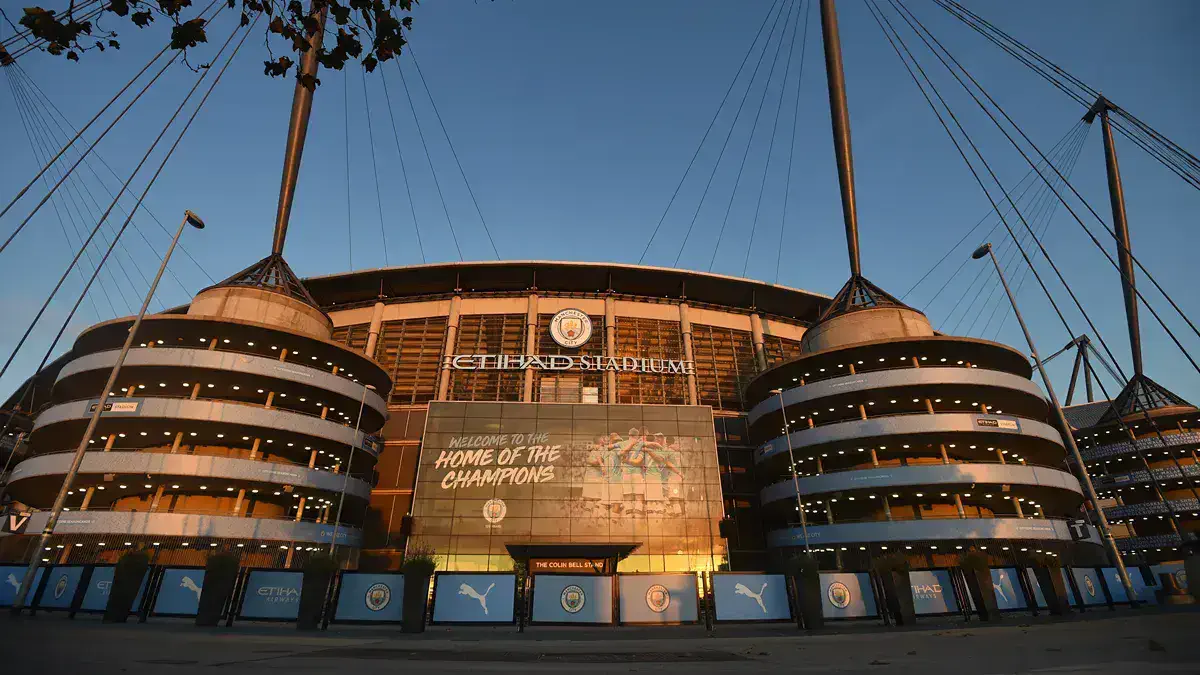
Following the high-profile ruling in the Manchester City case, we look back at how financial violations have already cost Chelsea, Everton, Nottingham Forest and Juventus money, points and European places, while also examining why PSG, Barcelona, Newcastle and Aston Villa deserve particularly close attention.
Financial rules in football long seemed like a secondary matter — it appeared they almost never affected what happened directly on the pitch. The past few years have completely shattered that illusion.
Everton and Nottingham Forest have lost points in the Premier League, Juventus lost points in Serie A and was left without European football, while Chelsea faced multimillion-pound fines and transfer restrictions. Now, an extremely serious case has reached Manchester City.
On September 29, 2026, the Premier League officially announced that an independent commission had found City guilty on all charges relating to serious breaches of the league’s financial rules over nine seasons, as well as on the majority of charges concerning its failure to cooperate with the investigation. According to the commission’s findings, between the 2009/10 and 2017/18 seasons, the club used fictitious commercial agreements, inflated revenues, understated expenses and submitted financial reports that did not reflect the true state of affairs. The cumulative effect of the schemes exceeded £900 million. Manchester City categorically denies the findings and intends to appeal the decision. A separate hearing on the punishment is still to come.
This case cannot be meaningfully compared with other proceedings involving a straightforward breach of a financial limit. In one case, a club simply spent more than the rules allowed. In another, the regulator is talking about inaccurate reporting, concealed payments or the deliberate distortion of revenue structures. The potential punishment depends not only on the amount involved, but also on the nature of the violation, its duration, the club’s cooperation and whether the commission believes there was an attempt to circumvent the rules.
Manchester City: a case with almost no direct precedent
The most important detail in the current situation is that the Premier League is no longer speaking merely of suspicions. The commission found that sponsorship and other commercial agreements were used as part of a concealed-financing scheme, that some of the club’s actual expenses were not properly reported, and that the owner, Abu Dhabi United Group, effectively covered sums that were presented differently in the accounts. The commission also concluded that, had all transactions been recorded correctly, City would have significantly exceeded both Premier League and UEFA financial limits.
Another difference from many previous cases is the club’s conduct during the investigation. The commission upheld three of four separate blocks of charges relating to a failure to cooperate and act in good faith. By comparison, voluntary disclosure of violations and active cooperation were among the main factors that allowed Chelsea to avoid a far more severe sporting punishment.
The Premier League explicitly states that the independent commission has broad discretion in choosing a sanction: this could include fines, points deductions and other sporting penalties. City’s sanction will be determined at a separate hearing.
What Manchester City face. Moderate scenario — a huge financial fine, coverage of substantial legal costs, restrictions on sporting activity and a comparatively small points deduction. Most likely scenario, provided the commission’s key findings survive the appeal, — a significant sporting sanction in the form of a major points deduction combined with financial restrictions: once a systemic pattern of violations has been established, it would be difficult to explain closing the case with a fine alone, especially against the backdrop of punishments handed down in less serious cases. Most critical scenario — a sanction that effectively leads to relegation, or even the club’s suspension or expulsion from the Premier League. Such powers are being discussed among the possible consequences of the case, although no final decision has yet been made.
Chelsea: perhaps the most useful precedent for understanding the City case

Chelsea’s history is particularly interesting because this was not simply a matter of overspending either. After the change of ownership in 2022, the club’s new leadership uncovered transactions dating back to the Roman Abramovich era whose details had not been fully reflected in the financial documentation, and voluntarily reported them to the football authorities.
In 2023, UEFA established that Chelsea had submitted incomplete financial information regarding historic transactions from 2012–2019. The club agreed to pay €10 million. The decisive factor was that the violations were uncovered by the new owners, who themselves approached UEFA.
But the case did not end there. In March 2026, the Premier League announced two separate sanction agreements. Chelsea accepted fines totalling £10.75 million, an immediate nine-month ban on certain player transfers into the academy and a one-year ban on registering first-team players, suspended for two years. The league placed particular emphasis on the club’s voluntary self-reporting and “exceptional cooperation”. At the same time, the investigation showed that these historic transactions had not resulted in a breach of the PSR limit applicable at the time.
In July 2026, a separate FA case was also concluded: the club admitted 74 breaches of rules concerning agents, intermediaries and third-party investments. Chelsea were fined a further £10 million. An initial suspended six-point deduction was overturned on appeal and replaced with a suspended ban on registering new players for two transfer windows until June 30, 2027.
At the same time, the current Chelsea has already been sanctioned by UEFA under an entirely different set of new financial sustainability rules. In 2025, the club entered into a four-year settlement agreement for failing to comply with the football earnings rule: the maximum financial sanction is €80 million, of which €20 million is unconditional. The club also paid €11 million for exceeding the squad cost ratio in force at the time. In June 2026, UEFA fined Chelsea a further €3 million, €2 million of which is conditional, for exceeding the 70% squad-cost threshold. This is a separate matter, not directly connected to violations from the Abramovich era.
What punishment did Chelsea receive. For the historic violations — €10 million from UEFA, £10.75 million from the Premier League, £10 million from the FA, immediate restrictions involving the academy and several conditional transfer bans. The club avoided an actual points deduction. This case shows just how significant a change of ownership, voluntary identification of a problem, admission of violations and full cooperation can be for a regulator.
Everton: the first signal that points are no longer untouchable

If Chelsea is an example of punishment for reporting problems and concealed payments, Everton demonstrates another side of financial control: directly exceeding the permitted losses.
In November 2023, an independent commission initially deducted ten points from Everton for breaching the Profitability and Sustainability Rules. It was established that the club’s calculated losses stood at £124.5 million against an allowable threshold of £105 million. Following an appeal, the punishment was reduced to six points.
The following year, Everton received a further two-point deduction for another reporting period in which the club admitted exceeding the limit by £16.6 million. The remaining disputed issues in the case were finally closed by the Premier League in January 2025.
What punishment did Everton receive. In total, the club lost eight points: six for the first case and another two for the second. In comparison with City, it is important to note that there was no established, multi-year system of concealed financing here — the issue was an excess of permitted losses. Even for such a violation, the Premier League deemed a sporting punishment appropriate.
Nottingham Forest: four points even with cooperation from the league
Nottingham Forest breached the PSR for the period ending with the 2022/23 season. The club’s permitted threshold was lower than the standard £105 million because the team spent part of the three-year cycle in the Championship. Forest exceeded its own limit by £34.5 million.
The commission separately recognised the club’s “exceptional cooperation” with the Premier League, but that did not save it from a sporting sanction. In March 2024, the team lost four points, and in May the appeals body left the decision unchanged.
What punishment did Nottingham Forest receive. Four points in the 2023/24 season. This example matters to the City case for another reason: even active cooperation and an admission of wrongdoing did not guarantee the absence of a points penalty. They merely helped reduce it.
Juventus: when a financial scandal costs both points and Europe
The Italian example is even closer to what City fans fear most, as Juventus faced both domestic and international consequences at once.
In 2023, the case concerning so-called plusvalenze — the accounting treatment of capital gains from transfer operations — led to a lengthy legal process. Juventus were initially handed a 15-point deduction, the decision was reviewed, and after a retrial the Italian Football Federation imposed a final ten-point deduction in Serie A for the 2022/23 season.
UEFA later concluded that Juventus had breached its regulatory framework and a previous settlement agreement. The Turin club were excluded from UEFA men’s club competitions for the 2023/24 season and ordered to make a financial contribution of up to €20 million, half of which was conditional.
What punishment did Juventus receive. Ten points in Serie A, exclusion from European competitions for the 2023/24 season and a UEFA financial sanction. This is one of the clearest demonstrations that no major club enjoys untouchable status: when a violation is serious enough, the regulator can move from financial penalties to direct intervention in sporting results.
Who could be hit next?
After the cases involving Everton, Forest, Juventus and, above all, the current City proceedings, financial discipline no longer looks like a formality. But it is important to distinguish between clubs that have already been given specific requirements and those about whom we can speak only in terms of potential risk.
Barcelona: little time left to put things right

Barcelona’s financial problems have long been no secret, but in the UEFA context, what matters is not the club’s debts themselves, but specific regulatory indicators.
Back in 2023, UEFA fined the Catalans €500,000 for incorrectly reporting income from the sale of intangible assets, which could not be counted as relevant revenue under the financial rules. Barcelona appealed the decision, but the CFCB Appeals Chamber upheld the fine.
A much more serious warning came in July 2025. UEFA established that Barcelona had failed to comply with the football earnings rule for the 2023 and 2024 financial years. The club entered into a two-year settlement agreement with a total potential sanction of €60 million, of which €15 million is unconditional. The ultimate goal is full compliance with the rules in the 2026/27 season. The agreement also provides for restrictions on registering new players on the List A for UEFA competitions, while failure to meet interim targets could lead to more severe measures, including exclusion from the next European competition for which the club qualifies.
Three scenarios for Barcelona. Moderate — meeting most of the targets while being required to pay an additional part of the conditional financial sanction. Most likely if the club deviates from the approved plan again — an additional fine combined with tighter restrictions on the squad list for European competitions. Most critical — failure to meet the key terms of the settlement agreement and exclusion from the next UEFA competition. This is not an abstract sanction: it is directly provided for by the agreement’s mechanism.
Newcastle: owners’ money does not mean freedom to spend

After coming under the control of Saudi Arabia’s Public Investment Fund, Newcastle gained an owner with practically unlimited financial resources. But modern UEFA rules are designed precisely so that an owner’s financial strength does not automatically give a club the right to spend any amount it wishes.
In June 2026, UEFA established that Newcastle had failed to comply with the football earnings rule over the three-year cycle covering the 2023–2025 financial years. The club entered into a three-year settlement agreement and must achieve full compliance by the 2028/29 season. The total financial sanction is €10 million, of which €7 million is conditional. Restrictions on registering new players on the List A are also in place.
That same summer, Newcastle received an additional €3 million fine for exceeding the 70% squad cost ratio for the 2025 calendar year. UEFA explicitly recorded the possibility of tightening registration restrictions and even excluding the club from the next European competition if it fails to meet the agreement’s interim targets.
Three scenarios for Newcastle. Moderate — the club stays on UEFA’s required trajectory but pays part of the conditional €7 million and continues to operate under squad restrictions. Most likely in the event of another breach — activation of a larger portion of the conditional sanction plus stricter rules on registering players for European competitions. Most critical — failure to meet the final targets by 2028/29 and exclusion from the next UEFA competition for which the team qualifies.
Aston Villa: warnings are already turning into sanctions

Aston Villa may be even more illustrative than Newcastle, as the squad-cost rules were breached in two consecutive years.
In July 2025, UEFA established that the Birmingham club had failed to comply with the football earnings rule and entered into a three-year agreement with them: the total potential financial sanction was €20 million, of which €5 million was unconditional. The club also received a separate €6 million fine for a squad cost ratio between 80% and 90% in 2024.
In 2026, the squad-cost limit fell to 70%, and Villa exceeded it again. UEFA classified the breach as significant: the total sanction is €22.5 million, of which €15 million is conditional. The club also received restrictions on registering new players on the List A for the 2026/27 European season.
Three scenarios for Aston Villa. Moderate — a rapid reduction in the share of spending on the squad and payment of only the unconditional part of the sanctions. Most likely in the event of another minor breach — activation of the conditional millions and the continuation or tightening of registration restrictions. Most critical — systematic failure to meet the settlement agreement’s targets, after which UEFA could move to its most painful instrument: exclusion from European competitions.
PSG: everything is fine for now, but the issue is not only the numbers

PSG is the most nuanced case on this list. It would be wrong to claim that the Paris club currently faces a new financial punishment.
On the contrary, UEFA’s latest official data on PSG is positive. In 2022, the Parisians were among the clubs that failed to meet the old break-even requirement. PSG agreed to a settlement agreement with a maximum financial sanction of €65 million, €10 million of which was unconditional. The club subsequently met its interim targets, and in June 2026 UEFA officially confirmed that PSG had fulfilled the final football earnings rule requirement and exited the settlement regime.
Therefore, there is currently no basis for placing PSG in the same category as Manchester City, a club already facing an active case of comparable scale.
However, another issue surrounds the Paris club — an institutional one. PSG president Nasser Al-Khelaifi is simultaneously chairman of European Football Clubs and a member of UEFA’s Executive Committee as the representative of the club organisation. His membership of the Executive Committee has been officially confirmed by UEFA and remains in force under the body’s current composition.
This proximity inevitably raises questions about the perception of a potential conflict of interest. But it is important not to cross the line between a question and a claim: Al-Khelaifi’s status in itself is not proof that PSG receives special treatment. Moreover, UEFA has historically already imposed major fines on the club.
Financial cases involving clubs are handled by the Club Financial Control Body. Under UEFA rules, its members must be impartial and independent, and the body itself has separate First Chamber and Appeals Chamber divisions. Al-Khelaifi is not a member of the CFCB. At the same time, the composition of the financial control body is determined within the UEFA system, and its members are elected by the Executive Committee, meaning transparency in any future PSG case will be especially important for the regulator’s reputation.
In other words, PSG’s paradox is that the numbers currently speak in its favour: the club has just successfully exited the financial monitoring regime. But the combination of enormous spending, capital originating from a state-owned source and the club president’s prominent position in the European football system means that any new deviation from the rules would automatically come under the microscope.
Three scenarios for PSG in the event of a future new violation. Moderate — a fine or withholding part of the revenue from UEFA competitions. Most likely for an ordinary breach of the financial sustainability rules — a new settlement agreement with a financial contribution, clear interim targets and conditional restrictions on player registrations. Most critical — a serious or repeated failure to meet the requirements, resulting in exclusion from a future European competition. But these are only hypothetical scenarios: as of now, PSG has fulfilled its latest financial agreement with UEFA, and no active proceedings comparable to the City case have been publicly announced against the club.
A financial era with no untouchables?
The main conclusion of recent years is not that every wealthy club will inevitably be punished sooner or later. It is that financial regulators have gradually learned to use sanctions that genuinely affect the sporting side of football.
Everton and Nottingham Forest showed that exceeding permitted losses can cost a club points. Juventus showed that a financial and accounting scandal can leave a giant without European football. Chelsea showed that voluntary disclosure and cooperation can radically soften the consequences even in a serious historic case.
Barcelona, Newcastle and Aston Villa demonstrate UEFA’s new model: first a fine and a multi-year agreement with specific targets, then registration restrictions, and if the club fails to improve — the possibility of exclusion from European competitions. French club Marseille were already handed a conditional ban from the next UEFA competition in June 2026 if they fail to meet a financial target in the 2026/27 season, proving that the top rung of this punishment system is entirely real.
Finally, the Manchester City case could establish an entirely different standard. Here, the commission is not talking about an excess of a few tens of millions over a limit, but about a multi-year system that distorted revenue and expenses by more than £900 million, as well as attempts to obstruct the investigation. That is why the previous punishments imposed on Everton, Forest, Chelsea or even Juventus are only reference points, not a ready-made formula.
The question is no longer whether a major club can receive a serious punishment. The history of recent years has provided an unequivocal answer. The real question is: how far are football regulators prepared to go when the violation involves one of the most successful and influential clubs in the world.
 Steven Perez
Dailysports's expert
Steven Perez
Dailysports's expert