


Goodbye to traditional cards? Referee shocks football world with revolutionary invention
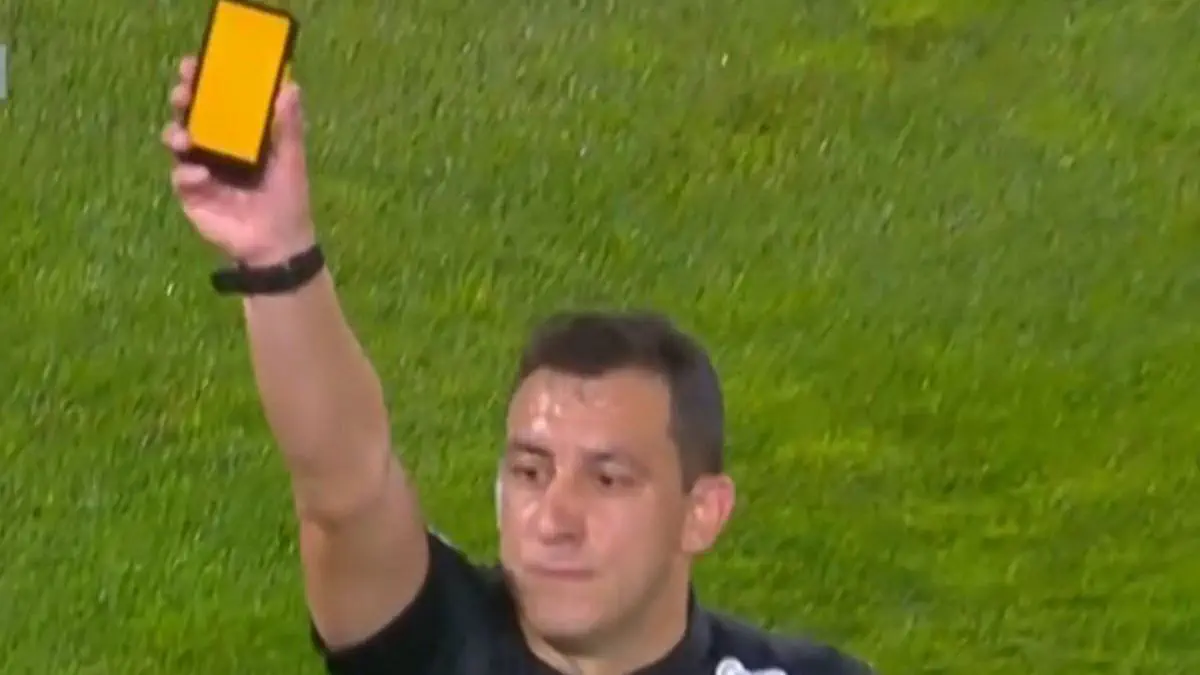
Football may have just witnessed the beginning of a remarkable revolution. A referee in Uruguay has stunned fans by replacing traditional yellow and red cards with an electronic device during an official competitive match.
Details: An innovative digital card system was tested during the Copa AUF Uruguay match between Nacional and Rentistas on October 15. Referee Eduardo Varela used an electronic device resembling a smartphone to display disciplinary sanctions instead of the familiar cardboard cards. The historic first booking came in the 12th minute, when Rentistas player Juan Pablo Plada received a yellow card for a foul on Maxi Silvera. Nacional went on to win the round of 16 encounter 3:0 at the Gran Parque Central stadium in Montevideo.
The unusual technology is part of a project supported by the Uruguayan Football Association and developed in collaboration with a private technology company. The device contains two buttons that allow referees to display either a yellow or red card on its screen. However, its purpose goes beyond simply replacing traditional coloured cardboard. Every disciplinary decision is automatically registered in the system used to record official match events.
The electronic tool is connected to COMET, the competition management platform used by the Uruguayan Football Association. Referees can also record substitutions, penalties, goals and other match incidents using the same device. This significantly reduces the need for handwritten notes and subsequent manual data entry. According to refereeing official Marcelo De León, the long term ambition is to make match information available almost instantly to the association and eventually to media organisations.
Interestingly, the technology does not require a conventional WiFi connection to function. That makes it potentially useful in stadiums with limited connectivity and at lower levels of football. The development could eventually simplify the administrative responsibilities of match officials, allowing them to manage different types of information through a single electronic system.
However, the experiment has already revealed an important weakness. The screen can be difficult to see from a distance, particularly under strong sunlight. An earlier trial during a match involving Defensor Sporting and Plaza Colonia encountered visibility problems that prevented the referee from using the device properly. Even during the nighttime encounter between Nacional and Rentistas, some observers reported that the displayed colours were not entirely clear from the stands.
For that reason, the introduction of digital cards remains an experimental project rather than a confirmed replacement for traditional disciplinary equipment. Developers and refereeing authorities will need to improve screen visibility and assess practical reliability before considering wider use. Nevertheless, the first successful demonstration during an official match has generated considerable curiosity about the future of football officiating.
It's worth noting that the first electronic yellow card in the Nacional versus Rentistas match was shown by referee Eduardo Varela to Juan Pablo Plada after just 12 minutes. The system automatically recorded the caution in the association's digital platform. Uruguay's initiative remains in a testing phase, with further improvements needed before the technology can potentially expand to other competitions.
Reminder: VAR nightmare drags on! South African football hit by another delay.
 Miguel Solomons
Dailysports's expert
Miguel Solomons
Dailysports's expert



