
The Viking fairytale: from financial catastrophe to a Champions League sensation
Just eight years ago, Norwegian club Viking were playing in the second tier, carrying enormous debts and standing on the brink of bankruptcy. Now the team from the small city of Stavanger are competing in the Champions League and taking points off Bayern Munich. Behind this incredible transformation are two head coaches, a former Manchester United player and a captain who has travelled with the club from the depths of football to the European elite.
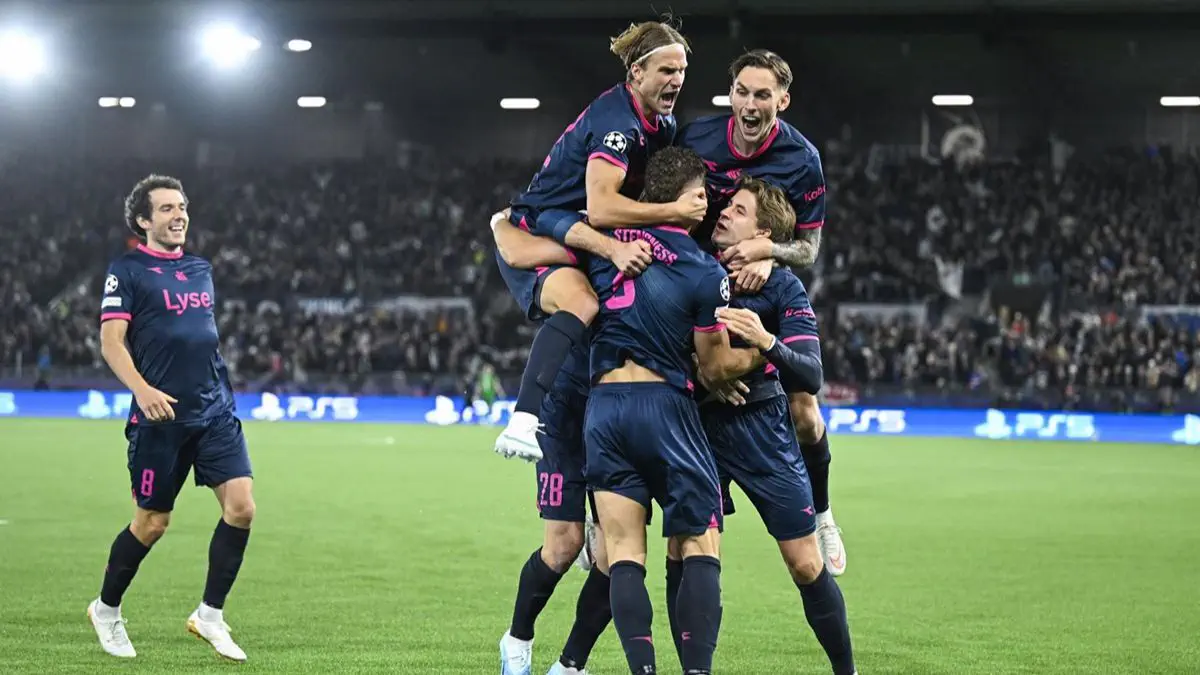
On October 13, 2026, one of the most unexpected matches of this season's Champions League took place in Stavanger, Norway. Local side Viking, making their debut in the league phase of Europe's premier club competition, drew 3-3 with Bayern Munich.
Vincent Kompany's team could easily have left Norway without dropping any points at all. The hosts opened the scoring in just the second minute and doubled their advantage before half-time. Bayern managed to complete the comeback and went 3-2 ahead, but conceded a third goal in the 90th minute.
The numbers only underline the scale of the shock: 65% possession, 25 shots to eight and an expected-goals figure of 3.51 to 0.56 in favour of the German giants. Yet the scoreboard read 3-3.
But the result is not even the most fascinating part of this story. Just a few years ago, the club now competing on equal terms with one of the Champions League's main favourites was a step away from financial collapse.
One of Norway's most decorated clubs nearly disappeared
Viking are far from being a random club from a small footballing nation. Their history began on August 10, 1899, and in terms of league titles they rank among Norway's most successful teams.
The 20th century was particularly bright for the club. Between 1972 and 1975, Viking won the national championship four times in a row. In 1979, they completed a domestic double, and in 1991 they claimed their eighth league title.
The Norwegians also enjoyed some memorable European nights.
In 1992, Viking faced Barcelona in the European Cup. The Catalans won the home leg by just 1-0, while the teams played out a goalless draw in Norway.
An even greater shock followed in 2002. In the UEFA Cup, Viking eliminated Chelsea, then managed by Claudio Ranieri. After losing 2-1 at Stamford Bridge, the Norwegians won 4-2 at home. Erik Nevland scored twice that night — the man who would later play an extremely important role in the club's revival.
It seemed that such a historic legacy guaranteed Viking a stable place among Norway's leading clubs.
But everything proved far more complicated.
Debts totalling tens of millions and the threat of bankruptcy
Stavanger is often called Norway's oil capital. It is an affluent city in the country's southwest, home to major energy companies.
And the region's financial prosperity ended up playing a cruel trick on its football club.
For many years, Viking's management spent significant sums trying to restore the team's former glory. They signed expensive players, increased wages and relied on constant backing from sponsors.
In 2004, the club moved into a new stadium that was meant to symbolise its ambitions. But maintaining a modern arena required enormous sums of money.
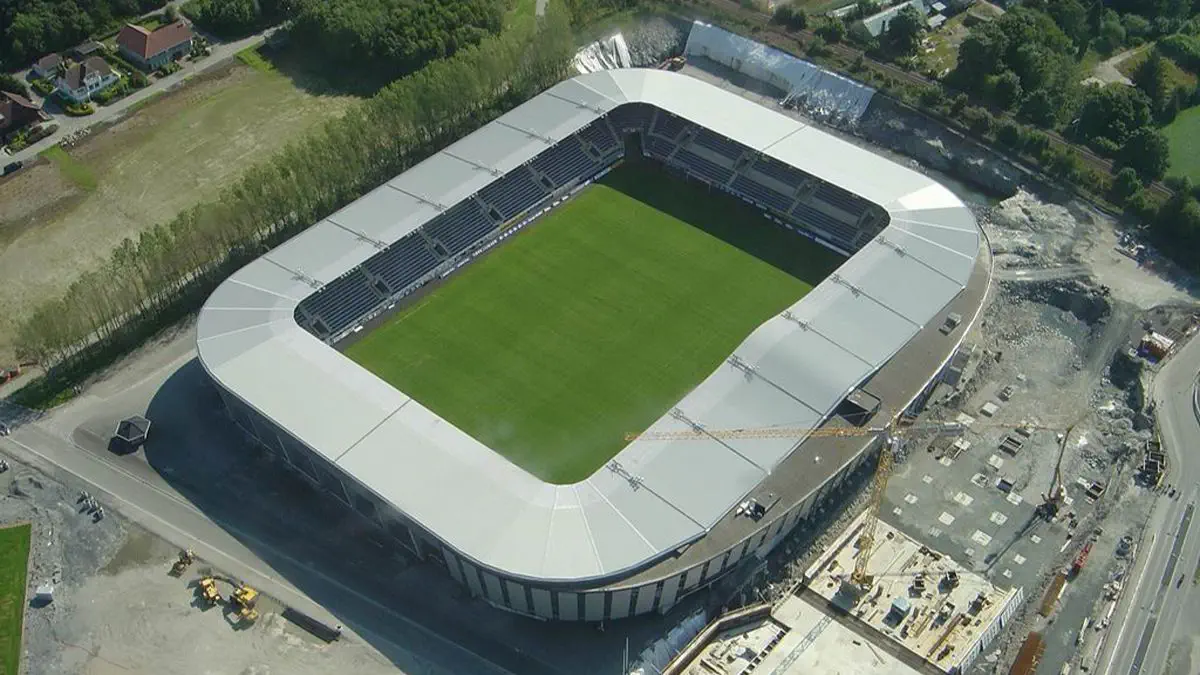
Between 2004 and 2010 alone, Viking spent approximately 124 million Norwegian kroner ($13 million) on player purchases, while sales brought in around 54 million kroner ($5.65 million).
On top of that came wages and stadium expenses, which reached 12–17 million kroner ($1.26–1.78 million) per year.
The sporting results did not match the investment. As a result, the club became increasingly dependent on loans and the support of wealthy investors.
In 2017 the situation reached a critical point.
Viking finished bottom of the league and were relegated from the top division for the first time in 29 years. Losing their place among the elite also meant a drop in revenue at a time when money was already in desperately short supply.
At the start of 2018, according to Josimar, the debts of the company responsible for running the club stood at around 75 million Norwegian kroner ($7.85 million). Bankruptcy was a very real possibility.
The city even discussed the possibility of selling the stadium to save the club.
Ultimately, Viking stayed afloat thanks to the backing of local investors, sponsors and the municipality. In particular, SR-Bank signed an expanded sponsorship agreement worth 15 million kroner ($1.57 million), part of which was used to install a new artificial playing surface at the stadium.
But saving the club from bankruptcy was only half the battle. Now they had to learn how to survive without constant financial injections.
Back to their roots: homegrown players instead of expensive stars
Relegation to the second tier was painful for Viking, but it was also a necessary reset.
The club's management began cutting costs, changed its approach to squad-building and put its faith in young footballers, above all players developed in its own academy.
The rebuilding project was led by Bjarne Berntsen — a man who had previously worked at the club in various roles and understood its character inside out.
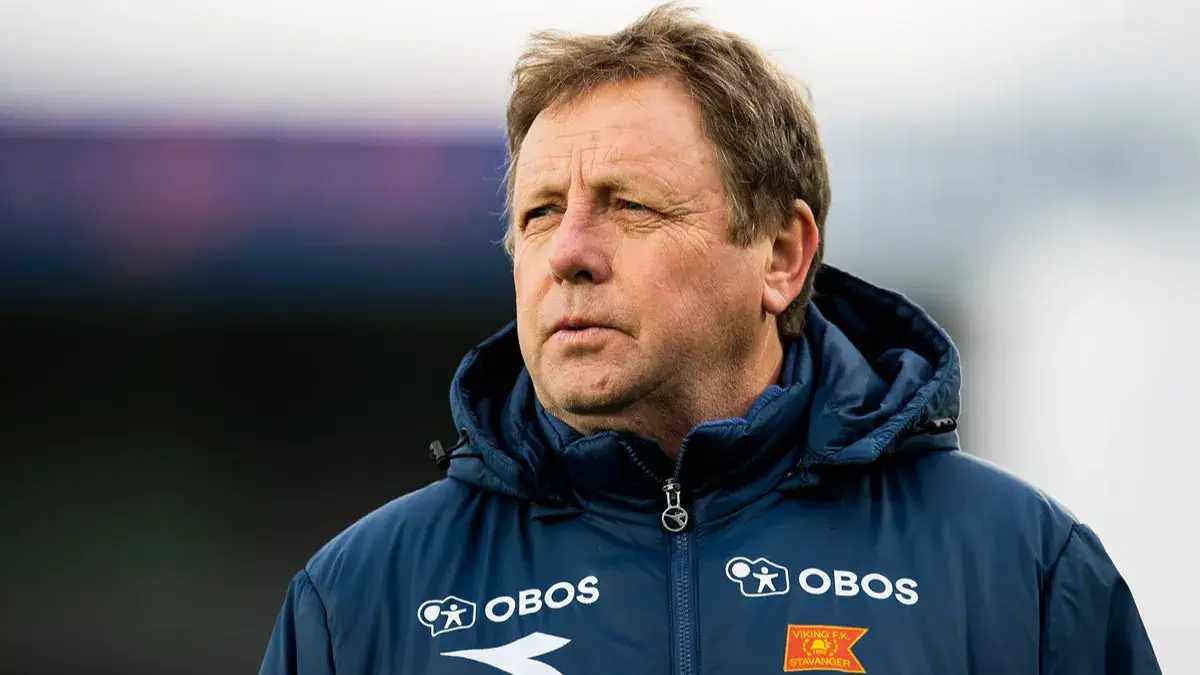
In 2018, the team were playing in Norway's second tier, but instead of sliding further, they began to win back the trust of their supporters.
Even at that level, the support remained remarkable. More than 15,000 spectators attended the May match against Sandnes Ulf. The young side did not find consistency immediately. At one point, the team lost four matches in a row, including a 5-0 thrashing by Nest-Sotra.
However, Viking weathered the crisis and finished the season in first place, returning to the top flight at the first attempt.
And the following year, something happened that nobody had expected not long before.
In 2019, the team won the Norwegian Cup, beating Haugesund 1-0 in the final. The decisive penalty was converted by Zlatko Tripic.
That footballer became one of the main symbols of the new Viking.
Zlatko Tripic — the captain who stayed when things were at their hardest
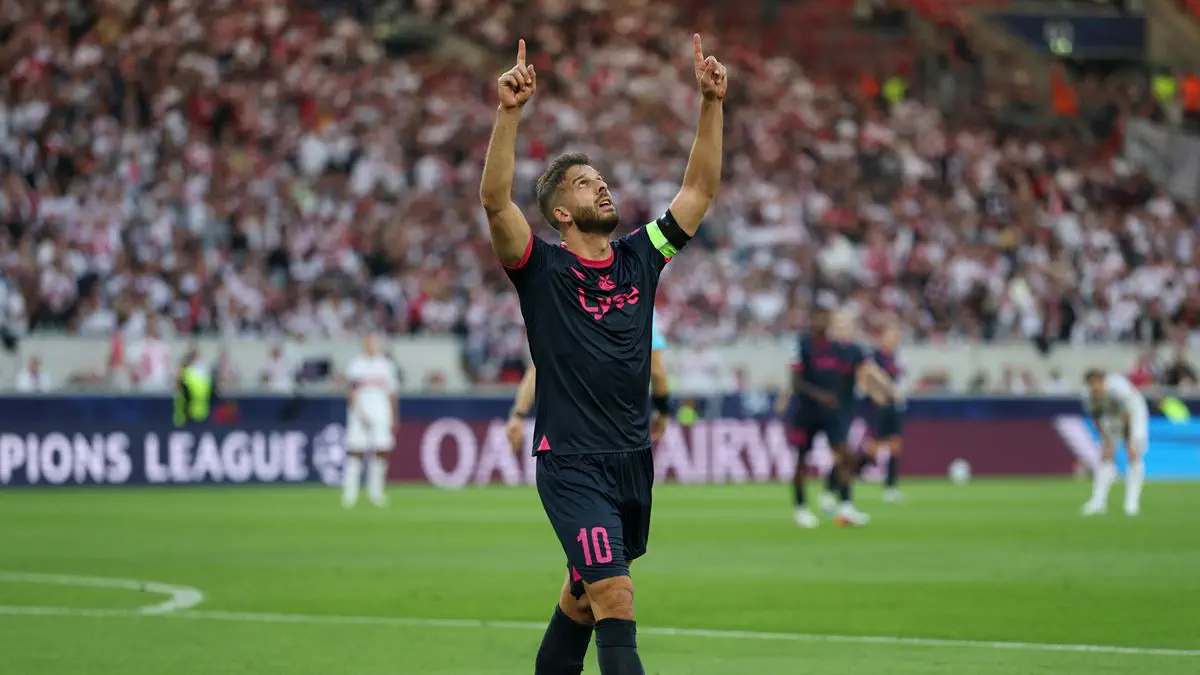
Tripic's story deserves special attention.
He joined Viking at the start of 2018, when the team were going through the most difficult period in their modern history. He was only 25 at the time, but in the young squad he was already regarded as one of the more experienced players.
The footballer helped the club return to the top flight and win the Norwegian Cup. He later left Norway briefly to play in Turkey, but eventually returned to Stavanger.
Over the years, he developed into a genuine leader of the team.
Tripic does more than score goals and provide assists. He embodies the connection between the team and the city that experienced the financial disaster and sporting decline alongside it.
In the 2025 championship season, the captain became one of Viking's most important players. Now, in the Champions League, he walks out against opponents he could only have dreamed of facing eight years ago.
It was Tripic who provided two assists in the match against Bayern, including the set-up for Herman Haugen's decisive equaliser.
After the match, the captain told Norwegian television:
“I could have played another 90 minutes. I am incredibly proud. I have waited for this moment for 34 years.”
And it is not difficult to understand him.
Two head coaches and a presentation featuring wolves: how Viking found their winning formula
Perhaps the most unusual feature of the current Viking side is that the team are managed by two head coaches simultaneously.
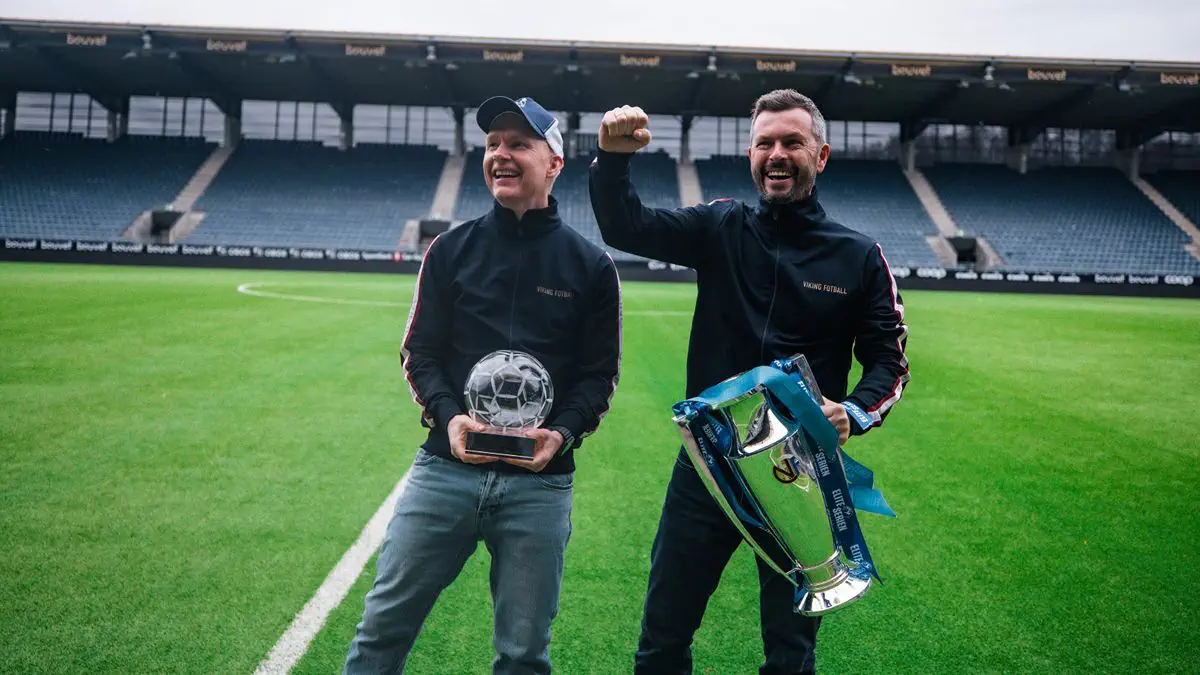
They are Bjarte Lunde Aarsheim and Morten Jensen.
They met long before working together at Viking. One had once played for the club and later worked in banking. The other had experience in the oil and gas industry.
As early as 2012–2013, the friends discussed the idea of one day managing a football team together.
That dream came true in November 2020.
After Berntsen was dismissed, the club began searching for a new manager. Aarsheim and Jensen, who had worked as his assistants, were supposed to attend separate interviews. But they offered the board an unexpected solution — appoint both of them.
The coaches prepared a 120-page document outlining their detailed vision for the team's development.
The presentation contained one particularly interesting slide.
It showed a flock of sheep followed by two wolves. The coaches explained to the board that the opponents were the sheep, while they wanted to become the wolves who would change the rules of the game.
It sounded rather overconfident for a club that had only recently narrowly avoided bankruptcy. But the management took the risk.
The two head coaches were given equal authority.
At the same time, they divided the responsibilities: Aarsheim focuses more on organising the defence, while Jensen is responsible for attacking play. In official line-ups, they take turns — Aarsheim is listed as head coach for one match, and Jensen for the next.
In football, where even one ambitious coach can sometimes struggle to see eye to eye with the board, such a system looks highly unusual. But in Stavanger, it works.
The coaches have built a fearless team that is not afraid to take risks and attack with numbers. At the same time, they focus on developing players rather than signing expensive recruits.
And this approach began to deliver results.
A former Manchester United player helped build a championship-winning team
Another key figure in Viking's revival is sporting director Erik Nevland.
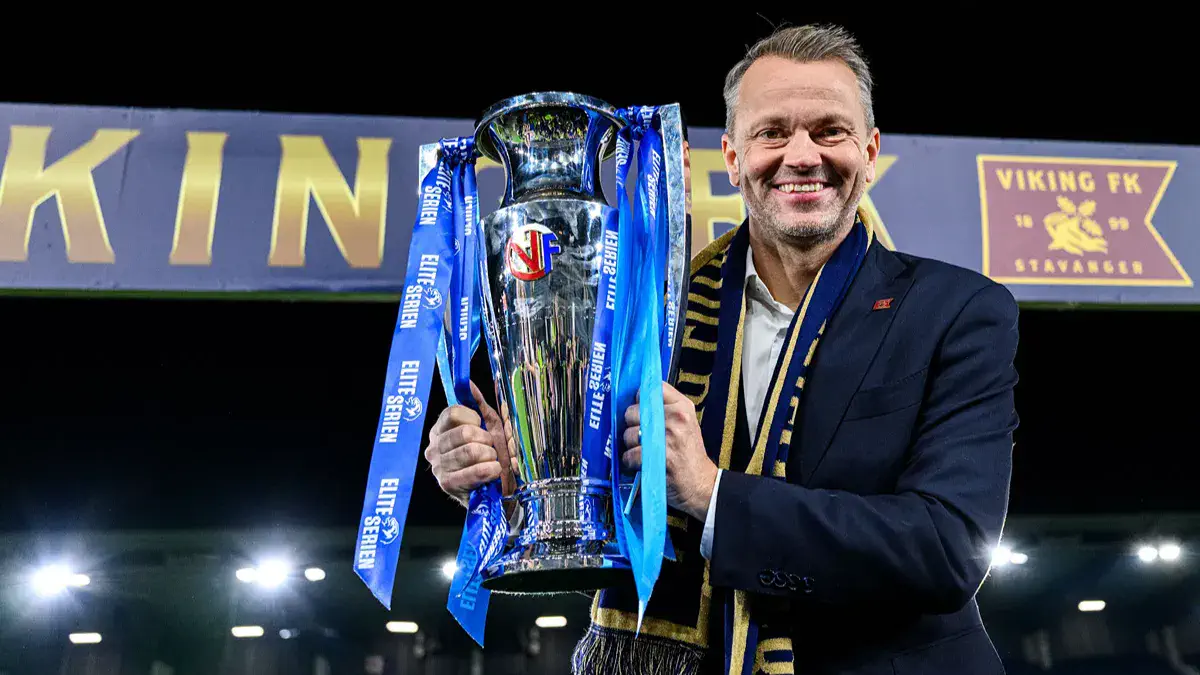
Fans of English football may remember him for his spells with Manchester United and Fulham.
However, Viking has always remained the main club in his life. Nevland was the man who scored twice in the famous match against Chelsea in 2002. Now he builds the team from the other side of the touchline.
Together with chief executive Eirik Bjorne and the coaching duo, Nevland helped create a new management model.
Its essence is simple: develop footballers, work intelligently in the transfer market and do not spend more than the club can earn.
This stands in stark contrast to what happened in Stavanger before the financial catastrophe.
Restoring the trust of the local community was also crucial.
Club representatives have said that children in Stavanger once mostly walked around in Manchester United and Liverpool shirts. Now, it is increasingly common to see youngsters wearing Viking kits.
For the people who built the team almost from scratch, that achievement is no less important than the trophies.
Champions after 34 years: how Viking pipped Bodø/Glimt
The results of the painstaking work became especially clear in 2025.
Before the season began, Bodø/Glimt were regarded as the main favourites for the Norwegian title, having won four of the previous five Eliteserien campaigns.
But Viking issued a genuine challenge.
The team from a city of around 150,000 people managed to go toe to toe with a club that had by then become Norway's most recognisable representative in European football.
The title race remained alive until the final round. On November 30, 2025, Viking hosted Vålerenga. To become champions, they simply had to win.
The hosts gave their opponents no chance — 5-1.
In the simultaneous fixture, Bodø/Glimt thrashed Fredrikstad 5-0, but it was not enough.
Viking finished the championship with 71 points, edging their main rivals by just one point.
For the first time since 1991, the club from Stavanger were crowned champions of Norway. It was the ninth title in their history.
Thousands of supporters ran onto the pitch after the final whistle. Captain Tripic could not hold back his tears.
Just eight years earlier, the team had been relegated to the second tier and were fighting to avoid bankruptcy. Now they had reclaimed their status as the strongest side in the country.
But something even more special awaited Viking.
From 0-2 against Dinamo Zagreb to a Champions League debut
The title opened the door for Viking to enter the qualifying rounds of the 2026/27 Champions League.
The Norwegians' final obstacle on the way to the league phase was Dinamo Zagreb — a team with far more experience in European competition.
The start of the tie was catastrophic for Viking. In the first leg in Zagreb, the Croatians were already 2-0 up after ten minutes thanks to goals from Dion Beljo and Mateo Lisica.
It seemed the European fairytale could end before it had even begun. But the Norwegians showed their character once again. Peter Christiansen and Zlatko Tripic scored before half-time, and the match finished 2-2.
In Stavanger, Viking won 3-1 to take the tie 5-3 on aggregate.
That was how the team reached the Champions League league phase for the first time in their history.
And this was more than just a sporting victory. Viking had effectively leapt several rungs of the European football ladder, having failed to qualify for the Conference League just a year earlier.
Their Champions League debut was a difficult one — a 3-1 defeat by Stuttgart. But in the second round, the Norwegians showed that they had not come to Europe's most prestigious tournament merely to make up the numbers.
Shock against Bayern: the night Stavanger will never forget
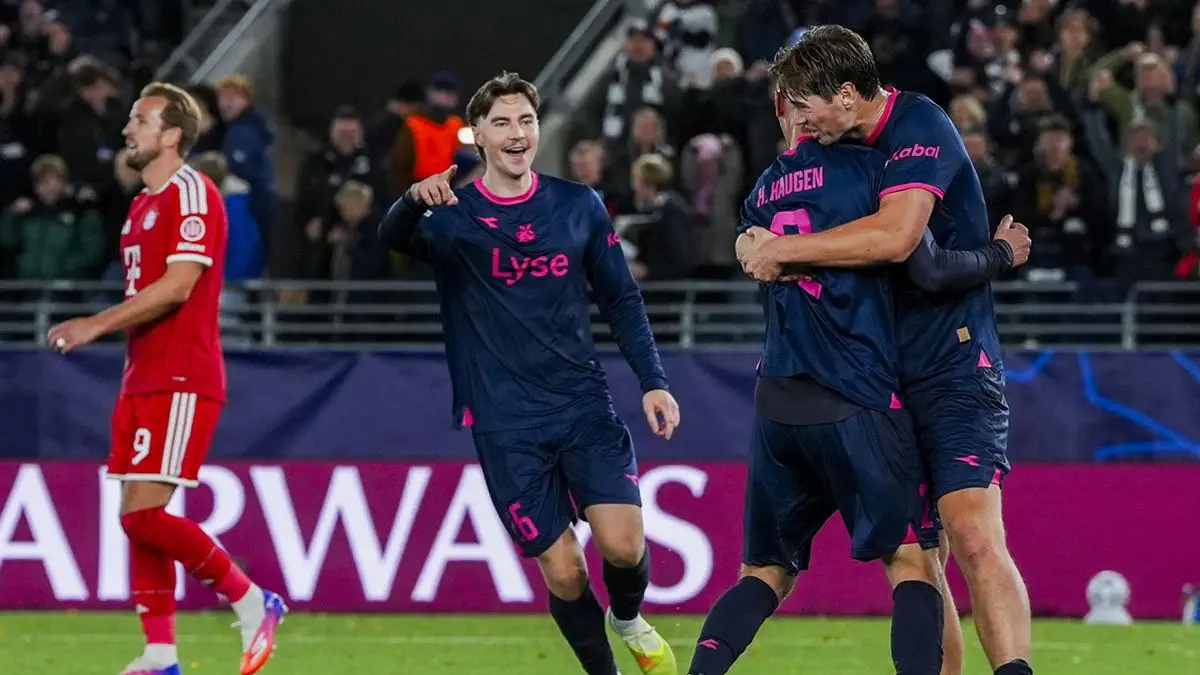
On October 13, Viking hosted one of Europe's most decorated clubs — Bayern Munich.
All 15,900 seats at Lyse Arena were filled. It was Viking's first home match in the Champions League league phase. And it began in sensational fashion.
After approximately 70 seconds, Zlatko Tripic delivered a corner and Gianni Stensness won the aerial duel, heading the ball past Jonas Urbig.
1-0 — and the stands erupted. Bayern predictably took control of possession and created chances, but the Norwegians defended with incredible determination.
In the 38th minute, another shock followed. The hosts launched a swift counterattack, and Peter Christiansen beat the visiting goalkeeper. 2-0!
After the break, Vincent Kompany made three substitutions at once, bringing on Dayot Upamecano, Alphonso Davies and Ismael Saibari.
Bayern raised the tempo and soon began to fight their way back into the game.
In the 54th minute, Harry Kane converted a penalty, and six minutes later he headed home from a Joshua Kimmich cross. In the 71st minute, Luis Diaz finished off a flowing move involving Kane and Konrad Laimer.
It seemed the fairytale was over — 2-3. But a few minutes later, Michael Olise received a second yellow card and left Bayern with ten men.
Viking surged forward, desperate to salvage at least a draw.
In the 90th minute, Tripic delivered another cross, and Herman Haugen, who had come on in the second half, headed the ball into the net. 3-3!
The stadium erupted once again. The team that had only recently been balancing on the brink of financial ruin had taken points off Bayern.
After the match, Vincent Kompany acknowledged the Norwegians' efforts, highlighting their commitment and approach to the game:
“They showed real team play and at times operated on the edge of what is allowed. But that is part of football, and for them it was the right approach.”
Viking coach Bjarte Lunde Aarsheim particularly praised his players' character and the support from the stands:
“I was impressed by the character and desire of our players. The supporters also drove us forward. We did not want to lose and were determined to earn this point.”
It was a truly fairytale evening that will forever be part of the club's history.
A fairytale built on far more than a footballing sensation
Viking's story is special because the club did not receive a wealthy foreign owner who spent hundreds of millions on transfers within a few years.
Instead, their revival began with the realisation that the old financial model simply no longer worked.
The club abandoned uncontrolled spending, began developing young players, brought in people who genuinely cared about its future and dared to make unconventional management decisions.
Of course, local investors and sponsors also played their part. Without their support, Viking might not have survived the most difficult period at all.
But the real turning point came when the club's management decided not merely to save the team, but to completely change its approach to development.
Today, Viking are Norwegian champions, Champions League participants and a club that has already forced one of Europe's giants to drop points.
There are still many difficult matches ahead, and one draw with Bayern does not guarantee the Norwegians further success in the tournament.
However, Stavanger have already proved something more important. In football, you do not need the biggest budget to build a team that an entire city can be proud of.
And sometimes the journey from relegation to the second tier of Norwegian football and the brink of bankruptcy to a Champions League night against Bayern takes just eight years.
 Steven Perez
Dailysports's expert
Steven Perez
Dailysports's expert