Second chance after doping: Mudryk, Pogba and other high-profile comebacks
From four-year bans to triumphant returns: whose careers were all but broken by disqualification, and who managed to reclaim titles and reach Champions League finals after a doping scandal?
A doping suspension is often seen as one of the heaviest stains on an athlete's record. But behind the same verdict can hide vastly different stories: deliberate use of banned substances, a “contaminated” supplement, medicine from the family cabinet, or a mistake by someone on the player’s team.
- Also read: The Valencia derby promises intrigue: prediction for Villarreal vs Levante on August 5, 2026.
That’s why comebacks are so different. Some players only need to wait out their ban to shine again. Others regain the legal right to play but can’t recapture their physical peak. And for some, returning to the pitch is not the end of the story, but the start of a new struggle.
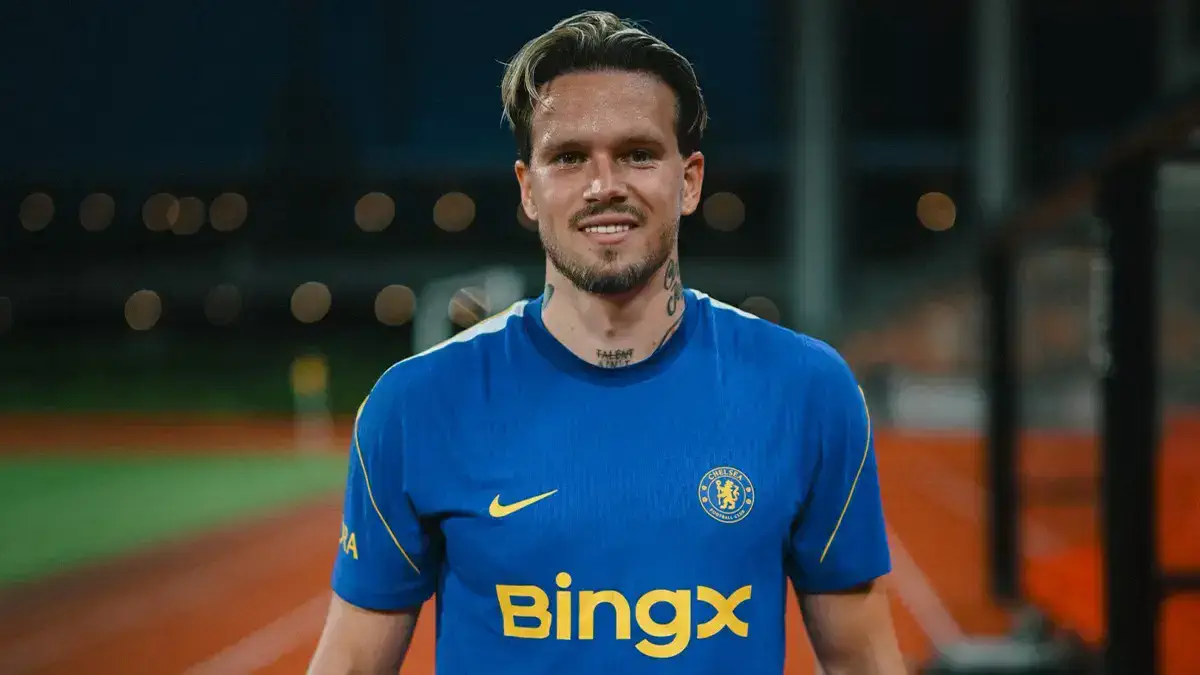
The latest and most relevant example is Mykhailo Mudryk. The Ukrainian has already been cleared to resume his career, but now he must prove that nearly two years out of official football haven’t destroyed his potential.
Mykhailo Mudryk: a comeback that starts right now

Mudryk moved from Shakhtar to Chelsea in January 2023 as one of Europe’s most promising young wingers. The London club paid £62 million for the 22-year-old Ukrainian, with bonuses potentially raising the deal to £89 million. That price tag was explained not only by his phenomenal speed and dribbling ability: Mudryk had already impressed in the Champions League. Chelsea hoped he would become one of the new project’s main attacking stars, but he didn’t have time to fully unlock his potential.
Mudryk’s doping sample was taken on October 22, 2024. It showed a low concentration of meldonium, and in December he was provisionally suspended. In January 2026, an independent panel handed him a four-year ban, but his team appealed to the Court of Arbitration for Sport.
The situation changed after the World Anti-Doping Agency (WADA) updated its technical documents. The English FA specifically noted that under the current rules, Mudryk’s meldonium concentration would not have been registered by the lab and the case wouldn’t have led to charges at all.
The changes weren’t retroactive, so officially the test result stood. Mudryk accepted the anti-doping violation, but his suspension was reduced to time already served. On July 31, 2026, the FA announced he could immediately return to competition.
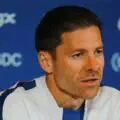
At the time of writing, Mudryk had yet to play an official match since his return. He is gradually rejoining team training, while Chelsea head coach Xabi Alonso admitted the club has not made a final decision on his future. After roughly 20 months without competitive football, Mudryk will need not just fitness, but patience.
His age and unique speed work in his favor. Against him: fierce competition at Chelsea, lack of match rhythm, and the pressure that will surround every appearance. So Mudryk’s story isn’t a full-fledged comeback yet. It’s a second chance—the outcome still to be determined.
Paul Pogba: ban is over, but problems remain

Pogba tested positive for doping in 2023 while at Juventus. He was found to have DHEA—a substance that increases testosterone. The Frenchman was initially banned for four years, which at his age could have meant the end of his career.
However, CAS accepted arguments that the substance entered his system via a supplement recommended by a US doctor. The court ruled the use unintentional, though noted Pogba hadn’t exercised due caution. His ban was reduced to 18 months, and by March 2025, Pogba was eligible to play again.
That summer, the World Cup winner signed a two-year deal with Monaco. His first official match came in November 2025—811 days after his previous appearance.
But a full revival hasn’t happened. Muscle injuries and poor fitness have limited Pogba to brief cameos. Even after his ban, his main opponent is no longer anti-doping rules, but his own body and age.
Pogba’s case highlights a crucial point: being allowed back isn’t the same as truly returning to top-level football.
André Onana: from a home first aid kit to the Champions League final

In October 2020, Ajax goalkeeper Onana tested positive for furosemide. He explained he felt unwell and accidentally took a medication prescribed to his wife. UEFA found no intent to enhance performance but still imposed a one-year ban.
After an appeal, CAS reduced the ban to nine months. By November 2021, Onana was back with the Cameroon national team, keeping a clean sheet in a World Cup qualifier.
His subsequent career turned his story into one of football’s most successful doping comebacks. Onana left Ajax, became Inter’s starting goalkeeper, and played in the 2023 Champions League final. Then Manchester United paid big money for him.
Just over two years separated his positive test and a Champions League final. That fact alone best illustrates the scale of Onana’s return.
In England, things didn’t go as planned—last season he played for Trabzonspor on loan. But that’s another story.
Fred: a year-long ban didn’t stop a Manchester United move

Fred tested positive during the 2015 Copa América. The Shakhtar midfielder was found to have hydrochlorothiazide—a banned diuretic.
CONMEBOL suspended the Brazilian for a year, backdated to June 26, 2015. Initially, the ban only applied to matches under the South American federation, so Fred continued playing for his club. In February 2016, FIFA extended the sanction worldwide, and Fred missed the remaining four months.
The scandal hardly affected his career. He returned to Shakhtar’s starting XI, played in the Champions League, and in 2018 transferred to Manchester United. In England, Fred surpassed 100 Premier League appearances.
For him, the suspension was an unpleasant pause—not a career-defining event.
Adrian Mutu: career salvaged, reputation only partly

In 2004, Mutu tested positive for cocaine. Chelsea terminated the Romanian striker’s contract, and the English FA banned him for seven months.
Mutu returned via Italy: first Juventus, then Fiorentina, where he again became one of Serie A’s standout players. In Florence, he scored dozens of goals, played in European competitions, and partially restored his footballing reputation.
But the fallout lingered for years. Compensation disputes with Chelsea continued even after his return, and Mutu himself later called taking cocaine the worst decision of his life.
His comeback was a sporting success, but Mutu never fully escaped the long-term consequences of the scandal.
Dario Srna: one more season after turning 35

In spring 2017, a non-competition test found DHEA—the same testosterone-boosting substance—in the sample of long-time Shakhtar captain Srna. Ukrainian anti-doping authorities handed him a 17-month ban, but backdated it to the sample date. They also found no significant fault or negligence.
The ban ended in August 2018. By then, Srna had left Shakhtar and signed for Cagliari. At 36, the Croatian returned to Serie A for a full season.
It wasn’t a comeback to his previous level—Srna’s best years were behind him. But the chance to end his career on his own terms, not forced out by a ban, was an important second chance.
Kolo Touré: six months out, then a title-winning season

In 2011, Manchester City defender Kolo Touré took a weight-loss tablet belonging to his wife. It contained a banned substance, and he received a six-month ban.
The panel accepted the medication wasn’t intended to boost performance, so the punishment was relatively light. Touré returned in September 2011 and fought for his place in the team.
That same season, Manchester City won the Premier League for the first time. Touré was no longer a guaranteed starter, but remained part of the title-winning squad. He later continued his career at Liverpool and Celtic.
The Ivorian’s story shows how a single everyday mistake can lead to a serious sanction—but doesn’t have to end a footballing future.
Paolo Guerrero: a comeback fought for in the courts

One of football’s most tangled anti-doping cases involved Peru’s national team captain. In 2017, Guerrero tested positive for benzoylecgonine—a cocaine metabolite.
He claimed the substance entered his system via coca-leaf tea. FIFA initially banned him for a year, then reduced it to six months on appeal. But after WADA’s intervention, CAS increased the ban to 14 months.
That decision would have ruled Guerrero out of the 2018 World Cup—Peru’s first in 36 years. But Switzerland’s Federal Supreme Court temporarily lifted the ban, allowing him to play in the tournament.
Before the World Cup, Guerrero scored twice in a friendly against Saudi Arabia, and then netted against Australia at the finals. After the tournament, his ban was reinstated, and he only fully returned to club football in spring 2019.
This was not just a sporting comeback, but a legal battle for the right to play on the world’s biggest stage.
Diego Maradona: two returns after two bans

Maradona suffered two high-profile suspensions. In 1991, while at Napoli, he tested positive for cocaine and was banned for 15 months.
He didn’t return to Naples after his ban. Instead, he joined Sevilla, coached by his Argentina national team acquaintance Carlos Bilardo. Maradona no longer showed his late-1980s level, but did manage to prepare for international duty again.
In 1994, he went to the World Cup in the USA with Argentina. After a match against Nigeria, his sample showed ephedrine and related stimulants. Maradona was expelled and banned for another 15 months.
Even then he made another comeback—in 1995 with Boca Juniors. But both returns were more about prolonging a legendary career than regaining his former status as the world’s best.
Edgar Davids: a suspension between two league titles

In 2001, Juventus midfielder Edgar Davids tested positive for nandrolone. The player linked the result to a homeopathic remedy he’d used while ill.
Davids was initially banned for five months, but after appeal, the term was reduced. The Dutchman was cleared to return by September 2001.
The break barely affected his sporting level. Davids again became a key part of Juventus, won Serie A titles in 2002 and 2003, and reached the Champions League final.
Of all the footballers on this list, his comeback is perhaps the most convincing: after his doping case, Davids didn’t just continue—he won major trophies again.
Bonus: Tyson Fury and Jannik Sinner
Doping bans affect more than just football. In other sports, too, a scandal can be just a pause before a triumphant return. The stories of Tyson Fury and Jannik Sinner show how different a second chance can look.
Tyson Fury

Samples taken from Tyson and Hughie Fury in 2015 showed elevated nandrolone metabolites. The proceedings dragged on, and in December 2017, the parties reached a settlement: violations were admitted, and the boxers received two-year bans, backdated to December 2015. By the time of the announcement, the ban had already expired.
Tyson returned to the ring in June 2018. Within months, he fought Deontay Wilder to a draw, then in February 2020 defeated the American by TKO to claim the WBC belt.
This was one of the most dramatic comebacks in sports history—especially as Fury was simultaneously battling depression, addiction, and serious weight gain.
Jannik Sinner

In 2024, Sinner twice tested positive for low concentrations of clostebol. An independent tribunal agreed the substance entered his system via a massage: his physiotherapist used a cream containing the banned ingredient.
WADA didn’t claim Sinner intentionally doped, but insisted he was responsible for his team’s actions. In February 2025, the parties agreed to a three-month ban—from February 9 to May 4.
Sinner returned at his home tournament in Rome, and by July had won Wimbledon. In 2026, the Italian defended his title, turning the doping scandal from a potential disaster into a mere blip in an extraordinarily successful career.
What awaits Mudryk?
The stories of Onana, Davids, and Sinner show that it is possible to return to the top after a ban. The cases of Pogba and Srna remind us that being cleared to play isn’t enough—age, injuries, and a long layoff can be as dangerous as the ban itself.
Mudryk has an advantage many on this list didn’t: at 25, he still has time to restart his career. What’s more, official documents confirm an extremely low meldonium concentration and acknowledge that under new standards his test wouldn’t have even triggered a case.
But now, it’s all about football. Mudryk must regain his form, find a team ready to give him regular minutes, and cope with the inevitable scrutiny of every match.
Legally, the Ukrainian has already received a second chance. Whether it becomes a true comeback will be decided in the months ahead.
 Steven Perez
Dailysports's expert
Steven Perez
Dailysports's expert