

Career threat? Musiala faints for the second time in three days. What's next?
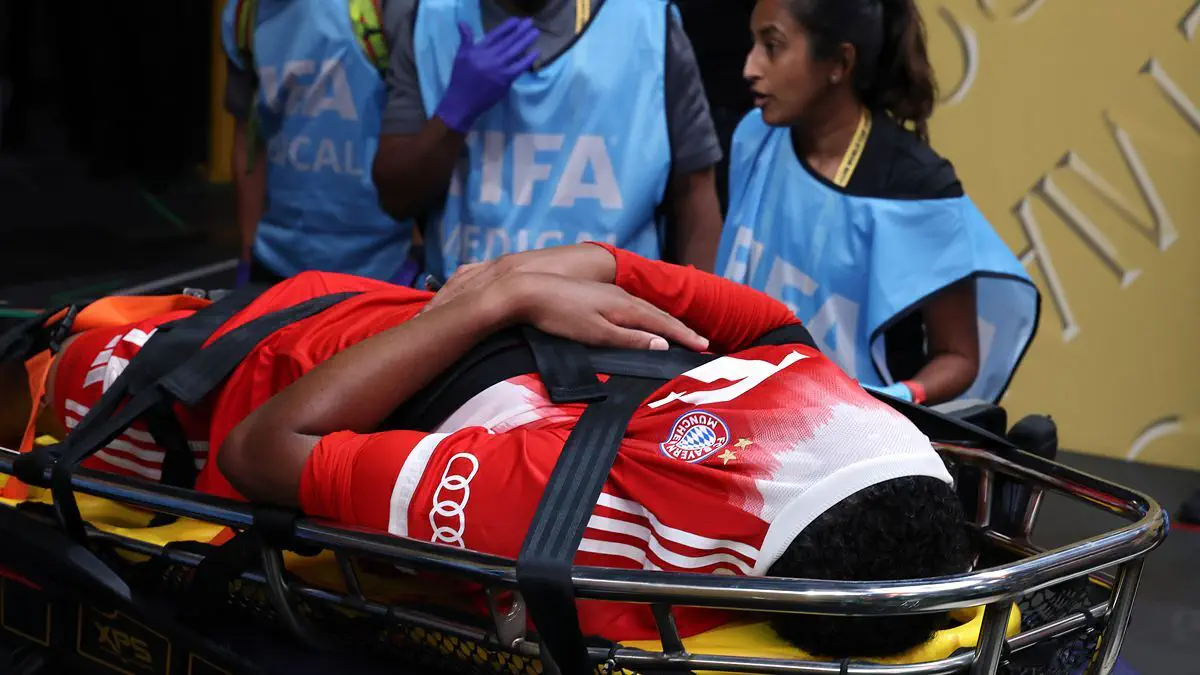


In just three days, Jamal Musiala collapsed on the pitch twice without any contact from an opponent, requiring urgent medical attention both times. The first incident was attributed to the extreme heat, but after a repeat, that explanation no longer seems sufficient. Let's break down how concerning the situation really is, what doctors look for in such cases, and whether this could genuinely impact the Bayern star's career.
The match against Heidenheim was supposed to be Bayern's final test before the official season kicked off. The Munich side won 4-2, but the result quickly faded into the background. The main reason? Jamal Musiala.
- Also read: Zagreb power versus vulnerable Norwegian defense: prediction for Dinamo Zagreb vs Viking.
The 23-year-old German came on after halftime and just minutes later, suddenly began to feel unwell. Musiala was on the pitch for about eight minutes.
The midfielder started losing his balance and collapsed with no visible contact from an opponent. Medical staff rushed to his aid, and players from both teams surrounded the stricken German. After a while, Jamal managed to get up and left the pitch accompanied by medics. Naturally, he was not allowed to continue playing.
The incident itself looked alarming. But far more important: this was the second such episode for Musiala in just three days.
The first incident could still be explained by the heat
On August 15, Bayern faced RB Leipzig in the Telekom Cup. Musiala came off the bench in the second half, scored in the 81st minute, but as the match neared its end, he suddenly felt unwell.
Footage showed the German visibly staggering. Teammate Ismael Saibari managed to catch Musiala and help him gently to the ground. For a few moments, the player barely moved, and then doctors rushed onto the pitch. Eventually, he was able to walk off to the dressing room on his own, though he looked disoriented.
At the time, there was a logical explanation. In Munich, temperatures soared to 33°C. Reports surfaced that Musiala complained of dizziness and circulation issues due to the heat.
Bayern sporting director Max Eberl soon reassured fans, stating that the main thing was the player was fine.
It was also reported that initial medical checks revealed nothing alarming. Musiala missed some team activities but soon returned to individual training and was ultimately included in the squad for the Heidenheim match.
If the story had ended there, the theory of overheating, dehydration, or a sudden drop in blood pressure would have seemed perfectly plausible.
But three days later, it happened again.
Now it's much harder to blame just the heat
The fact that the episode repeated fundamentally changes the perception of the situation.
In the Heidenheim match, weather conditions were no longer extreme. Musiala had just come on, played eight minutes, and again collapsed without any opponent making contact.
So after the second incident, the natural question arises: was the first episode really caused solely by the heat?
It’s impossible to say right now. And drawing conclusions about Musiala having any specific illness is even more premature. However, two such episodes in a matter of days are a serious reason to investigate their origin.
Loss of consciousness can occur for relatively benign reasons: dehydration, overheating, fatigue, a sudden drop in blood pressure, or so-called vasovagal syncope. But there are also causes that doctors are obliged to rule out: arrhythmias, structural heart disease, circulation problems, and, far more rarely, conditions affecting the body's oxygen supply.
So a second episode doesn't mean Musiala necessarily has heart problems. It means something else: a simple explanation like "it was just too hot" is no longer enough.
Why are doctors especially concerned about fainting during exertion?
There's an important nuance here.
In sports medicine, not only the fact of fainting matters, but also the timing of when it occurs.
For example, someone may feel unwell after intense exercise: the body suddenly stops, blood pressure drops, blood pools in the legs — and a faint occurs. Such mechanisms are well known to doctors.
But it’s a different story when an athlete loses consciousness right in the middle of physical exertion.
The American College of Cardiology notes that syncope during exercise requires a thorough evaluation for athletes. Basic tests include an ECG, echocardiogram, and exercise stress test. If necessary, doctors may also use long-term heart rhythm monitoring and other studies.
The European Society of Cardiology also lists syncope—the medical term for brief loss of consciousness—during exertion as a symptom that demands special attention for athletes. The reason is simple: before allowing someone to return to full training, doctors must rule out any underlying cardiovascular issue.
In practice, this doesn't necessarily mean Musiala will be out for weeks or months. But after a second episode, the logical scenario is a pause and more in-depth evaluation before he’s cleared for full match action.
What could doctors check for in Musiala now?
Doctors need to understand how Musiala's heart functioned before, during, and after exertion: was there any arrhythmia, does the heart cope well with intense work, are there any sudden blood pressure drops? They’ll also assess blood markers, hydration levels, effects of overheating or infection, and other factors that might cause such a state.
A normal exam at rest sometimes isn’t enough, because the problem—if it exists—may only appear under stress. That's why post-syncope athlete testing often includes exercise-based studies and heart rhythm monitoring.
Until the cause of two collapses in three days is clear, putting the player under maximum exertion would be risky.
Does this mean Musiala's career is truly at risk?
At this moment—there is no reason to say so.
Everything depends on the cause.
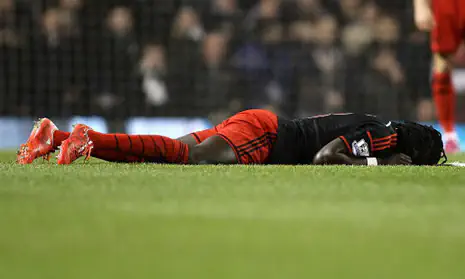
A good example is former France striker Bafetimbi Gomis. During his career, he fainted several times, including right on the pitch. One of the most famous incidents happened in 2015 during the Swansea vs Tottenham game.
It was later confirmed that Gomis suffered from vasovagal syncope: certain triggers caused his blood pressure and heart rate to drop, briefly reducing blood flow to his brain and resulting in loss of consciousness.
Such episodes looked scary, but after medical checks, Gomis returned to play and continued his professional career for many years.
This is why you can't draw a straight line from “Musiala fainted twice” to “Musiala's career is in jeopardy.”
On the other hand, if tests reveal a specific heart condition or dangerous arrhythmia, the situation changes completely. Then the decision to return depends on the diagnosis, treatment, and risk assessment by specialists. That’s exactly why repeated episodes during exertion demand special attention.
Musiala himself reveals the diagnosis
Later, Musiala himself decided to reassure fans and, for the first time, explained in detail what was happening.
On Instagram, the footballer revealed that after examinations, doctors diagnosed him with short-term "absence" episodes of consciousness linked to neurological dysfunction. According to Jamal, this was the cause of the episodes in the matches against RB Leipzig and Heidenheim.
Musiala emphasized that this condition is treatable and, in the view of specialists, does not pose any additional health risks for him.
"First of all—I'm fine," the footballer wrote, thanking fans for their numerous messages and support.
According to Musiala, while such episodes may look frightening from the outside, he is currently under constant medical supervision and receiving the necessary treatment. The German also said he remains very optimistic about his condition.
Most importantly, after consulting neurologists, Musiala was cleared to continue his normal life and play football. Moreover, the player himself insisted on continuing to train and play, as he believes that sticking to his usual rhythm and playing football help him cope best with the situation.
"For me, it was important to accept this challenge and keep doing what helps me most in my recovery—living my normal life and playing my passion, football," Jamal explained.
Musiala stressed that the decision was made together with specialists and that he takes responsibility for it.
The player added that he feels good and believes he is moving in the right direction. He said the best support for him is being able to keep fighting with Bayern for victories and trophies.
Musiala also asked for his privacy to be respected. He intends to discuss more detailed medical information only with his family, the club, and doctors.
This statement significantly changes the narrative around the incidents. After two pitch collapses, the main worry had been that the cause might be heart or circulation problems. Now, it's known that doctors link both episodes to a neurological condition.
And most importantly for Musiala's career prospects: by his own words, specialists see no added health risk and have cleared him to keep playing football.
What's next?
After Musiala's statement, the situation has become much clearer.
The main question—why the footballer collapsed twice in three days—now has a preliminary answer. According to the player, the cause was short-term neurological episodes, which specialists consider treatable.
Equally important: Musiala states that doctors see no additional risk to his health and have allowed him to continue playing football.
So right now, there's no reason to talk about a career threat.
However, two episodes in a few days have shown how closely Bayern and the medical staff will have to monitor the player's condition. Musiala himself says he regularly consults with specialists and remains under constant medical supervision.
Footage from the matches against RB Leipzig and Heidenheim did look frightening. But after medical checks and the player's own explanation, the main conclusion is now largely optimistic: the problem has been identified, doctors understand its nature, and Musiala is determined to continue his career.
And judging by his own words, he has no intention of quitting football any time soon.
 Steven Perez
Dailysports's expert
Steven Perez
Dailysports's expert