
Real Madrid vs. LaLiga: the complete history of the conflict
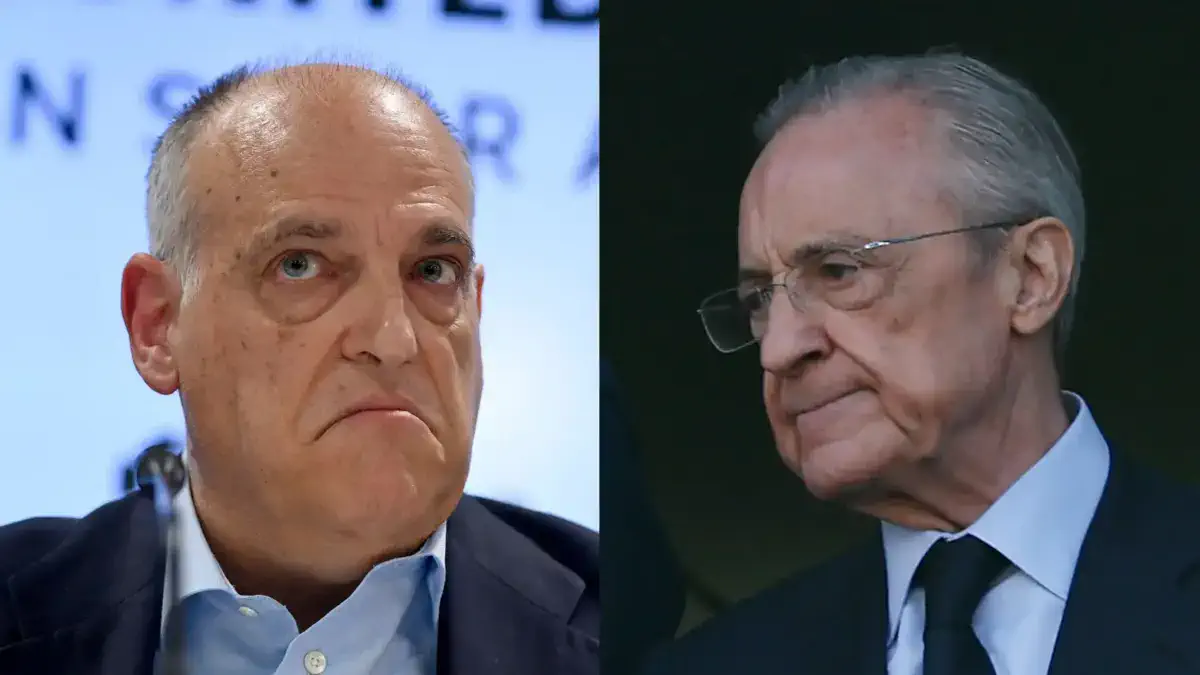
From the battle over television rights and the creation of the Super League to refereeing scandals and comparisons with Nazi propaganda. We tell the complete story of the conflict between Real Madrid and LaLiga president Javier Tebas — a dispute that went beyond the football pitch long ago.
Two printed pages from José Mourinho, a four-match ban for Vinícius and comparisons between Real Madrid's management methods and the propaganda of Joseph Goebbels. It sounds like the events of several different scandals, but it all happened in less than a month.
On September 20, 2026, Real Madrid lost 2-1 to Atlético Madrid. However, the post-match discussion was mostly about anything but football.
José Mourinho arrived at the press conference with printed photographs of two first-half incidents. In the Portuguese coach's view, Cristian Romero should have been shown a red card for a dangerous challenge on Jude Bellingham's leg, while Lee Kang-in deserved one for a rough foul on Federico Valverde. Both Atlético players remained on the pitch, while early in the second half the referee sent off Real Madrid defender Dean Huijsen.
“We could just save ourselves the time because the story of the match is right here,” Mourinho said, holding up the photographs.
The coach suggested that, under different officiating, his team could have spent most of the match playing against nine opponents. Atlético responded the following day with an ironic video: a printer produced a photograph of Mourinho alongside a call to stop pressuring referees.
Javier Tebas joined the dispute. The LaLiga president said that Real Madrid was once again creating a conspiracy narrative against itself, and that explaining all of the team's problems through refereeing decisions meant living in another galaxy.
On September 22, the Madrid club issued an official statement that effectively called for a change in LaLiga's leadership. Real Madrid stressed that the league should be run by someone capable of ensuring neutrality, rather than by a president who publicly criticizes one of its participants.
Less than three weeks later, another scandal exploded.
On October 10, Real Madrid defeated Villarreal 1-0, but Vinícius Júnior was shown a straight red card after VAR determined that the Brazilian had pulled the hair of Nathan Saliba. The referee also recorded the player's aggressive protests following the dismissal.
The punishment was severe: a two-match suspension for the foul itself and another two for his reaction to the referee's decision. On October 16, the appeals committee upheld the four-match ban. Vinícius is set to miss, among other games, El Clásico against Barcelona on October 25.
At the same time, the incident involving Saliba's hair did not disappear from the spotlight: it was captured by VAR, so it would be wrong to call the dismissal groundless. However, the severity of the overall punishment became a new source of controversy.
And on October 16, the confrontation between LaLiga and Real Madrid reached an entirely different level.
While commenting on the work of Real Madrid TV and journalists whom he considers close to the club's leadership, Tebas compared their communication methods to the propaganda techniques of Joseph Goebbels, the propaganda minister of Nazi Germany. He clarified that he was referring to the repetition of certain messages and the creation of an enemy image, not to Nazi ideology.
Real Madrid responded immediately. The club called the comments completely unacceptable and demanded Tebas's resignation not only as LaLiga president but also as vice-president of the Royal Spanish Football Federation.
Tebas responded by accusing the Madrid leadership of intimidation and attempting to silence him.
Right now, it seems these two sides may never find common ground. But to understand why the president of the league and its most decorated club have become irreconcilable rivals, we need to go back more than a decade.
2015: it all began with television money
Today, it is difficult to imagine that Spanish clubs once negotiated directly with television networks to sell the rights to broadcast their matches.
But that was how LaLiga operated for a long time. Naturally, Real Madrid and Barcelona, who had the largest audiences, could count on far more lucrative contracts than most of their rivals.
In 2015, Spain introduced a centralized model for selling television rights. Instead of dozens of separate agreements, the rights to broadcast the league were sold collectively, with the proceeds distributed among the clubs according to established rules.
For Javier Tebas, this was a crucial step: a strong league is impossible if two giants earn enormous sums while the rest of the teams are forced to fight for financial survival.
Real Madrid, however, did not want to lose control over decisions that directly affected its revenue.
In June 2015, Tebas openly accused the Madrid club in an interview with AS of seeking to control the entire television business.
It was one of the first major public conflicts between the two sides. As it turned out, it would also be remarkably long-lasting.
Ten years later, Real Madrid won an important legal dispute whose roots went back to 2015.
On December 5, 2025, Spain's Supreme Court annulled a provision added by LaLiga to its statutes that changed the distribution of certain audiovisual revenues for the 2015/16 season.
According to Real Madrid's explanation, applying the previous rules would have meant approximately €88 million in additional funds for clubs in the Segunda at the time and €8.8 million for the Madrid side.
An important nuance: the court did not overturn the centralized sale of television rights itself. It found a specific amendment to the statutes concerning revenue distribution to be unlawful.
For Real Madrid, however, it was a landmark victory. The club gained a powerful argument for its long-standing position: even the league's leadership cannot change the rules arbitrarily.
And Tebas had to watch as a decision made a decade earlier came back to haunt him in court.
2018: why did Real Madrid refuse to travel to the United States?
The next major clash revolved around an idea that, at first glance, should have appealed to both sides. LaLiga wanted to stage official league matches in the United States.
To Tebas, it looked like a logical step. The Premier League was actively expanding its international audience, the American market offered enormous commercial potential, and Spanish football could generate additional revenue through advertising, sponsors and television contracts.
One of the first matches planned to be moved to Miami was the 2018/19 meeting between Girona and Barcelona.
But Florentino Pérez was categorically opposed.
“We are not going to the United States. I don't know whose interests this serves, but they certainly aren't those of the clubs or the fans,” the Madrid president said at a club meeting.
Real Madrid also officially objected to moving the match, citing a violation of the principle of sporting equality.
And this raises an interesting question.
Why did a club that regularly embarks on commercial tours of America suddenly become an opponent of football in the United States?
The answer is that friendly matches and an official league fixture are entirely different things.
If Girona hosted Barcelona in Miami, the Catalan giants would effectively avoid a difficult away trip to Girona. Instead of facing the atmosphere of the opponent's stadium, they would play on neutral ground, where they could even enjoy significant support.
For Barcelona's title rivals, this was a question of calendar fairness.
Tebas, however, was not impressed by Real Madrid's arguments. He hinted at populism from the Madrid leadership and openly stated that the club's opinion did not concern him because participation in such a match was voluntary.
Ultimately, the first attempt to stage a LaLiga match in Miami failed. Tebas, however, did not abandon his American dream.
April 2021: the Super League — the project that turned a dispute into war
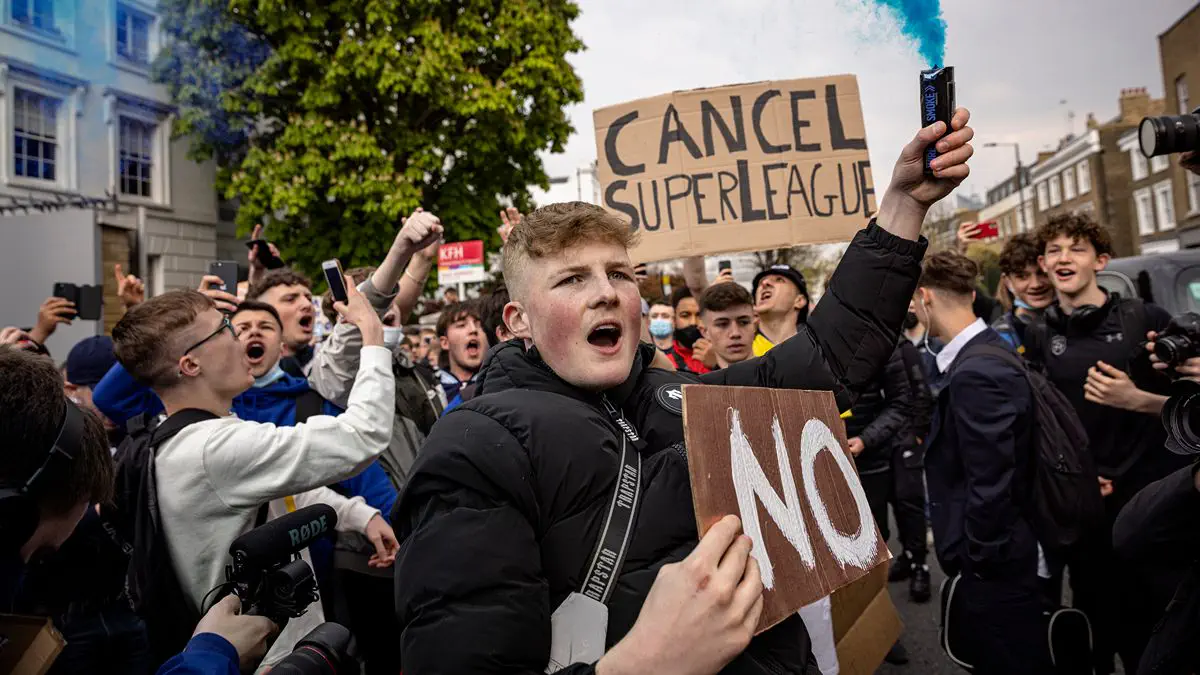
If Pérez and Tebas had previously argued over money and the organization of Spanish football, then in April 2021 the future of European football as a whole was at stake.
On April 18, twelve of Europe's leading clubs announced the creation of the European Super League.
The founding clubs were Real Madrid, Barcelona, Atlético Madrid, Manchester United, Liverpool, Arsenal, Chelsea, Manchester City, Tottenham, Juventus, Milan and Inter.
Florentino Pérez became president of the new project.
His central argument was simple: football needs radical change, otherwise the biggest clubs will face serious financial problems.
Pérez spoke of declining interest among young people in traditional football tournaments, excessive club spending and the need to stage matches between elite sides more frequently.
The idea was to create a new European competition with huge commercial revenues, a significant share of which would be controlled by the clubs themselves.
The initial format envisaged 20 participants, with 15 founding clubs receiving permanent places and five more qualifying through sporting performance.
This was where the project's main problem for critics began.
If Real Madrid, Manchester United or Juventus effectively receive guaranteed places in an elite competition, why would they need to fight so hard for the corresponding positions in their domestic leagues?
And what would happen to the remaining clubs if the richest teams began earning even more, gaining an advantage unavailable to others?
For Tebas, the Super League threatened the very existence of the traditional football system.
In his view, LaLiga's strength lay not only in Real Madrid and Barcelona, but also in the clubs that create competition across 38 rounds.
For Pérez, the key point was different: if the giants attract the most viewers and generate most of the television revenue, why should they not have more control over their own commercial future?
This was a fundamental clash between two business models.
Pérez wanted leading clubs to have more power over the football product. Tebas believed that power should remain within a system that unites big and small teams.
Ultimately, the Super League suffered a disastrous launch.
Mass fan protests, criticism from football organizations and governments forced most of the founding clubs to abandon the original plan within days.
However, Pérez did not give up. On December 21, 2023, the Court of Justice of the European Union delivered an important ruling: FIFA and UEFA rules requiring prior approval for alternative competitions did not comply with EU competition law.
For Super League supporters, this was a legal breakthrough.
However, the ruling did not mean that the court had automatically authorized Pérez's specific tournament. It primarily concerned unlawful control mechanisms used by football organizations.
Despite the legal successes, a viable Super League has still not been created.
Moreover, in February 2026 there was an unexpected twist: UEFA, European Football Clubs and Real Madrid announced an agreement in principle on the future of club football. It includes respect for sporting merit and could bring the Super League legal disputes to an end once the agreed principles are implemented.
By then, Barcelona had already left the project, leaving the Madrid club without its last major ally.
In effect, Pérez's biggest football revolution ended in negotiations with the very organization he had spent years fighting.
For Tebas, it was a major strategic victory, though not a final legal capitulation by Real Madrid.
August 2021: CVC — why did Real Madrid turn down billions?
At the height of the Super League battle, Tebas launched his own major financial project.
In August 2021, LaLiga unveiled an agreement with investment fund CVC. The initial figure was approximately €2.7 billion, intended to help Spanish clubs modernize their infrastructure, develop international markets and increase revenue.
After the terms were revised, the final amount agreed in December was €1.994 billion.
The idea looked attractive: clubs would receive significant investment immediately, while the fund would receive a share of the future revenues of LaLiga's commercial structure for 50 years.
Under the final arrangement, CVC received an 8% stake in LaLiga Group. The deal was backed by 37 of the 42 clubs.
For many teams, it was a chance to build new training centers, modernize stadiums, improve marketing and finally begin competing on the international market.
But Real Madrid categorically refused to join.
Together with Athletic Club Bilbao, the Madrid side challenged the agreement in court, arguing that LaLiga had created a dangerous precedent for the management of clubs' commercial rights.
Why? For Florentino Pérez, it looked something like this:
Imagine that you own a business that generates more money every year. Someone offers you a large sum upfront, but in return the investor will receive a share of the revenue from your joint business for the next 50 years.
Today, that might be an excellent deal. But what if, 20 years from now, the value of those revenues has multiplied several times over?
It was the long-term consequences that concerned Real Madrid's leadership.
The club argued that the agreement affected not only those who voluntarily joined the project, but also the broader system for managing rights and the economic structure of the league.
In June 2026, the Madrid club suffered a legal setback.
The Madrid Court of Appeal rejected the challenge brought by Real Madrid and Athletic Club. The court held, among other things, that CVC's remuneration constituted costs related to the commercialization of audiovisual rights and that the agreement did not affect clubs that had not joined it.
Real Madrid disagreed and announced its intention to appeal to the Supreme Court.
Thus, unlike some of the other disputes, the legal advantage in the CVC case currently lies with LaLiga.
But the full financial success of the investment program can only be assessed years from now.
2022–2026: when Real Madrid was simply barred from meetings
Against the backdrop of billion-euro projects, one of the most important legal episodes went almost unnoticed.
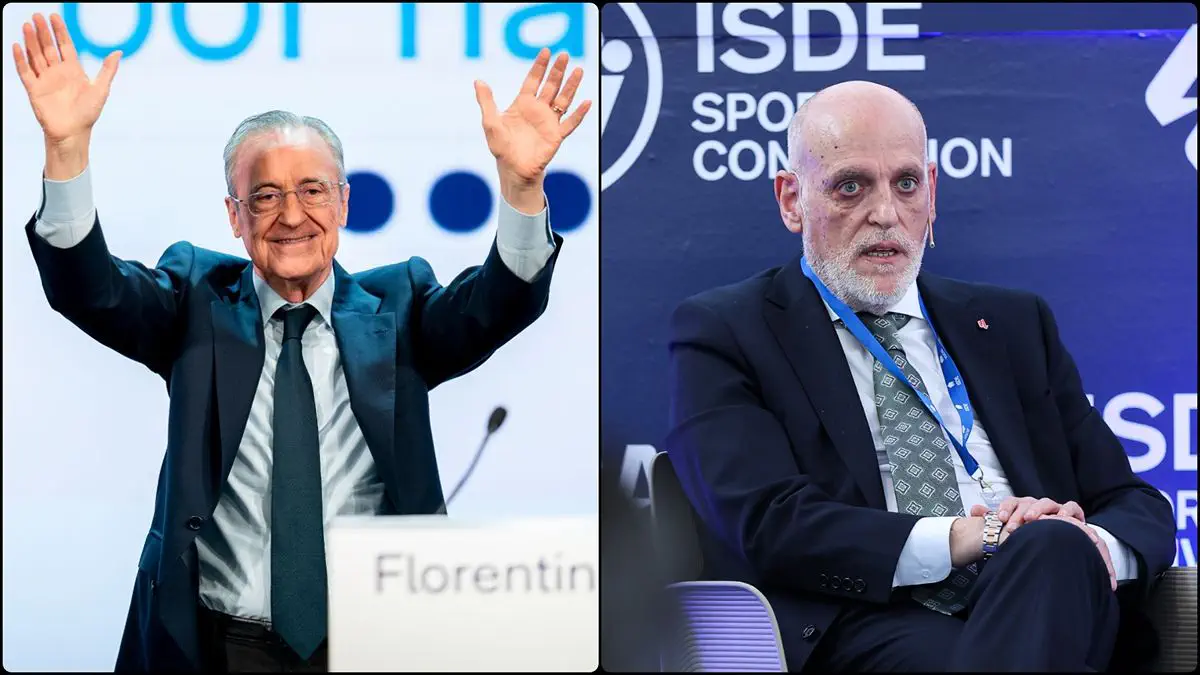
In 2022, LaLiga's leadership excluded Real Madrid from a series of meetings of the body responsible for overseeing the management of television rights.
The Madrid club challenged the decisions. And this time, the court sided with them.
On April 10, 2026, the Supreme Court rejected LaLiga's appeal, upholding earlier rulings that Real Madrid's rights to participate in the relevant meetings had been violated. The court later also rejected LaLiga's attempt to revisit the final ruling through proceedings seeking to have it declared invalid.
On June 23, the Madrid club officially announced that this legal battle had ended in its favor.
This episode is especially significant because it was not about subjective assessments of refereeing or loud statements on social media.
The court confirmed that specific actions by LaLiga's leadership had violated the club's rights and had been adopted without following the required legal procedure.
And it is rulings like these that help Real Madrid argue that its conflict with Tebas is not simply Pérez's personal dislike of him.
2023–2026: the Negreira case and the question that still has no answer
If money became the foundation of the war between Real Madrid and LaLiga, then refereeing made it particularly emotional.
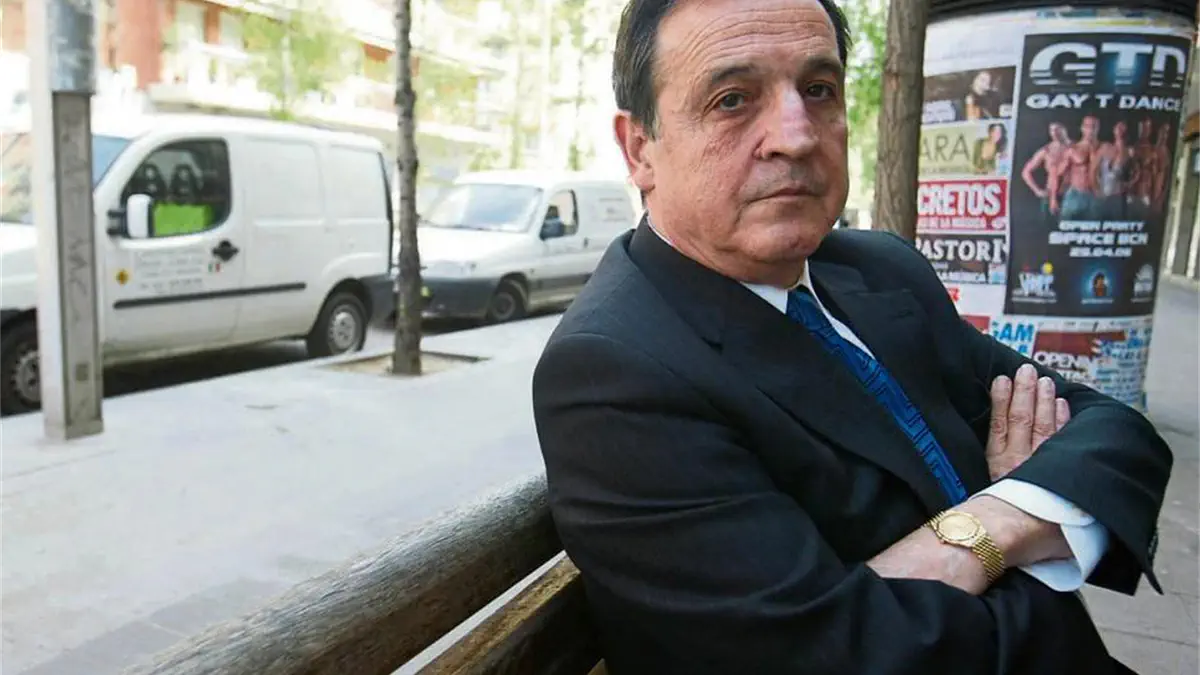
In 2023, Spanish football was shaken by the case involving José María Enríquez Negreira — the former vice-president of Spain's Technical Committee of Referees.
It emerged that for many years Barcelona had made multi-million-euro payments to companies linked to Negreira.
The Catalan club explained the payments as consulting fees and the preparation of refereeing reports.
But an obvious question arose: why was a club paying entities connected to a person who held a senior position in Spain's refereeing system?
Real Madrid joined the legal proceedings and later began using the scandal extensively in its criticism of football institutions. The Madrid club believes the case highlights serious problems with transparency and the independence of the refereeing system.
In June 2026, Real Madrid submitted its own material on the Negreira payments to UEFA. On October 1, the club announced that the European body had confirmed receipt of the documentation and the continuation of its examination of the case.
Barcelona, for its part, stressed that UEFA had not opened a new proceeding, but was reviewing the documents within the investigation launched back in 2023.
It is important to note that the mere fact of long-term payments is not proof that specific matches were bought or their results fixed. An investigation must not be replaced by a verdict delivered in advance.
Tebas also acknowledges the seriousness of the Negreira case and the need for a full investigation. However, he categorically rejects attempts to automatically link those payments to all current refereeing decisions.
In October 2026, the LaLiga president stressed that events that ended many years ago do not prove that anyone is still influencing Spanish referees today.
That is the heart of the dispute.
Real Madrid is demanding reforms to a system in which trust has been lost. Tebas believes the club is using a genuine historical scandal to build a broader, but unproven, narrative about modern refereeing.
And this is where Real Madrid TV comes to the forefront.
February 2025: Real Madrid TV — defending fairness or pressuring referees?
On February 1, 2025, Real Madrid lost 1-0 to Espanyol.
The only goal was scored by Carlos Romero, a player whom the Madrid club believed should have been sent off much earlier for a heavy foul on Kylian Mbappé.
The referee showed only a yellow card, VAR did not intervene, and 23 minutes later Romero gave Espanyol the win.
That was the final straw.
Real Madrid filed an official complaint with the Spanish Football Federation and the country's Higher Sports Council. The club claimed there were systemic problems with refereeing and questioned the fairness of refereeing decisions.
Tebas reacted sharply. In his view, the Madrid club was portraying itself as a victim and discrediting the Spanish league.
The club channel Real Madrid TV once again found itself at the center of the conflict.
For a long time, it had broadcast segments compiling refereeing errors, including ahead of matches that were due to be officiated by the referees in question.
For Real Madrid supporters, this is a way to draw attention to injustice, show specific incidents and demand explanations from refereeing authorities.
Critics, however, see the situation differently.
When a television channel belonging to one of the world's most popular clubs regularly highlights a particular referee's mistakes before a match, it can create additional psychological pressure on the official.
And even if all the incidents shown are genuine, selectively presenting only those moments that support one side does not always provide an objective picture.
It is worth separating two things here.
Criticizing referees is a club's legitimate right. But using a huge media audience to create a negative image of specific officials is an entirely different matter.
Each side draws that line in its own way. And with every new scandal, the boundary becomes harder to see.
October 2025: Miami returns — and fails again
Seven years after the first failed attempt, LaLiga once again decided to move an official match to the United States. This time, it involved Villarreal and Barcelona, with the game scheduled to take place in Miami in December 2025.
The story nearly repeated itself. Tebas viewed the project as an opportunity to expand the Spanish league's international presence.
Real Madrid opposed it once again, arguing that staging the match at a neutral venue violated equal sporting conditions.
This time, players from other teams also joined the protests.
In October, players from several LaLiga clubs symbolically stood still for the first 15 seconds of their matches. Their union protested against the lack of transparency and insufficient consultation over the relocation of the fixture.
On October 21, LaLiga announced that plans to stage Villarreal–Barcelona in Miami had been canceled because of the uncertainty surrounding the project in Spain.
Once again, Tebas failed to realize his American idea.
For Real Madrid, it was a positive result, but it would be an exaggeration to attribute the cancellation solely to the Madrid club. A much broader group within Spanish football opposed moving the match.
Interestingly, almost nothing had changed in seven years: Tebas was still convincing everyone of the commercial benefits of the American market, while Pérez continued to insist that the sporting principle of home and away matches must remain untouchable.
“I have been a Madridista since I was six.” Why is Tebas fighting the club he supports?
There is one particularly paradoxical aspect to this entire story.
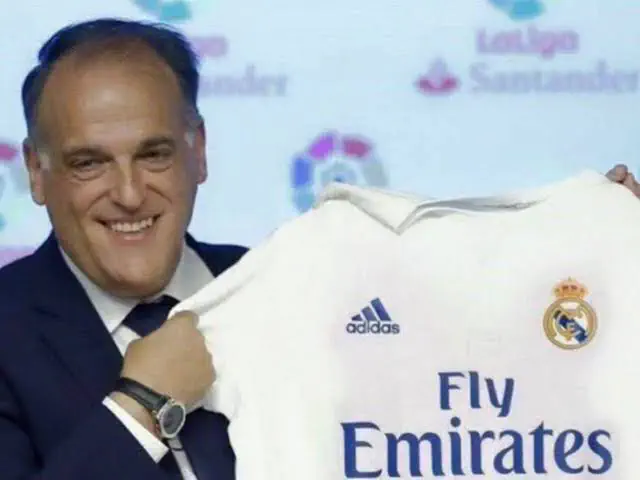
Javier Tebas has never hidden the fact that he supports Real Madrid.
In November 2025, after yet another criticism at a club meeting, one of the assembly members even proposed declaring the LaLiga president persona non grata.
Tebas responded with an emotional public statement.
“I chose the Madridista path when I was six years old... And I remain as much a Madridista as anyone else. Those who run Real Madrid today are not the entire club and not its history. They are promoting projects that weaken the league that helped them become great.”
This statement effectively offers the clearest explanation of the personal dimension of the conflict.
Tebas does not see himself as an opponent of Real Madrid. On the contrary, he is convinced that defending a strong LaLiga also means defending the future of the Madrid club.
However, there is an important difference between loving Real Madrid and supporting Florentino Pérez.
Back in 2023, Tebas openly described himself as a Madridista, but not as a supporter of Pérez. That distinction gradually turned into a genuine political dividing line.
Pérez is convinced that his club has the right to determine its commercial future independently and defend itself against unfair decisions by football organizations.
Tebas, by contrast, sees a danger in one of the world's most influential clubs seeking greater power to set the rules of the game for everyone.
Both men claim to be defending the interests of football. The problem is that their understanding of those interests is radically different.
October 2026: the Goebbels comparison and the demand for immediate resignation
By the autumn of 2026, relations between the two sides had deteriorated so badly that even routine discussions about the schedule or refereeing turned into major public confrontations.
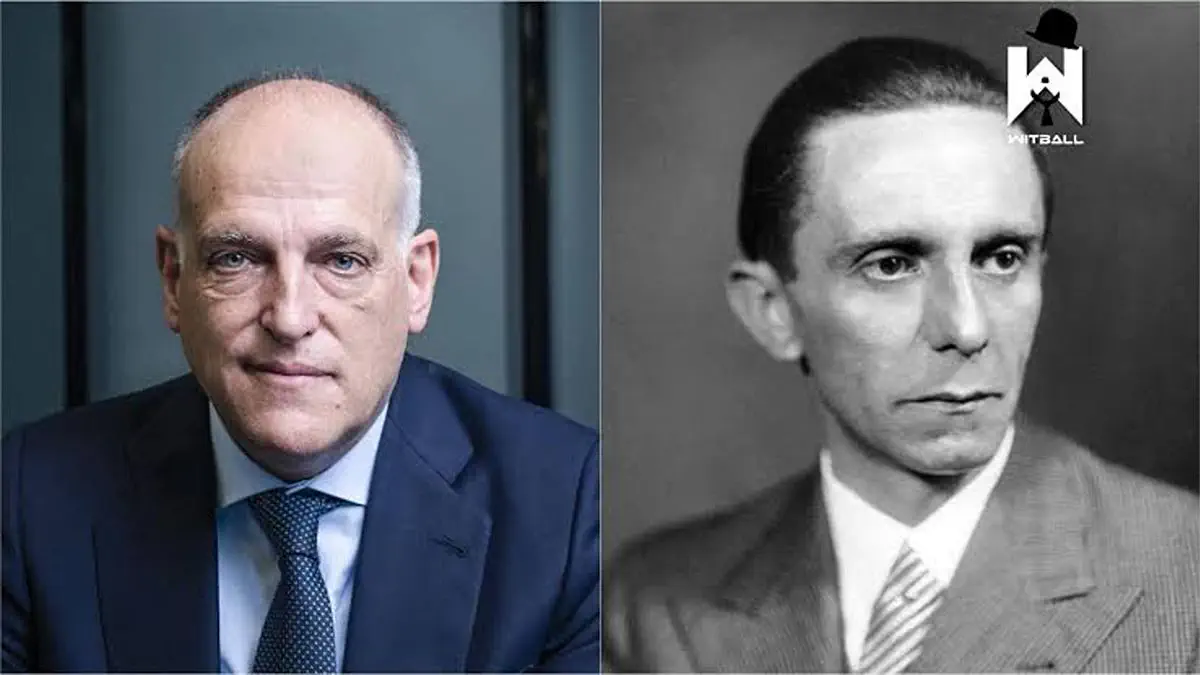
However, on October 16, Tebas resorted to a historical analogy that provoked an especially fierce reaction.
On social media, he accused Real Madrid's leadership of using the club's television channel and sympathetic journalists to constantly repeat accusations against referees and LaLiga.
According to Tebas, this communication strategy was based on selective coverage of events, intensifying a sense of injustice and creating an image of an enemy.
It was these methods that Tebas compared with the propaganda mechanisms used by Joseph Goebbels.
The LaLiga president specifically clarified that he was not comparing Real Madrid with Nazism in ideological terms and was not insulting its supporters.
But for the Madrid club, that clarification was beside the point.
In its official statement, Real Madrid called the historical analogy morally repugnant and incompatible with the responsibilities of the head of a football organization.
The club also accused Tebas of systematically attacking the Madrid leadership and Real Madrid TV.
The Madrid club once again placed particular emphasis on the Negreira case. In its view, the LaLiga president and federation vice-president should be focused on restoring confidence in the refereeing system, rather than engaging in public disputes with a club demanding its reform.
The final demand was unequivocal: Javier Tebas must immediately resign from both positions.
But once again, the LaLiga president refused to back down. He said that after 13 years in the job, he had lost count of the attempts by the Madrid leadership to force his resignation or remove him from office.
In Tebas's view, the club's official statements had become a tool for pressuring people who criticize its leadership.
He summed up his response in one word: “Intimidation.”
The conflict had now definitively moved beyond an ordinary football dispute.
Today, Real Madrid questions the neutrality of the LaLiga president and his ability to represent the interests of all clubs. Tebas, meanwhile, effectively accuses Real Madrid's leadership of attempting to undermine trust in the league by creating an information landscape that serves its own interests.
Both sides speak of defending fairness, but they increasingly deny their opponent the right to act as its defender.
So who is winning the war?
After eleven years of confrontation, neither side has secured a definitive victory.
Judging by the legal results, the Madrid club has serious arguments in its favor.
Real Madrid won the case concerning the unlawful provision in LaLiga's statutes on television revenue for the 2015/16 season. The Supreme Court also confirmed the illegality of the decisions that barred the club from meetings of the body overseeing audiovisual rights in 2022.
These are genuine legal victories, not merely successful media campaigns.
At the same time, Real Madrid lost its appeal in the CVC case and continues to challenge that investment model.
When it comes to implementing major projects, the advantage is far less obvious.
Tebas succeeded in launching the LaLiga Impulso program, securing nearly €2 billion and the support of most clubs. The centralized system for selling television rights remains in operation.
But his attempts to stage official league matches in the United States in 2018 and 2025 ended in failure.
Pérez, for his part, gained important legal arguments in the fight for the right to create alternative European competitions, but he still failed to launch the Super League.
On the contrary, in 2026 Real Madrid agreed with UEFA on principles that could bring the long-running confrontation to an end.
Even the current political balance has its paradoxes.
Despite their constant criticism of one another, Real Madrid joined LaLiga's delegated commission for the 2026/27 season. Tebas, whom the Madrid club once again called on to resign, continues to run the league.
Therefore, Real Madrid's legal victories do not mean it controls the league. Likewise, Tebas's administrative power does not guarantee victory in court or the realization of all his commercial ideas.
But the biggest problem in this war may not even be money.
Imagine a situation in which one of the world's most famous clubs repeatedly declares that it does not trust the refereeing system in its own league. The president of that league responds by accusing the club of manipulation and pressure.
What message does that send to football fans?
Every controversial red card, every VAR decision and every disappointing result risks becoming not a football debate, but yet another piece of evidence in an endless information war.
And in that sense, no one has emerged as the true winner of this confrontation so far.
Over eleven years, Pérez and Tebas have gone from arguments about television revenue to legal battles, attempts to reshape European football and mutual accusations that would have seemed unthinkable only a few years ago.
Once, they argued over who owned Spanish football's money. Now they are arguing over who has the moral right to speak in its name.
That is precisely why ending this war will be far more difficult than simply agreeing on a new television contract.
 Steven Perez
Dailysports's expert
Steven Perez
Dailysports's expert