Fabian Hürzeler: The 33-year-old genius who snubbed Man United and could lead Brighton to the title
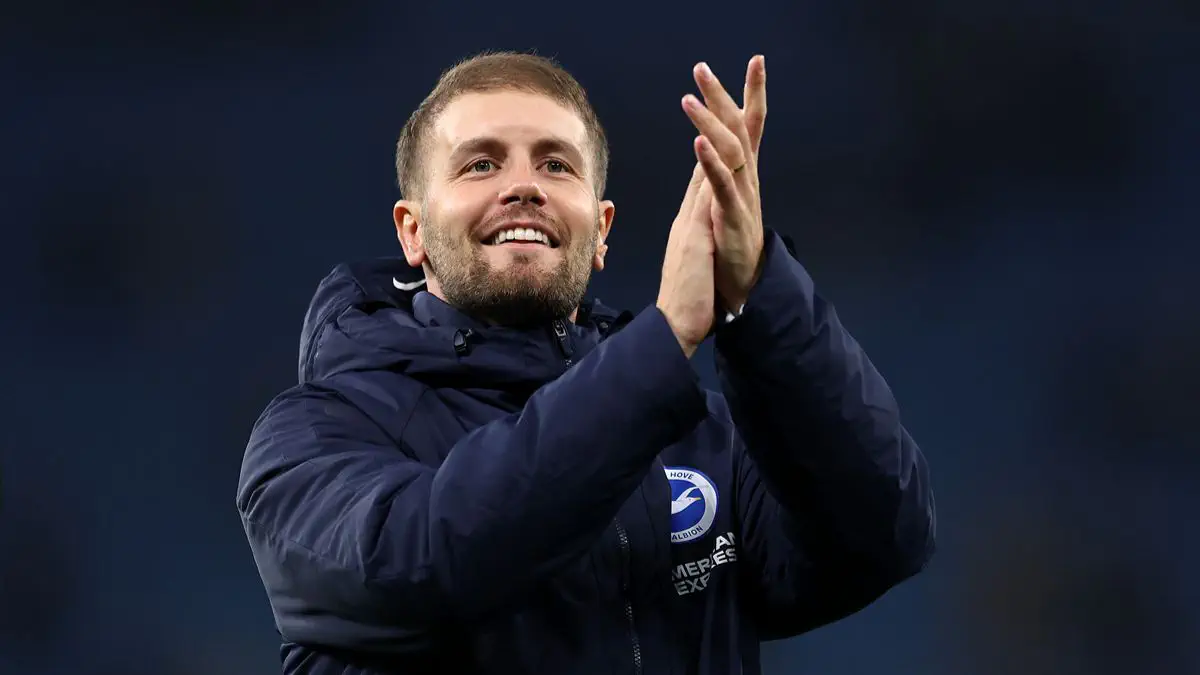
From selling paintings and coaching a fifth-tier German club to becoming one of Europe’s most promising managers. Fabian Hürzeler has endured heavy defeats, calls for his dismissal and the chance to take charge of Manchester United. Now his Brighton side have beaten the champions of England, conquered the Etihad for the first time and are seriously forcing their way into the title race.
On October 31, 2026, Manchester City lost a home Premier League match to Brighton for the first time in their history. Yasin Ayari’s only goal in the 11th minute gave the Seagulls a 1-0 victory, and after the final whistle, 33-year-old Fabian Hürzeler celebrated one of the most important results of his managerial career.
The victory was yet another confirmation that Brighton are becoming something more than simply an attractive team capable of occasionally beating the big guns. After nine rounds, Hürzeler’s side have collected 19 points, scored 24 goals, conceded just seven and sit third in the Premier League.
Just a few weeks earlier, the Seagulls had thrashed reigning champions Arsenal 3-0. Between those victories, they also knocked Manchester United out of the League Cup.
Ironically, Hürzeler himself was viewed by the Manchester club’s hierarchy as one of the candidates for the manager’s job. But the German does not want to leave ambitious Brighton for a far more prestigious yet crisis-hit club.
What makes this manager, who is only 33, so special? Why is his career developing so rapidly? And is he really capable of achieving what nobody expected — leading modest Brighton to the title?
Born in the USA, developed at Bayern, but never became a football star
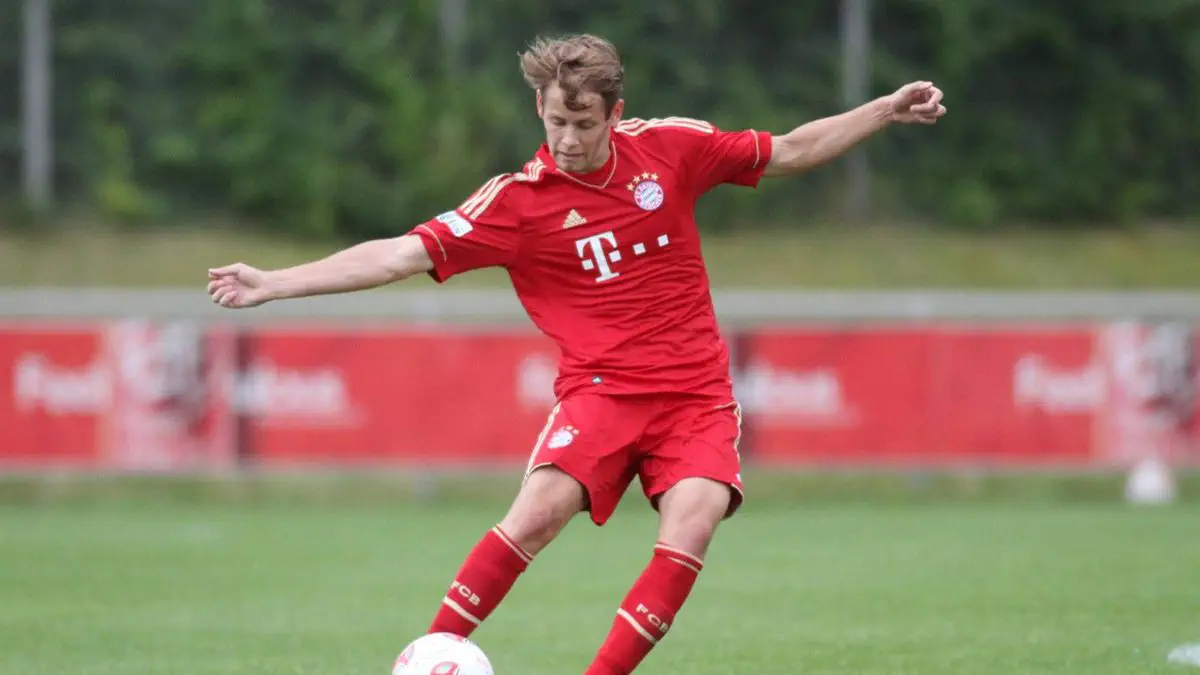
Fabian Hürzeler was born on February 26, 1993, in Houston, Texas. His father is Swiss and his mother is German. Both worked as dentists. When Fabian was two, the family returned to Germany, and the future manager spent most of his childhood in Munich.
The Hürzeler household was dominated by a genuine cult of hard work and competition. Fabian later recalled that his father cycled to work even in terrible weather, while at home everyone took even board games extremely seriously.
“When the whole family got together, for example at Christmas, and I lost a game, my evening was over,” Hürzeler recalled.
According to the manager, his brother, sisters and father were equally devastated by defeats. Even an ordinary game of Uno or Catan could turn into a fierce battle. It was in this atmosphere that his obsession with winning was formed.
Hürzeler studied at Bayern Munich’s academy, where he spent a significant part of his youth. He played for the club’s youth teams and later for Bayern II. He was also called up to Germany’s youth national teams.
However, he never broke into the Munich club’s first team. After Bayern came reserve sides Hoffenheim and 1860 Munich, but the prospects of a major playing career gradually faded.
Hürzeler later assessed his own abilities as a footballer rather harshly:
“I was missing something. I was an intelligent footballer, but not the fastest. I couldn’t properly defend my own penalty area and I didn’t score goals. I was absolutely honest with myself.”
Therefore, in 2016, at just 23, he decided to abandon his attempts to build a career at the highest professional level and focus on coaching.
At the same time, it would be difficult to describe him as a calm and disciplined player. According to Premier League data, during his time with modest Pipinsried he received 45 yellow cards, five second-yellow dismissals and one straight red.
Ten years later, his behaviour in the technical area would remain almost as emotional.
He sold paintings to make a living, but was sacked because of football
It was at Pipinsried, a club from a small Bavarian settlement near Munich, that Hürzeler’s coaching story began.
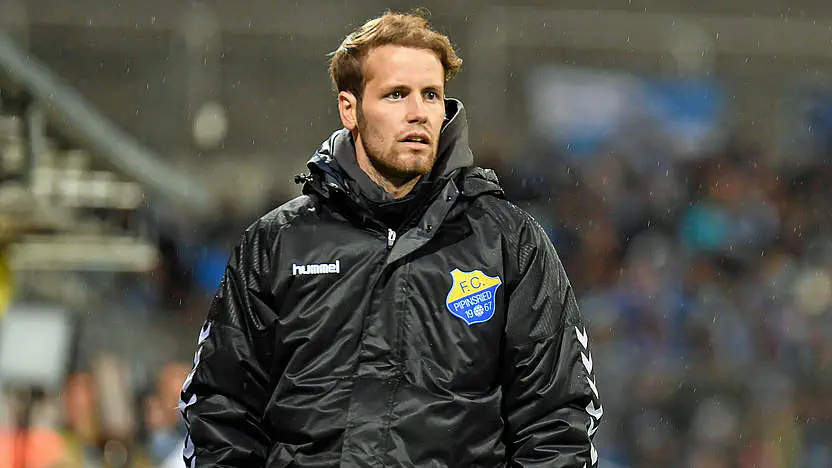
In 2016, he became the team’s player-manager in the fifth tier. Imagine it: a 23-year-old who had only recently dreamed of playing in Europe’s finest stadiums now had to take the field and manage footballers, some of whom were older than him.
Wages in amateur football were not enough for a comfortable life. So Hürzeler found a part-time job with an art dealer in Munich.
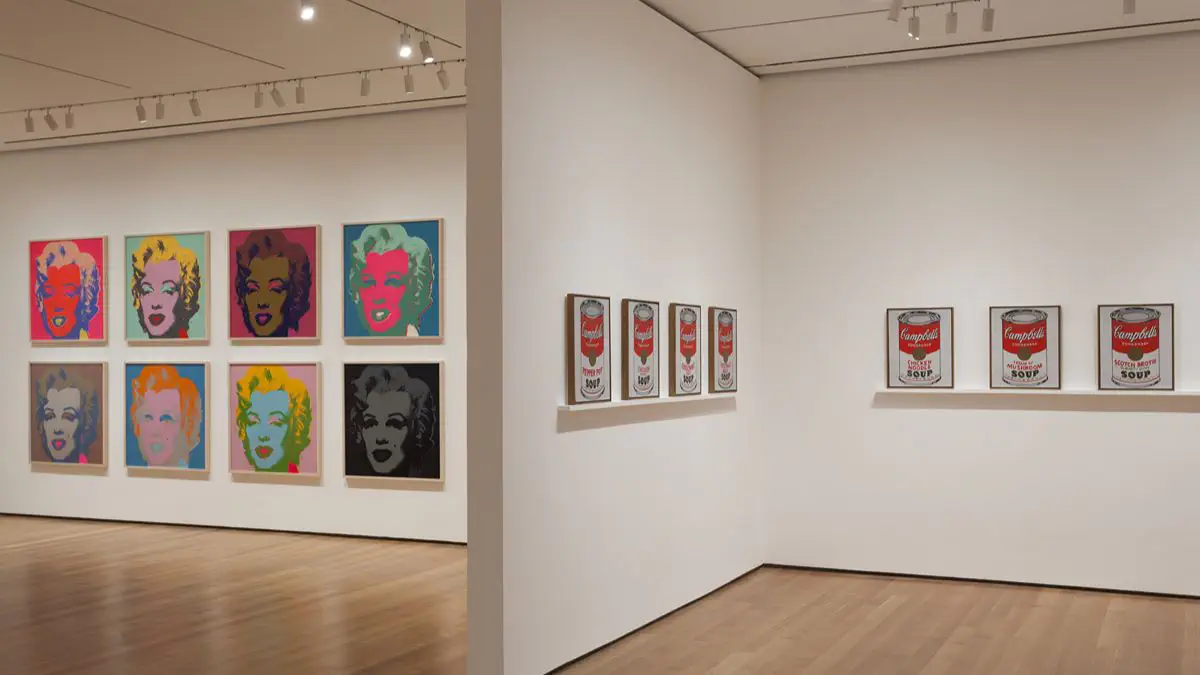
His task was to sell expensive paintings to wealthy clients. However, the new employee proved less than useful to the art business.
In an interview with The Guardian in October 2024, Hürzeler said that after selling one painting he could effectively consider his monthly target complete. He used the rest of his working time to watch football matches and study tactics.
Eventually, the owner noticed that the employee was paying far more attention to football than to work and dismissed him:
“When I sold one painting in a month, I thought I had already done my job. So I watched a lot of football. That also became one of the reasons for my dismissal,” Hürzeler admitted.
Still, Hürzeler took a lesson from that story which would later help him in his coaching career.
He realised that it was impossible simply to show a client a painting and persuade them to buy it by explaining how wonderful it was. First, you had to understand the person’s needs.
In the German’s view, the same applies to footballers. A coach must know not only a player’s strengths and weaknesses, but also their character, cultural background, habits and personal values:
“You need to understand the needs and desires of your clients. It is somewhat similar to the work of a coach. The most important thing is to understand the person behind the footballer.”
Alongside his work at Pipinsried, Hürzeler got the chance to serve as an assistant with Germany’s U20 and U18 youth national teams. In 2020, he took the next step, joining the coaching staff at St. Pauli.
St. Pauli: ten straight wins and a return to the Bundesliga after 13 years

In December 2022, St. Pauli’s hierarchy dismissed head coach Timo Schultz after a poor run of form. The team had won just one of its previous 13 Bundesliga 2 matches and was hovering near the relegation zone.
They entrusted the temporary role to 29-year-old assistant Fabian Hürzeler.
What happened next was almost unbelievable.
St. Pauli won their first ten league matches under the new manager. A team that had recently been battling relegation suddenly became one of the most dangerous sides in the division.
Hürzeler changed not only the results but also the team’s style of football. His side pressed aggressively, controlled possession and used unusual tactical solutions.
Most striking was the way centre-back Eric Smith regularly moved into midfield during build-up, creating a numerical advantage. This allowed St. Pauli to progress through the centre without abandoning their wide positioning.
In the 2023/24 season, the club won Bundesliga 2 and returned to Germany’s top flight after a 13-year absence.
It was especially symbolic that their far wealthier and more famous neighbours, Hamburg, were left behind.
That was when Hürzeler began to be spoken of as one of the most intriguing representatives of Germany’s new generation of coaches.
He constantly sought opportunities to learn from his peers. While working in Germany, he visited Tottenham’s training ground, where he spoke with Ange Postecoglou.
“He asked so many questions! At one point there were so many that I simply passed him on to the other coaches. He was interested in absolutely everything,” Postecoglou joked.
Hürzeler was also interested in Roberto De Zerbi’s work and visited Brighton, without suspecting that he would soon take charge of the English club himself.
The Premier League’s youngest manager: why Brighton took a chance on the 31-year-old German
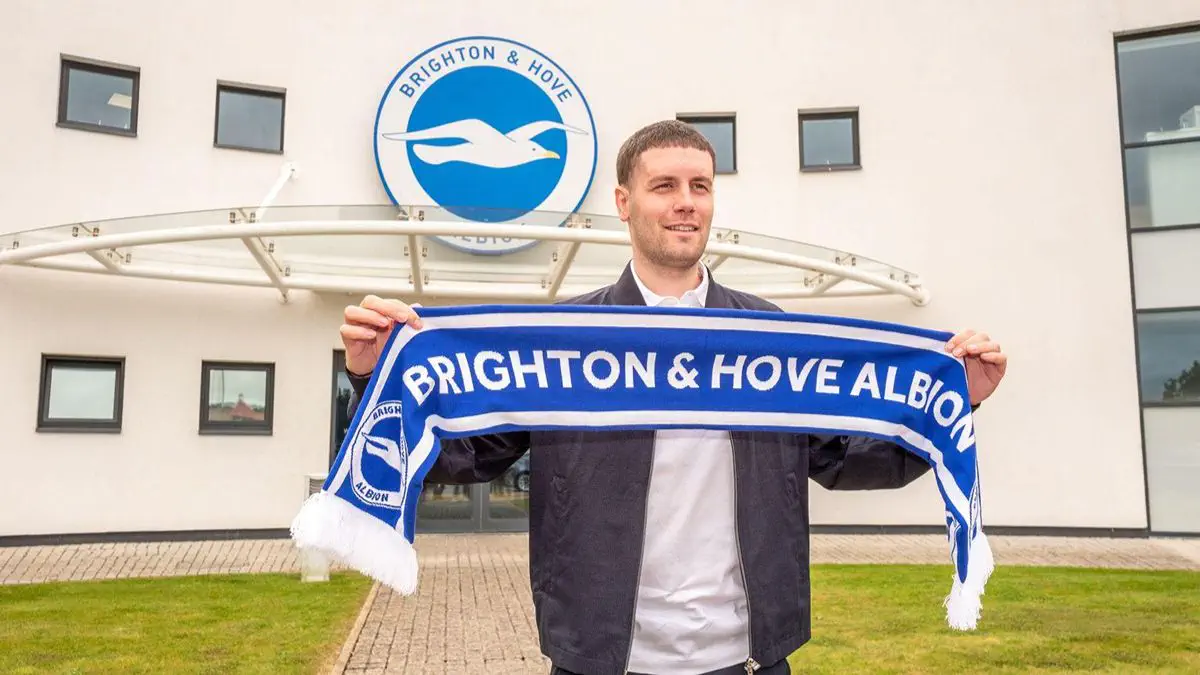
In summer 2024, Brighton faced a difficult decision. Roberto De Zerbi, who had taken the team to a new level, left the club.
The Italian had given supporters a historic European campaign and made the Seagulls one of England’s most exciting teams.
Finding a worthy replacement was extremely difficult.
Yet Brighton president Tony Bloom and his team once again demonstrated an unconventional approach. Instead of appointing an established manager with extensive experience, they brought in a 31-year-old coach who had never worked in the top division.
Hürzeler became the youngest permanent manager in Premier League history.
At the time, he was younger than several players in his own squad, including James Milner, Lewis Dunk and Danny Welbeck.
But the German did not view his age as a problem. On the contrary, he argued that being close in age to his players allowed him to understand their problems, emotions and way of thinking better.
At his presentation, the new manager outlined an ambitious goal — to challenge English football’s traditional giants.
And it was not merely a pretty phrase.
Brighton already had a reputation for finding undervalued players, developing them and selling them for huge fees. Hürzeler had to prove that a club operating under such a model could still remain competitive.
The first season: victories over the giants, seven conceded against Nottingham and 61 points
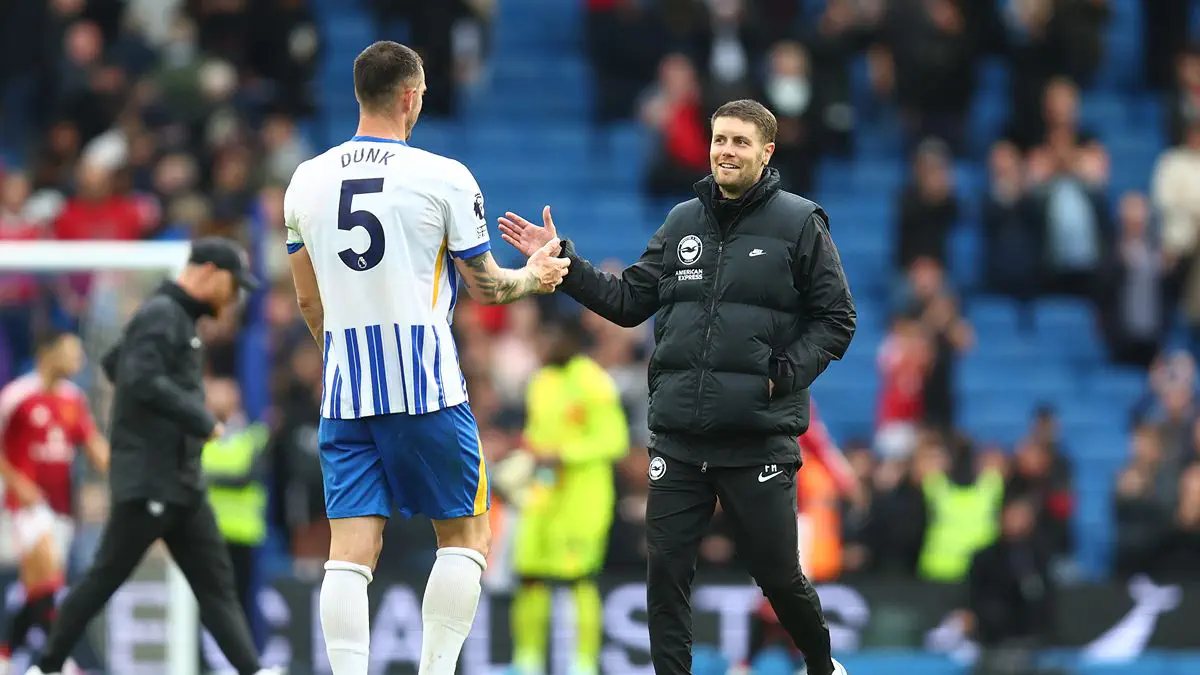
Hürzeler’s Premier League debut was almost perfect. On the opening day of the 2024/25 season, Brighton thrashed Everton 3-0 away, then beat Manchester United 2-1 in their next match.
Later, the team produced one of the season’s most spectacular comebacks: trailing Tottenham 2-0 at half-time, the Seagulls scored three times after the break to win 3-2.
Hürzeler gradually proved that his success in Germany had not been a fluke. Brighton knew how to adapt to stronger opponents and remained dangerous even when matches went against them.
However, the flip side of the manager’s youth also became apparent.
In September 2024, Chelsea beat his team 4-2, with Cole Palmer scoring four goals before half-time. Experts then labelled Hürzeler too inexperienced for that level.
The most painful blow came in February 2025, when Brighton were thrashed 7-0 by Nottingham Forest.
Defeats like that could have destroyed faith in a young coach. But the German kept working.
After the humiliation by Nottingham, his team produced a powerful finish to the campaign. In the end, Brighton finished eighth with 61 points — just one fewer than in their historic 2022/23 season, when they finished sixth.
At the same time, the Seagulls had problems organising their defence against counter-attacks. Opponents scored ten goals after fast breaks — the highest figure in the league.
But Hürzeler had already shown that he could do more than build an eye-catching attacking game: he could also find solutions in times of crisis.
From calls for his dismissal to a new contract: the biggest turning point of his career
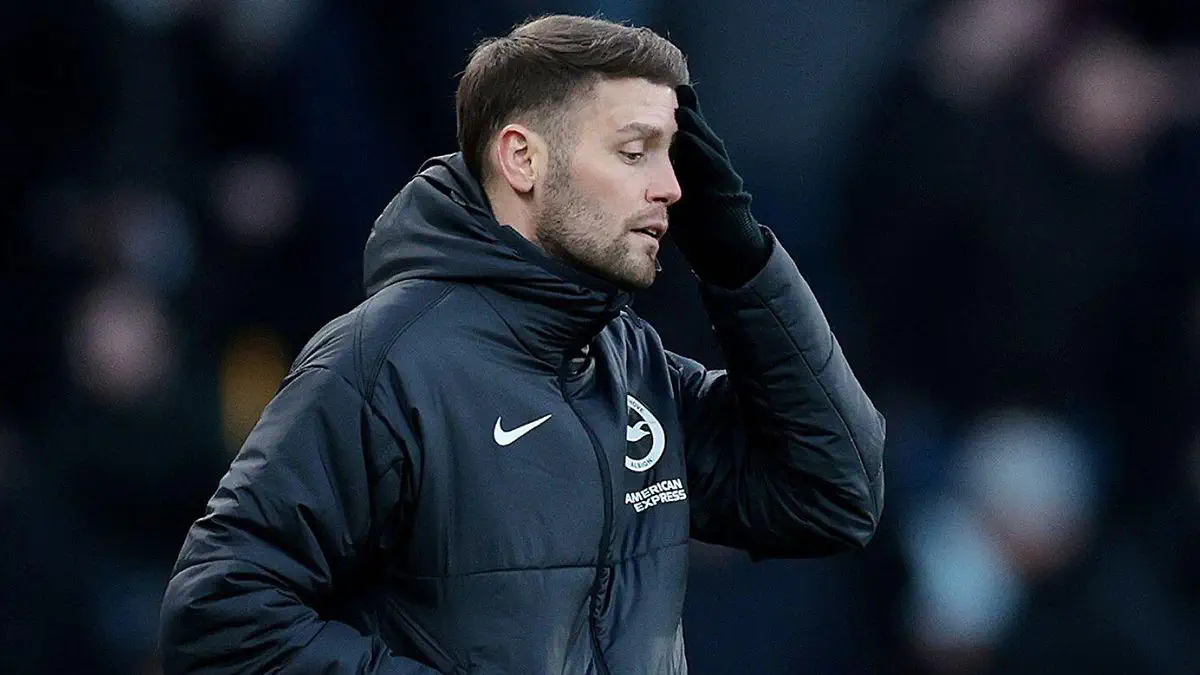
Hürzeler’s second season at Brighton proved even more difficult psychologically.
During the 2025/26 campaign, the team endured a prolonged crisis in results. Over one stretch, they managed just one win in 13 matches.
The critical point came in February 2026 after a 1-0 home defeat by fierce rivals Crystal Palace.
Brighton dropped to 14th, while some supporters booed Hürzeler and chanted “You don’t know what you’re doing” and “You’re getting sacked in the morning”.
After the match, Hürzeler said:
“There are only two options: give up or work even harder and fight even harder. Throughout my life, I have always chosen the second option.”
The club’s hierarchy did not panic either. Brighton have long sought to build long-term projects rather than sack managers after every poor run.
Hürzeler gradually reshaped the team’s play. He began relying more on experienced footballers, while Pascal Groß’s return from Borussia Dortmund in winter 2026 helped stabilise midfield. At the same time, Jack Hinshelwood was given more freedom in the attacking midfield role.
The result was immediate. In their final 12 league matches, Brighton recorded seven wins and kept seven clean sheets.
The team finished eighth again, but this time the result secured qualification for the Conference League.
Even more important was the evolution of the defence. Over the entire season, the Seagulls conceded 46 goals — the third-best record in the league behind Arsenal and Manchester City.
On May 7, 2026, Brighton announced that Hürzeler had extended his contract until summer 2029.
Within just a few months, the manager booed by his own supporters would become one of the leading figures in English football.
What is Hürzeler’s secret? Pressing, unconventional solutions and psychology
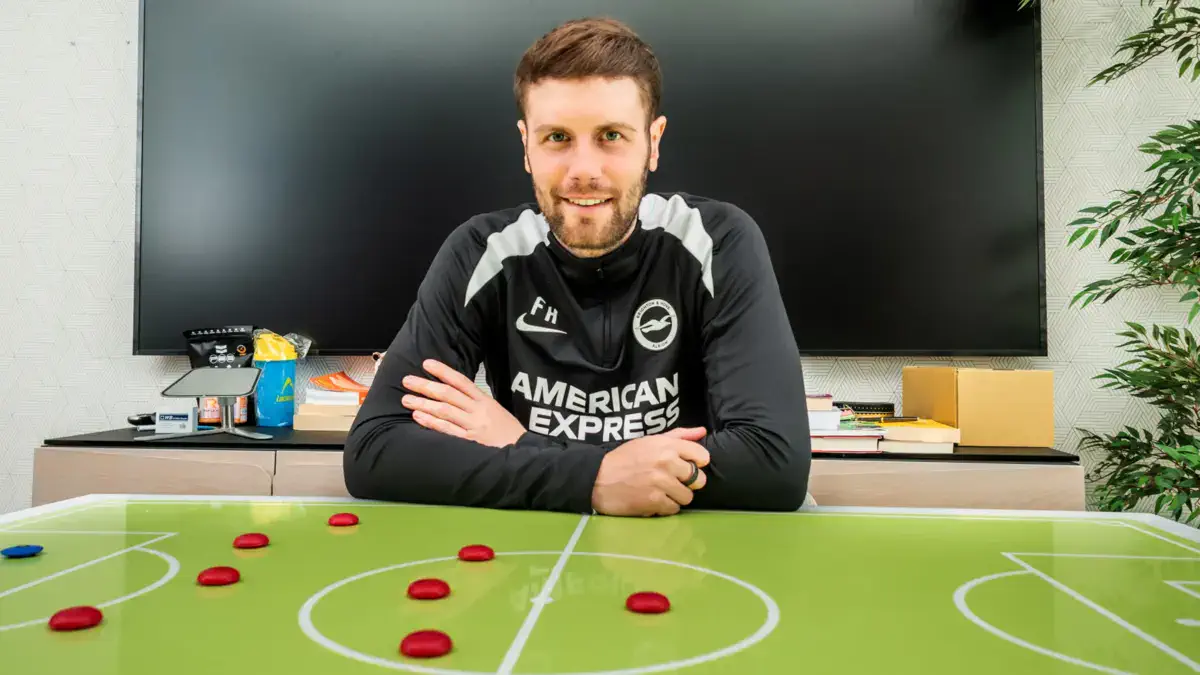
Hürzeler’s philosophy was shaped by the influence of several football schools.
From Bayern, he took the desire to dominate with the ball. From Gian Piero Gasperini, a love of flexible structures and unexpected movements by centre-backs. From Roberto De Zerbi, the idea of building attacks bravely even under pressure from the opponent.
But it would be a mistake to call him a simple disciple of any of these coaches.
While under De Zerbi Brighton often tried to lure opponents forward with short passes near their own goal, under Hürzeler the team became far more aggressive without the ball.
In the 2025/26 season, the Seagulls made 192 high turnovers — the best figure in the Premier League. In other words, they won or recovered possession near the opponents’ goal more often than anyone else.
The attacks have also become more varied. The team uses the wings, crosses and midfielders’ runs into the penalty area more frequently.
An important detail is that the players constantly change positions. A centre-back can step into midfield, a wide player can move inside and a midfielder can appear in the second-striker position.
But the most fascinating aspect of Hürzeler’s work is his approach to psychology.
In an interview in October 2026, he explained that a coaching idea only truly works when the players begin to perceive it as their own.
One important detail is that Hürzeler pays particular attention to actions that often go unnoticed by supporters.
“I always use Thomas Müller as an example: he makes ten runs and doesn’t receive the ball ten times, but on the eleventh he gets the pass,” the German explained in October 2026.
In Hürzeler’s view, the previous ten runs are no less important because they allow Müller to create space for his teammates. That work is rarely recognised, but without it, it is impossible to build a genuinely strong team.
That is why the manager wants his players not merely to follow his instructions, but to understand their value and embrace the principles of play as their own.
His own behaviour remains highly contrasting. Away from the pitch, the German tries to be calm and rational. During matches, however, he transforms into an emotional coach who gestures constantly, argues with referees and can barely stay still.
At St. Pauli, he received seven yellow cards on the touchline in a single season. In England, he has also had disciplinary problems on several occasions.
Hürzeler has admitted that he sometimes watches footage of his own behaviour during matches and is surprised by how emotional he can be.
But he has no intention of changing. To him, it is a natural expression of his passion for football.
2026/27: Brighton have become a machine that is not afraid of champions
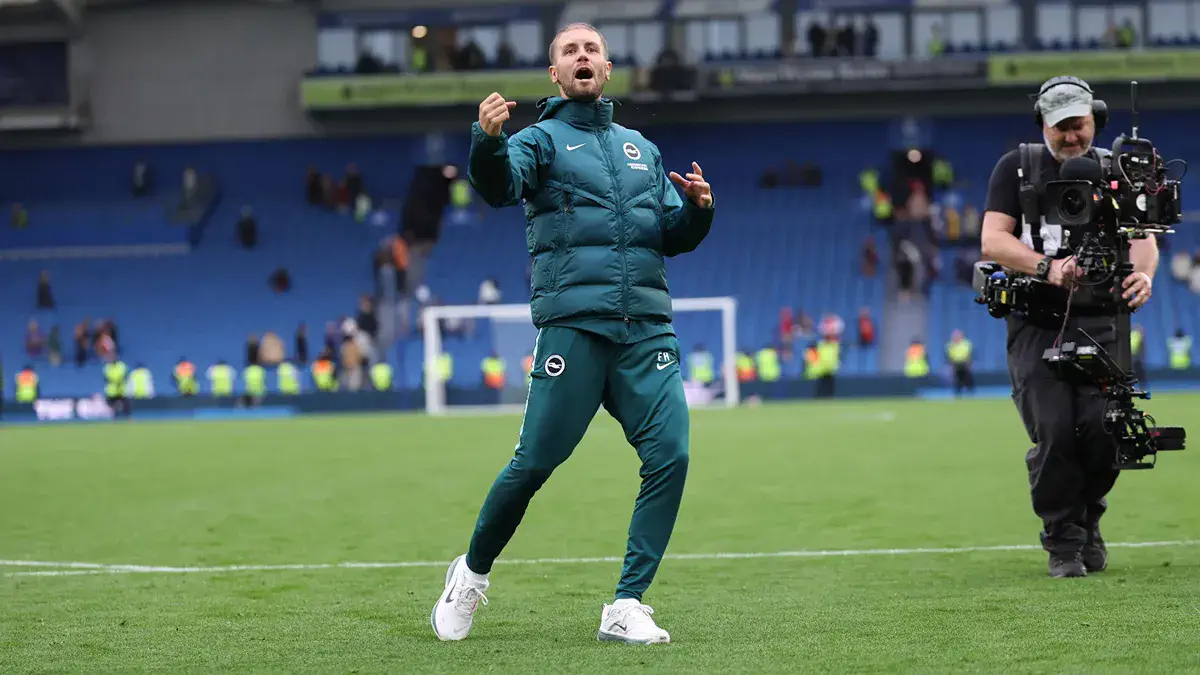
The current season has marked the next stage in the team’s development.
Brighton no longer look like a side dependent on one or two leaders. The goals are shared among many players, while constant rotation does not destroy the team’s structure.
It is particularly impressive that the team began the season without last year’s familiar attacking trio. Danny Welbeck joined Chelsea, while Kaoru Mitoma and Yankuba Minteh missed the start of the campaign.
Despite that, by the ninth round the Seagulls had scored 24 goals in nine matches — more than any other Premier League team. Eleven different players had already found the net.
In August, Brighton thrashed Aston Villa 4-0. In September, they destroyed Coventry 5-0 before handing reigning champions Arsenal their first defeat of the season — 3-0.
The match against the London side was special because the club was also celebrating 125 years since its first professional fixture. Pascal Groß, Charalampos Kostoulas and Cema Andrés gave the supporters a genuine celebration.
In October, Brighton also thrashed fierce rivals Crystal Palace 5-0. It was a symbolic revenge for the February defeat that had placed Hürzeler’s future in doubt.
On October 2, the Premier League named the German Manager of the Month for September. It was his second such award — he had first won it in August 2024.
Interestingly, Pascal Groß and Lewis Dunk also received individual awards for September. Both are older than their manager: Groß is 35, while Dunk is 34.
Meanwhile, defenders Luka Vušković and Lewis Dunk have become important parts of a solid defence, while Bart Verbruggen has repeatedly rescued the team in difficult situations.
In nine rounds, Brighton have kept six clean sheets. This is no longer simply an attacking team hoping to score more than it concedes.
Historic victory at the Etihad: how Hürzeler taught Brighton to suffer for the result
Brighton had extra motivation ahead of the October 31 match.
Just three days earlier, the team had faced Manchester City at the same stadium in the League Cup. The Seagulls took the lead twice but drew 2-2 and lost on penalties.
Among those who missed from the spot was Yasin Ayari.
For the young Swede, it was a personal disappointment. But Hürzeler urged his players not to dwell on the past and to focus on the next match.
On Saturday, Ayari himself became the hero.
In the 11th minute, after a quickly taken free-kick by Lewis Dunk, Diego Gómez delivered the ball into the penalty area. Matheus Nunes failed to intercept, Maxim De Cuyper picked up the loose ball and played it to Ayari, who scored from close range.
Then the hardest part began. City seized the initiative, pinned the visitors back and recorded 21 shots. But Brighton held firm.
Verbruggen made six saves, while the defenders threw themselves in front of shots and closed down the space outside the penalty area.
Interestingly, this was not a typical Hürzeler match. His team had just 38% possession, even though they usually seek to control games.
Yet this was precisely where the German’s managerial maturity was revealed.
He understood that against such an opponent, it was not enough simply to stick to your own principles. You also have to adapt, suffer and make the most of your opportunities.
After the match, Hürzeler admitted that the team had been forced to defend for long periods, but stressed the importance of believing in victory:
“There is an old saying: defence helps you win battles and championships. Of course, we are not talking about winning the championship right now, but today we particularly needed this defensive mentality. When a team defends the way we did today, it always shows how united it is,” Hürzeler said.
He immediately clarified, however, that Brighton are not talking about the title yet.
The manager warmly praised the 3,044 supporters who backed the team in the stadium. Many of them made the long journey from the south coast to Manchester twice in three days.
Hürzeler was delighted that after the cup disappointment, the team had finally rewarded them with a historic victory.
Why did Hürzeler refuse to move to Manchester United?
Against the backdrop of Brighton’s success, interest in their manager from more prestigious clubs was only a matter of time.
One of those clubs was Manchester United.
After a poor start to the 2026/27 season under Michael Carrick, the English media began actively discussing candidates who could replace the Manchester United manager.
Hürzeler was among the coaches highly rated by United’s hierarchy.
However, on October 22, respected journalist Ben Jacobs reported that the German was not interested in moving to Old Trafford and did not want to leave Brighton.
The following day, Hürzeler publicly commented on rumours about his future. He stressed that he was fully focused on his work at Brighton, respected Carrick and had no intention of wasting time on speculation:
“I am very fortunate to be here. I am part of this journey, and even now, when I go to bed, I feel that our story is not over yet.”
According to him, the team had gone through good and bad periods together, gradually building trust and personal connections.
He did not want to easily abandon what had been created over two and a half years.
This approach explains why even the Manchester United brand was not enough to tempt him.
At Old Trafford, Hürzeler could potentially have received greater resources, a much higher salary and global attention. But he would also have faced enormous pressure amid the club’s deep institutional crisis, along with the risk of losing his job after the first serious setback.
At Brighton, he had already endured such a crisis and received the backing of the club’s hierarchy.
Most importantly, he has the opportunity to continue building the team according to his own vision.
Can Brighton repeat Leicester’s fairytale and win the Premier League?
After the victory at the Etihad, the question of Brighton’s title prospects no longer sounds like a joke.
In the 2015/16 season, Claudio Ranieri’s Leicester achieved one of the greatest feats in English football history. A team nobody considered a title contender won the Premier League.
Ten years later, Brighton have the chance to create their own fairytale.
There are enough arguments in the team’s favour.
The Seagulls have already shown that they are capable of beating the strongest sides. The thrashing of Arsenal and the historic success against Manchester City are difficult to dismiss as coincidences. The team boast an outstanding goal difference of +17 after nine rounds. That is the league’s best figure at this stage.
The squad’s depth is also impressive. Brighton do not depend on one goalscorer, while injuries and absences have not stopped their attacking football.
The team have already come through difficult matches against many direct rivals. Before their return meeting with City in January, the Seagulls will not have to face any other member of the current top five.
Still, there are serious reasons for caution.
Brighton have never finished in the top five of England’s top division. In previous seasons, moreover, the team have endured several prolonged winless runs.
Hürzeler now faces a new task: teaching the team to maintain a high level not for a few weeks, but throughout the entire campaign.
Participation in the Conference League creates an additional burden. Although the competition offers another route to a trophy, midweek matches will demand intelligent rotation.
After the victory over City, Hürzeler himself deliberately refused to discuss the title race:
“Right now, we are focused on the process. We will go home, analyse the match, draw conclusions and start preparing for the next game. We are simply moving from match to match.”
But perhaps that restraint is the right strategy.
Just a few months ago, Hürzeler was being booed by his own supporters. Now he has beaten the reigning champions of England, conquered the Etihad and become one of Europe’s most sought-after young managers.
Once, he failed to become a star footballer and lost his job selling paintings because of his obsession with the game. At 23, he took charge of an amateur team. At 29, he began rescuing St. Pauli from relegation. At 31, he became the Premier League’s youngest manager.
And at 33, he finds himself with the opportunity to achieve something that until recently seemed impossible.
To transform Brighton from a club that develops stars for the giants into a club that becomes champions itself.
And if Hürzeler succeeds, his decision to remain at the Amex instead of potentially moving to Old Trafford will go down in English football history forever.
 Steven Perez
Dailysports's expert