
Everything was ready, but the deal collapsed: Camara and other transfers that fell through at the last minute
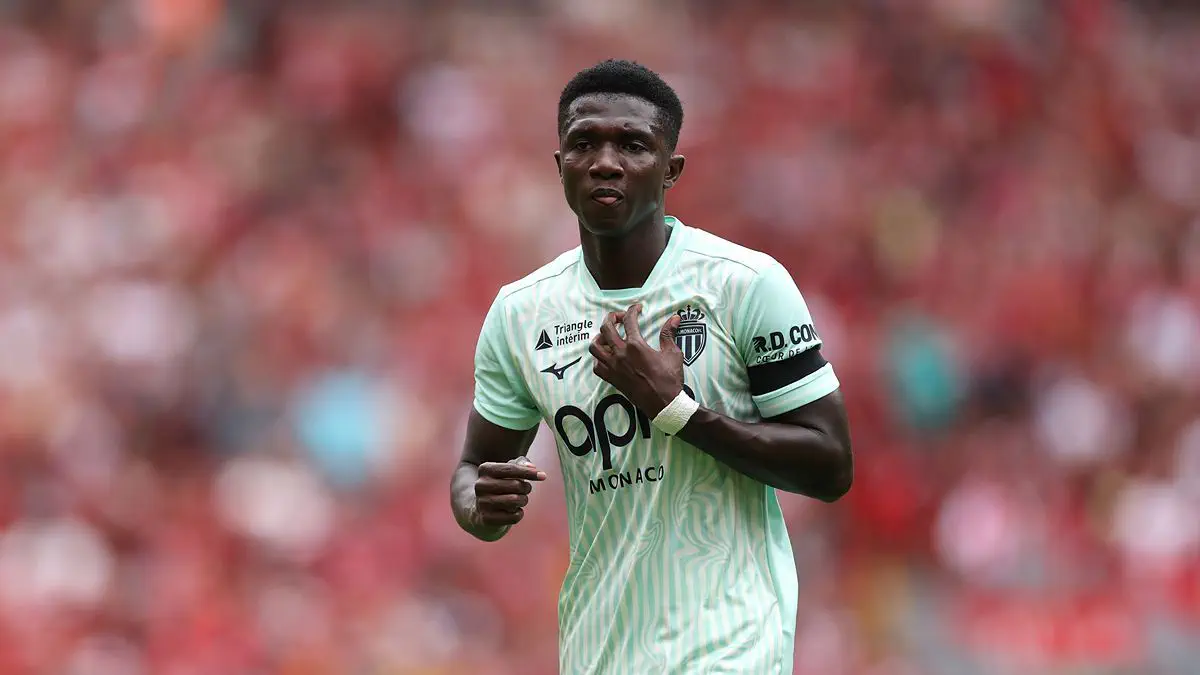
Lamine Camara was already preparing to fly to London, David De Gea failed to become a Real Madrid player because of paperwork, while Willian switched from Tottenham to Chelsea practically after completing his medical. We look back at the biggest transfers that seemed all but done — until something went wrong.
In football, the phrases “deal done” or “here we go” are far from a guarantee that a player will actually change clubs. Neither is an agreed contract. Nor even a completed medical, a plane ticket, a transfer document submitted to the league, or a recorded unveiling video for a new signing.
The football world received another reminder of that on September 1, 2026. Chelsea had agreed a deal with Monaco for Lamine Camara, but the French club effectively pulled out of the already agreed transfer in the final hours of the window.
And this was far from the first time that a transfer which had appeared to be a mere formality collapsed right at the finish line.
Lamine Camara — Monaco to Chelsea, 2026
The most recent story on the list — and one of the most dramatic. After selling Enzo Fernandez to Manchester City for £125 million, Chelsea urgently needed a new central midfielder and settled on 22-year-old Lamine Camara.
On deadline day, the London club agreed a €55 million transfer with Monaco for the Senegal international. Camara agreed a six-year contract and was due to fly to London for a medical. According to Fabrizio Romano, everything between the clubs had already been agreed in writing. Monaco had initially been unwilling to sell the player, but accepted the deal after Folarin Balogun’s £40 million move to Everton began to collapse because of issues during his medical.
Then the situation changed again. Everton and Monaco found a new compromise over Balogun, after which the French club backed out of the already agreed sale of Camara. At the same time, Liverpool entered the story. According to Ben Jacobs, the Merseyside club contacted both Camara’s representatives and Monaco and asked them not to rush. Liverpool were not planning to sign the midfielder immediately, but could return for him in 2027.
Liverpool did not try to directly sabotage Chelsea’s deal, but their interest strengthened Monaco’s belief that they could eventually receive around €70 million for Camara. As a result, Monaco rejected Chelsea at the last moment. Most ironically, after the deadline Balogun himself turned down a move to Everton. In the end, Monaco sold nobody, while Chelsea were left without a replacement for Enzo Fernandez.
David De Gea — Manchester United to Real Madrid, 2015

Probably one of the most famous failed transfers in deadline-day history.
In the summer of 2015, David De Gea was Real Madrid’s main transfer target. The Spaniard had entered the final year of his contract with Manchester United, while Madrid viewed him as the long-term replacement for Iker Casillas.
However, the clubs left everything until the final day.
On August 31, Real Madrid and United finally reached an agreement: the operation was valued at around £29 million and also involved Keylor Navas moving in the opposite direction. Both goalkeepers were ready to change clubs. Navas later even revealed that he was waiting at the airport for the signal to fly to Manchester.
Then came the bureaucratic disaster.
The required information was not registered in time with FIFA’s system and Spain’s La Liga. The De Gea paperwork reached the league only after midnight. Real Madrid and Manchester United published detailed statements the following day, effectively blaming one another.
The transfer did not happen.
De Gea remained in Manchester for many more years, while Navas unexpectedly became the first-choice goalkeeper of the team that won three consecutive Champions League titles. One late package of paperwork significantly changed the history of both clubs.
Steven Gerrard — Liverpool to Chelsea, 2005

Only a few weeks had passed since the unforgettable Champions League final in Istanbul, where Gerrard lifted European football’s biggest trophy as Liverpool captain.
But by early July, negotiations over a new contract had reached an impasse.
Jose Mourinho’s Chelsea made a £32 million offer — a fee that at the time could have set a British transfer record. Liverpool rejected it, but Gerrard formally submitted a transfer request. Fans burned shirts bearing their captain’s name, while a move to the reigning English champions appeared to be only a matter of time.
Mourinho later admitted that, at one point, he effectively considered Gerrard a Chelsea player.
But during the night, the midfielder changed his mind.
The following morning, his agent called Liverpool’s hierarchy and informed them that Steven was staying. Gerrard soon signed a new contract.
One of the biggest potential transfers of the generation failed to happen because the player realised that he simply could not leave his boyhood club.
David Beckham — Manchester United to Barcelona, 2003

This is not a classic story from the final day of a transfer window, but given how advanced the deal was and the stature of the player involved, it certainly deserves a place on this list.
In June 2003, Barcelona presidential candidate Joan Laporta made Beckham a central part of his election campaign. And it was not merely a promise.
Manchester United officially announced that they had accepted an offer from Barcelona — provided Laporta won the election.
There was only one problem: nobody had convinced Beckham himself.
The player’s representatives stated that he had no plans to meet Laporta, while the Englishman preferred Real Madrid. A week later, the Spanish club agreed a transfer with United for around €35 million.
Barcelona lost the biggest star of Laporta’s campaign — and turned their attention to Ronaldinho.
Considering what happened to the Catalan club in the years that followed, this is one of those failed transfers about which you could say: the disappointment ultimately proved to be a historic stroke of luck.
Robinho — Real Madrid to Chelsea, 2008

Sometimes overconfidence can cost you a transfer as well.
In the summer of 2008, Robinho wanted to leave Real Madrid, and his main destination was Chelsea, who were managed by his Brazilian compatriot Luiz Felipe Scolari.
The London club were so confident the transfer would happen that their official website prematurely offered fans the option to order a Chelsea shirt with “Robinho” on the back.
That went down very badly in Madrid. Robinho himself later cited the shirt incident as one of the reasons negotiations became more difficult. Real Madrid were also demanding a higher fee than Chelsea were prepared to pay.
Then deadline day arrived.
Manchester City’s new owners decided to immediately demonstrate their ambition and offered £32.5 million. On the evening of the final day of the window, Robinho’s agent still believed his client was going to become a Chelsea player.
A few hours later, the Brazilian had joined Manchester City.
Willian — Anzhi to Tottenham, 2013

One of the most painful transfer stories for Tottenham.
The London club agreed a deal worth around £30–32 million with Anzhi for Willian. The Brazilian flew to England, completed his medical and was at Spurs’ training ground, where the contract was supposed to be signed.
And then Chelsea called.
According to Willian himself, he was already preparing to complete his move to Tottenham when his agent told him about an offer from the Stamford Bridge club. The player’s choice was immediate: he wanted Chelsea.
Roman Abramovich was reported to have personally contacted Anzhi’s owner. Chelsea hijacked the transfer, leaving Tottenham furious at how events had unfolded.
Willian ultimately spent seven seasons at Chelsea and won two Premier League titles and the Europa League with the club.
For Spurs supporters, the transfer remains one of the most famous “hijackings” in Premier League history.
Nabil Fekir — Lyon to Liverpool, 2018

Fekir was so close to joining Liverpool that the club had already recorded his unveiling interview.
In June 2018, the Merseyside club agreed a transfer worth around £53 million with Lyon. The player agreed a five-year contract, underwent a medical in Paris and even recorded material for the club’s LFCTV channel. It seemed all that remained was to press the “publish” button.
But after the medical tests, Liverpool raised concerns over the condition of Fekir’s knee, having previously suffered a cruciate ligament rupture.
From there, the different parties’ versions of events partly diverged. Media reports widely suggested that Liverpool attempted to change the financial structure of the deal because of the risks, although ESPN reported that the club did not try to renegotiate the agreed fee. The full reason was never officially disclosed by either side.
The fact remained: Lyon announced that negotiations had ended, while Fekir’s Liverpool unveiling video was never used.
Ruud van Nistelrooy — PSV to Manchester United, 2000

One of the rare stories in which a medical not only prevented a transfer, but effectively predicted a serious future injury.
In the spring of 2000, Manchester United agreed a deal worth around £18.5 million with PSV for Van Nistelrooy — a move that was set to break the British transfer record.
The club even scheduled a press conference to unveil their new signing.
But the striker never appeared.
United’s doctors were unhappy with the condition of his right knee. The English club wanted further tests and proposed an arthroscopy, as well as evidence that the striker had fully recovered. PSV did not agree to the additional conditions, and the transfer was halted.
A few days later, the same knee gave way in training — Van Nistelrooy tore his anterior cruciate ligament and was ruled out for around a year.
However, this story eventually had a happy ending. In April 2001, United returned for the striker, he successfully passed his medical and finally moved to Old Trafford.
Marc Guehi — Crystal Palace to Liverpool, 2025

A year before the Camara story, English football had already witnessed a very similar deadline-day thriller.
On September 1, 2025, Liverpool agreed a deal worth around £35 million for Crystal Palace captain Marc Guehi.
The transfer had progressed extremely far. The first part of the defender’s medical had already been arranged, while the required deal sheet was submitted before the transfer window closed.
But Palace head coach Oliver Glasner was adamant that he did not want to lose his captain without a proper replacement. The London club signed young Jaydee Canvot but failed to bring in a more experienced centre-back.
Palace ultimately blocked the transfer at the last moment.
For Guehi, that meant several more months in London. The story continued in January 2026, when Manchester City signed him for a significantly lower fee — around £20 million.
Joao Palhinha — Fulham to Bayern, 2023

On September 1, 2023, Palhinha was already in Munich.
Bayern had agreed a deal worth around €65 million with Fulham for the Portuguese defensive midfielder. The player received permission to fly to Germany and completed his medical.
Only one thing remained — Fulham needed to find his replacement.
They did not.
Because Marco Silva did not want to be left without his key midfielder, the London club did not give final approval for the transfer. The German window closed earlier than the English one, and there was no longer time to find an alternative. Palhinha, who had effectively spent the day as a future Bayern player, returned to London.
But, as with Van Nistelrooy, this case merely postponed the inevitable.
In July 2024, Bayern returned for the Portuguese midfielder and completed the transfer this time. Palhinha signed a contract until 2028, with the deal worth around €51 million.
Hakim Ziyech — Chelsea to PSG, 2023

In January 2023, Chelsea were spending hundreds of millions on new players, while Ziyech was supposed to leave the club.
PSG agreed a loan deal for the Moroccan until the end of the season. Ziyech arrived in Paris, completed his medical and waited for the formalities to be completed.
But the documents were not registered in time.
The Parisian side blamed Chelsea: according to British media reports, incorrect or incompletely prepared documents were sent from London several times. Chelsea partly disputed that version of events and also pointed, among other things, to technical problems.
PSG appealed to the French football authorities to allow the transfer to be registered after the deadline, but the request was rejected.
Ziyech, who was already in Paris and believed the move to be practically complete, was forced to return to Chelsea.
Paulo Dybala — Juventus to Tottenham, 2019

In the summer of 2019, Mauricio Pochettino could have brought one of Serie A’s biggest stars to Tottenham.
Spurs reached an agreement with Juventus over the transfer of Paulo Dybala for around €70 million. The Argentine was also prepared to consider a move to London.
But just hours before the English transfer window closed, the deal collapsed.
The main problem was said to be the complicated situation surrounding the player’s image rights, which were connected to a third party. The potential payments required to resolve the issue significantly increased the overall cost of the operation. There were also outstanding questions over personal terms.
Tottenham ultimately decided not to complete the transfer.
For a club that had played in the Champions League final only a few months earlier, Dybala could have been the signing that took the team to another level. But it was not to be.
Malcom — Bordeaux to Roma, 2018

In this case, fans were already on their way to welcome the new signing.
On July 23, 2018, Bordeaux and Roma publicly announced that they had reached an agreement in principle for Malcom’s transfer. The Brazilian was supposed to fly to Rome, complete his medical and sign a contract.
Around 50 Roma supporters even travelled to the airport to welcome the player.
But the plane never arrived.
The reason was Barcelona.
The Catalan club entered the negotiations after the agreement between Roma and Bordeaux had already been announced and offered the French side more money. The following day, Barcelona officially agreed a €41 million transfer plus €1 million in bonuses for Malcom.
Roma sporting director Monchi made no attempt to hide his anger. From the Italian club’s perspective, a promise had already been made and the player was expected in Italy.
Peter Odemwingie — West Bromwich Albion to QPR, 2013

Possibly the funniest failed transfer in Premier League history.
On January 31, 2013, Odemwingie wanted to leave West Brom and join QPR. Negotiations between the clubs were genuinely taking place, but they had not yet reached an agreement over the transfer fee.
The striker decided not to wait.
He got into his car in Birmingham and drove to London himself. Outside Loftus Road, Odemwingie gave interviews to television channels, effectively discussing his upcoming transfer.
There was just one problem: West Brom had not given him permission to negotiate a contract, while QPR could not even officially allow the player inside to complete the transfer.
The deadline passed, and no agreement was ever reached.
The following day, Odemwingie had to return to West Brom training. He later insisted that he believed he had been given verbal permission to travel to London.
His journey to Loftus Road has since become an inseparable part of Deadline Day folklore.
Jean-Philippe Mateta — Crystal Palace to Milan, 2026

Another recent example.
During the 2026 winter transfer window, Mateta wanted to join Milan. Crystal Palace were prepared to sell the French striker for around £30 million, but first wanted to find a replacement.
The London club agreed a £48 million deal to sign Jorgen Strand Larsen from Wolverhampton, while Mateta was given permission to undergo a medical ahead of a move to Italy.
It was the medical that killed the deal.
Milan carried out additional tests because of problems with the striker’s right knee. Mateta had undergone surgery following a meniscus injury in 2019 and had again experienced discomfort during the 2025/26 season.
The Italian club concluded that the risk was too high and pulled out of the £30 million transfer on deadline day.
Fabio Coentrao — Real Madrid to Manchester United, 2013

The summer 2013 transfer window was Manchester United’s first since the end of the Sir Alex Ferguson era — and it almost immediately descended into transfer chaos.
One of David Moyes’ final options was Fabio Coentrao.
United attempted to arrange a season-long loan for the Real Madrid left-back practically at the deadline. Preliminary documents were submitted, and for a time the move appeared entirely realistic.
However, Madrid first needed a replacement. Real were working on a loan deal for Granada’s Guilherme Siqueira, but the Brazilian ultimately joined Benfica instead.
Without a new left-back, Madrid were unwilling to let Coentrao leave, while the clubs also failed to complete all the formalities before the deadline.
Coentrao remained in Madrid, while United ended a nervous final day of the transfer window with Marouane Fellaini as their only major signing.
Why Do Transfers Like These Keep Falling Through?
The sums involved have grown, clubs have become more professional, and information can be transmitted in seconds. Yet the final day of the transfer window still regularly produces stories that seem impossible.
The reasons have barely changed.
One club fails to find a replacement in time. Another receives a better offer. Doctors identify a risk. The player changes his mind. Representatives fail to reach an agreement over image rights. A document is submitted too late. And sometimes the fate of one transfer is decided by another deal that has no direct connection to the player at all.
That is exactly what happened with Lamine Camara.
Chelsea had almost everything: an agreement with Monaco, an agreed fee, a contract plan and a player ready to move. The only thing missing was the final formal step.
And that was enough for another “almost completed” transfer to join this list.
 Steven Perez
Dailysports's expert
Steven Perez
Dailysports's expert