Did Musiala deceive Bayern? The truth about his illness, money and conflict with the club
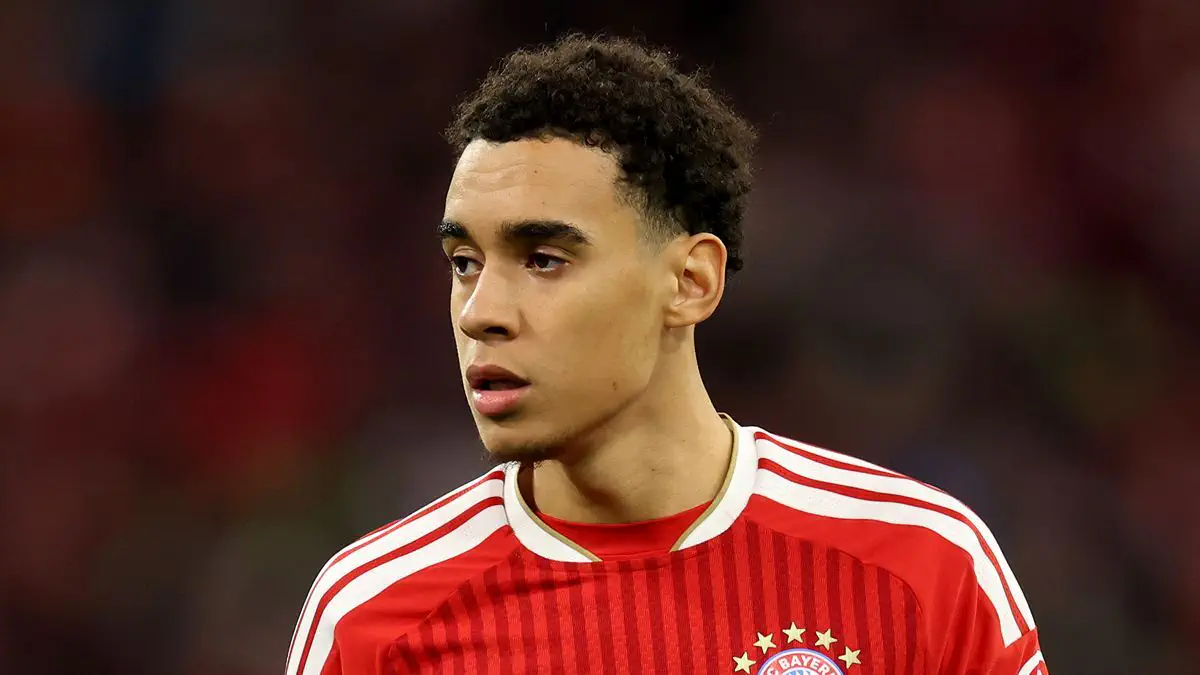
Hidden seizures, a secret meeting with Hoeneß, a €150m contract and suspicions of deception. One of Munich’s biggest scandals in years is gathering pace.
As recently as February 2025, Bayern celebrated extending Jamal Musiala’s contract as one of their biggest transfer-market victories. The Munich club kept one of the world’s most talented footballers, made him one of the highest-paid players in the club’s history and planned to build a team around him for years to come.
Less than two years later, Bayern’s leadership is publicly questioning whether his contractually agreed salary should be paid, the international players’ union is accusing the club of applying coordinated pressure on the player, and reports are emerging in the German press about seizures allegedly kept hidden even from some senior figures at the Munich giants.
On November 24, German magazine Stern published the findings of a new investigation shedding light on why Bayern’s bosses have adopted such an aggressive tone. It turns out that behind Uli Hoeneß and Karl-Heinz Rummenigge’s public statements lies a tangled web of internal conflicts, financial concerns and mutual distrust.
What is really going on with Musiala, why has his contract become a headache for Bayern, and could the footballer really have deceived the club? We unpack this complicated story.
- Also read: What if Manchester United are relegated? 10 devastating consequences — from star exits to bankruptcy
What illness does Musiala have, and when did it start?
For the general public, this story began in August 2026. But, as it is now emerging, Musiala’s health problems began much earlier.
According to Sky Sport, the first known seizure occurred back in June 2025 during the Club World Cup match against Argentine side Boca Juniors. Jamal came on as a substitute but was forced off after about 25 minutes. At the time, the incident did not cause anything like the reaction that followed the later episodes.
By the summer of 2025, both the footballer’s representatives and Bayern had learned of the diagnosis.
However, the neurological condition was far from Musiala’s only problem. In July that year, he suffered a serious leg injury in the Club World Cup match against PSG, which kept him out for around six months.
Then, on August 15 and 18, 2026, two incidents took place, after which it became impossible to keep the footballer’s health problems from the public.
First, Musiala suddenly collapsed during a friendly against RB Leipzig. Three days later, the same thing happened in the match against Heidenheim. In both cases, the footballer went down without contact from an opponent.
After the second incident, Jamal posted a statement on social media, saying doctors had diagnosed him with a neurological dysfunction causing brief seizures known as absence seizures.
“It’s part of my everyday life now. It’s treatable,” the footballer admitted at the time.
What is an absence seizure?
An absence seizure is a type of epileptic seizure during which a person briefly loses awareness of what is happening around them. Such seizures can last only a few seconds, after which the person returns to their usual activities.
For a professional footballer, even a few seconds of impaired awareness can pose a serious problem, especially given the intensity of modern football, the physical demands and constant contact with opponents.
Musiala himself has said he is under the care of qualified specialists. His representatives continue to insist that doctors see no fundamental obstacle to him continuing his professional career.
However, the full medical picture remains confidential. Based on publicly available information, it is impossible to predict exactly how the condition will affect Jamal’s career going forward.
Seizure before the Real Madrid match: what was kept from Bayern’s bosses?
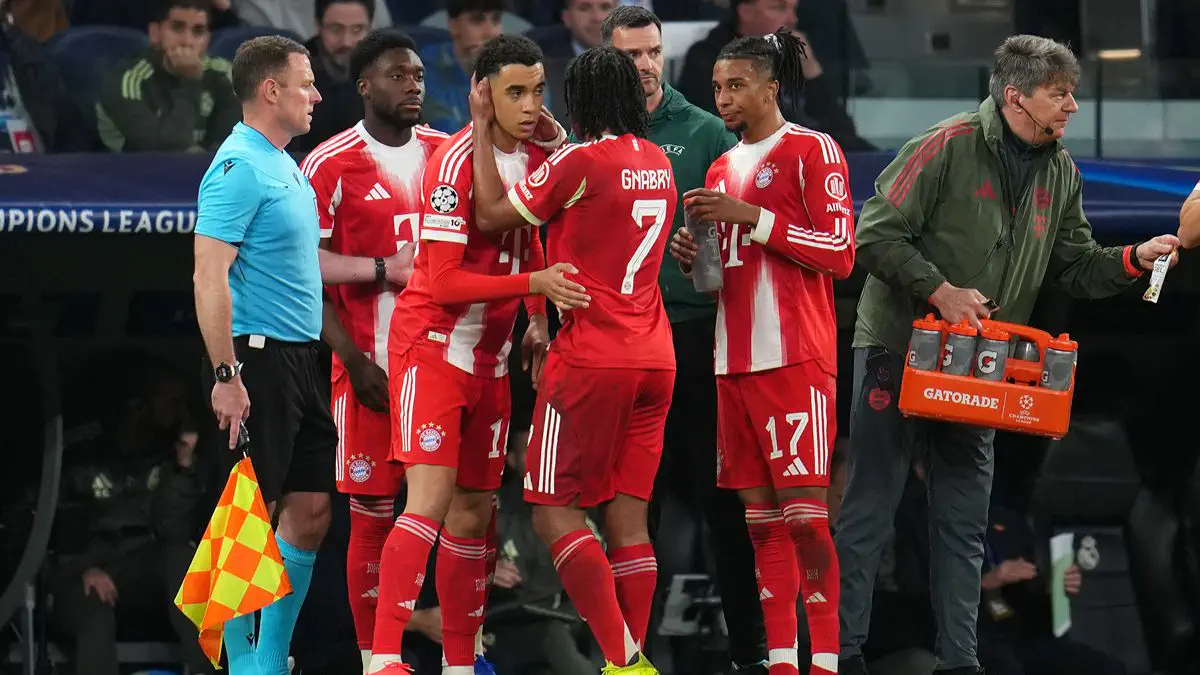
One of the most explosive details in Stern’s investigation concerns the events of April 7, 2026.
That day, Bayern arrived at the Santiago Bernabéu for the first leg of their Champions League quarter-final against Real Madrid.
The Munich side won 2-1, with Musiala coming on in the second half. Nothing out of the ordinary, it seemed. However, just hours before kick-off, Jamal suffered another seizure at the team’s hotel in Madrid.
Despite this, the footballer took part in the match that evening.
Until November, this episode had not been made public. It is also unknown exactly which club representatives knew about the seizure when the decision was made to field Musiala.
An incident on November 16, 2026, at the club’s training ground caused even more anger among Bayern’s leadership.
According to Stern, Musiala suffered another absence seizure during training. He returned to full-team training the very next day, and four days later he played in the Bundesliga match against Cologne.
But the problem was not just the seizure itself.
Stern reports that Bayern’s sporting leadership and the footballer’s representatives initially did not disclose the incident not only to the public, but also to some of the club’s senior officials.
They learned about it only later, prompting serious discontent.
For supervisory board members, this was another reason to doubt whether they were receiving enough information about the health of one of the team’s most expensive players.
And this is where one of the main paradoxes of the story emerges: Bayern has taken on huge financial commitments to Musiala, yet some club representatives say they do not have a complete picture of his health.
Musiala chooses his own doctors. Why does Bayern dislike that?
Two specialists chosen by the footballer and his representatives are treating Musiala’s neurological condition. They also pay for their services.
Bayern, for its part, depends on the information it receives from those doctors.
One Bayern representative complained that the club cannot require Musiala to undergo an examination with a neurologist of its choosing.
“We want clarity, but we’re not getting it,” the source told the publication.
The club’s leadership fears that the footballer’s actual health may be more serious than the information they are receiving suggests.
Musiala’s camp, by contrast, sees no grounds for such pessimistic forecasts. According to their information, doctors believe Jamal can return to his previous level.
On the one hand, choosing his own doctors is not proof that Musiala or his representatives are hiding anything. The right to medical confidentiality applies to professional footballers too, regardless of their salary.
On the other hand, the club’s concerns are understandable: it pays the footballer’s salary and needs complete information about his ability to train and play.
A €150m contract. Why has money become such a sore point?
On February 14, 2025, Bayern officially announced that Musiala had extended his contract until the summer of 2030.
At the time, the decision seemed entirely logical. Jamal was one of the planet’s most promising footballers, a leader of the next generation of the German national team and a potential face of Bayern for the next decade.
To keep him, the Munich club made unprecedented financial concessions.
According to Stern, Sky and Bild, the terms of the deal are as follows:
- The contract runs until the summer of 2030.
- His annual salary, including bonuses, could reach €25m before tax.
- A significant portion of the footballer’s income is not tied to the number of matches he plays.
- According to Stern, the signing bonus was at least €22m.
- The total potential financial package is estimated at around €150m.
- In the event of illness, the contract provides for his salary to be maintained for up to six months.
The last point is particularly significant.
A standard employment contract in German professional football provides for the employer to pay the salary for six weeks of incapacity for work, in line with the law. In the case of an occupational injury, an insurance benefits system may then come into play, with payments generally much lower than a top footballer’s salary.
Musiala’s representatives secured far more favorable terms: six months.
What makes the situation more difficult for Bayern is that a significant portion of Jamal’s pay is fixed. Even if he plays few matches, the club cannot automatically cut most of his income.
So the contract, once considered one of Bayern management’s biggest victories, is now viewed by the club’s own leadership as a potential financial problem.
Mysterious car crash: did Musiala know about his illness before signing the contract?
According to Stern, Bayern’s leadership has questions about exactly when Musiala, his family and his agents first learned about the footballer’s neurological problems.
Journalists obtained correspondence in which a former club executive allegedly acknowledged that “Bayern were informed about the absence seizures only after the new contract had been signed.”
Against this backdrop, Munich has revisited the car crash Musiala was involved in in April 2025—about two months after extending his deal.
The footballer caused a crash on the autobahn in which two people in another car were injured. In early 2026, a court fined Jamal, and the footballer later confirmed his involvement in the accident.
Now, according to Stern, some Bayern representatives are asking themselves: could the neurological condition have been connected to that crash? And could the footballer have known about his health problems before extending his contract?
Bayern president Herbert Hainer publicly rejected on November 21 the suggestion that Jamal’s representatives could have known about the condition before the deal was signed.
In other words, there have been no public accusations, but the most interesting developments are currently taking place behind the scenes.
Secret meeting at Lake Tegernsee. An agreement that never existed?
Another key episode in the dispute was a meeting that the public learned about only in recent days.
In August 2026, Musiala’s representative Christian Schmid met Bayern honorary president Uli Hoeneß at his home on Lake Tegernsee.
The conversation took place before the two public incidents in the matches against RB Leipzig and Heidenheim.
Hoeneß was informed about the footballer’s health. According to German journalists, the meeting took place in a fairly constructive atmosphere.
However, it later emerged that the two sides came away with entirely different conclusions.
Bayern’s leadership believed they had reached a sort of gentleman’s agreement: the club would give Jamal all the support he needed, but if the footballer could not return to his previous level, his representatives would agree to discuss the financial terms of his contract.
Musiala’s camp sees the meeting very differently.
In their view, it was an open and constructive discussion about the footballer’s health, but they made no specific commitments to renegotiate the contract.
Sky also reports that no agreement—written or verbal—was reached on a future salary reduction.
Clearly, the different interpretations of that conversation became one of the catalysts for the dispute that followed. Hoeneß and his allies seem to have expected the footballer’s representatives to be willing to make concessions, while the latter do not believe they should give up terms that have already been agreed.
Hoeneß and Rummenigge against Musiala. How did the conflict go public?
On November 8, Uli Hoeneß publicly expressed doubts on Bayerischer Rundfunk about whether Musiala would be able to return to his previous level:
“In his case, we find ourselves in a dilemma. He has an illness that is not so easy to treat, but which can be controlled to some extent with medication. But whether he will ever be able to return to the level he was at before…”
He also raised the question of whether the footballer’s salary matched his future sporting capabilities:
“But he continues to receive his money. Imagine if Bayern were to question his contract now and say: what he is able to show now no longer matches what was written into the contract.”
On November 18, Bayern CEO Jan-Christian Dreesen weighed in:
“Either we will all be delighted that the old Jamal is back, or, if he becomes a different Jamal along the way, we will have to talk about it.”
But the real explosion came on November 20.
That day, Musiala returned to the pitch after an approximately two-month absence caused by a muscle injury. Jamal played around 20 minutes in the 1-1 draw against Cologne.
Instead of discussing the return of one of their most talented footballers, Bayern supervisory board member Karl-Heinz Rummenigge once again turned to his money in an interview with Sky:
“If he doesn’t become the old Jamal again, we will have to speak with his family, the player himself and, above all, his agents. Because then, with all due respect, those figures will no longer be justifiable.”
Behind closed doors, however, the leadership’s rhetoric seems to have been even harsher.
At one closed-door meeting, Uli Hoeneß reportedly made a comment that quickly spread across Germany:
“One of Bayern’s highest-paid players, and until recently one of its most valuable, now has virtually no market value.”
So, from the club leadership’s perspective, the situation looks absurd: Bayern pays out millions every month without having the full medical picture, without controlling the treatment and while suspecting that critical details are being kept from them.
Division within Bayern. Not everyone is against Musiala
It would be a mistake to assume that all of Bayern has taken the same position on Jamal.
Sporting director Max Eberl and head coach Vincent Kompany are much more optimistic about Musiala’s prospects.
At a press conference ahead of the match against Cologne on November 19, 2026, they struck a far more optimistic tone than Hoeneß and Dreesen:
“We’re not worried about it. We are absolutely convinced that Jamal will become the old Jamal again. He’s an incredibly resilient guy who draws strength from this difficult situation,” Eberl said.
Vincent Kompany, who has also recently had health problems, put it this way:
“I hope he will be able to show all of this on the pitch, and I believe in it 100 percent. My role is to make sure Jamal succeeds at Bayern and comes out of this story a better version of himself.”
However, this position does not seem to sit well with Hoeneß.
According to Stern, at one supervisory board meeting, the honorary president accused Eberl of having effectively failed to take the necessary steps regarding the Musiala situation for six months.
Meanwhile, Hoeneß and Rummenigge reportedly won the supervisory board’s backing for their push to take a tougher stance toward the footballer’s representatives.
The reaction of Musiala’s agency to Rummenigge’s controversial interview was also telling.
Jamal’s representatives stressed that they were in constant, constructive contact with Bayern’s sporting leadership, specifically naming Max Eberl, Christoph Freund and Vincent Kompany.
Hoeneß and Rummenigge were not mentioned in the statement.
But the players have also had a part to play.
The most prominent show of support was Michael Olise liking Fabrizio Romano’s Instagram post, in which the journalist shared a FIFPRO statement criticizing Bayern’s leadership. The image accompanying the post bore the words: “Bayern must respect Musiala.”
As a result, the Musiala story is gradually becoming a conflict between different power centers within the Munich club, with the players themselves now involved too.
The football world has rallied around Musiala
The response to Bayern’s leadership statements was swift.
On November 21, the international players’ union FIFPRO issued an official statement:
“In FIFPRO’s view, this is a coordinated strategy aimed at putting pressure on Musiala and his representatives ahead of any negotiations. A club of Bayern’s stature should understand that this is not acceptable.”
On November 23, the German professional footballers’ union VDV joined the criticism.
Its president, former Germany international Carsten Ramelow, said:
“I think the bosses have scored a spectacular own goal. It’s definitely a bad message. We’re really forgetting the person at the center of all this. We need to be clear about one thing: a contract is a contract. Both parties signed it, and it cannot be called into question.”
Even members of Bayern itself expressed their discontent.
At the club’s annual general meeting, one member, a neurologist by profession, publicly criticized the leadership’s treatment of Musiala. His remarks were met with applause from those in attendance.
President Herbert Hainer and CEO Jan-Christian Dreesen then tried to ease tensions, assuring the crowd that the club would give the footballer the support he needed and time to recover.
However, the earlier statements had already caused serious reputational damage.
Can Bayern cut Musiala’s salary or terminate his contract?
Despite the hard line taken in public by Hoeneß and Rummenigge, the Munich club’s legal options are extremely limited.
Experts in sports and employment law consulted by German media stress that a footballer’s decline in sporting performance or the fact that they have an illness does not give the club the right to unilaterally change their agreed salary.
A professional footballer is not required to guarantee their employer a certain number of goals, assists or successful dribbles in exchange for a fixed salary.
According to lawyer Joachim Rein, as cited by Sky, terminating the employment relationship on health grounds could be considered if the footballer were permanently unable to play. But at present, there is no evidence that Musiala is unable to play.
What’s more, Jamal continues to train and take to the pitch.
Therefore, the most realistic scenario for changing the financial terms remains the footballer’s voluntary consent.
That helps explain why FIFPRO representatives interpreted Bayern’s leadership’s public statements as an attempt to put pressure on Jamal where the club has limited legal leverage.
The question of possible deception when the deal was signed also remains in theory. But any legal claim of that nature would require substantial evidence—not merely suspicions, assumptions or dissatisfaction with the terms of the signed contract.
Timeline of the Musiala scandal
- February 14, 2025. Musiala extends his Bayern contract until 2030.
- April 2025. The footballer is involved in a car crash in which two people are injured.
- June 2025. According to Sky, his first known seizure occurs during the match against Boca Juniors.
- July 2025. He suffers a serious leg injury in the match against PSG.
- Summer 2025. According to Sky, the club and the footballer’s camp learn of the diagnosis.
- April 7, 2026. Possible seizure at the hotel before the match against Real Madrid.
- August 2026. Hoeneß meets Musiala’s representative at Lake Tegernsee.
- August 15 and 18. Two on-pitch incidents. Musiala publicly discloses his condition.
- September 23. A muscle injury sidelines him for another lengthy spell.
- November 8. Hoeneß publicly questions whether Musiala can return to his previous level.
- November 16. Another possible seizure at training.
- November 20. Musiala returns to the pitch; Rummenigge raises the issue of his salary.
- November 21. FIFPRO accuses Bayern’s leadership of putting pressure on the footballer.
- November 22. The club and the footballer’s representatives resume contact.
- November 23. The German players’ union joins the criticism of Bayern.
- November 24. Stern publishes explosive new details about the dispute.
Interestingly, on November 24—the day Stern’s investigation was published—Musiala’s representatives met with Herbert Hainer, Jan-Christian Dreesen and Max Eberl. According to Sky Sport, the talks were constructive: the parties agreed to step up dialogue, and the club intends to ease the pressure on the footballer, support him over the coming months and only then reassess the situation. Hoeneß and Rummenigge were not present at the meeting.
So, did Musiala really deceive Bayern?
There is no black-and-white answer to the central question in this story—and that is exactly why the dispute has become so explosive.
As of November 24, 2026, there is no evidence that Jamal Musiala deliberately concealed his illness before signing a multi-million-euro contract. However, Bayern has some suspicions about the matter, so it will be interesting to see how the situation develops.
The Munich club’s position is understandable from an economic perspective. It has taken on huge financial commitments to a footballer whose future is now shrouded in uncertainty.
But there is another side to the story.
Just imagine if PSG’s leadership publicly started demanding that Khvicha Kvaratskhelia and Désiré Doué take pay cuts because of their serious injuries, arguing that the footballers cannot play and might not return to their previous level after recovering. How would the football world react? And how often have we seen anything like this in world football?
Musiala is only 23. Over the past year and a half, he has suffered a serious injury, several other setbacks and a neurological condition. Now he has to fight not only to get back to his best, but also to hear public doubts about his value from people who, not long ago, were persuading him to tie his future to Bayern.
It was the Munich club that agreed to all the financial terms of the contract. And unless it can be proven that the footballer deliberately misled the club during negotiations, it would be unfair to make Jamal bear responsibility for the risks of that deal.
For decades, Bayern has taken pride in its Mia san mia philosophy, presenting itself as something more than just a football club. The Musiala story has become a serious test of that philosophy.
But there is one caveat that could change everything.
What if Musiala really did know about his diagnosis before signing his new contract in February 2025—and deliberately kept that information from the club? For now, these are only suspicions circulating in the corridors of Bayern. But if they are confirmed, the whole story will be turned on its head. And Hoeneß, Rummenigge and the other Bayern executives will have to be viewed in a completely different light.
And the key question will no longer be whether Bayern is treating Musiala fairly, but whether Musiala himself acted honestly toward Bayern.
 Steven Perez
Dailysports's expert