
Who is Manchester United’s worst manager? From Mourinho and Moyes to Carrick and Amorim
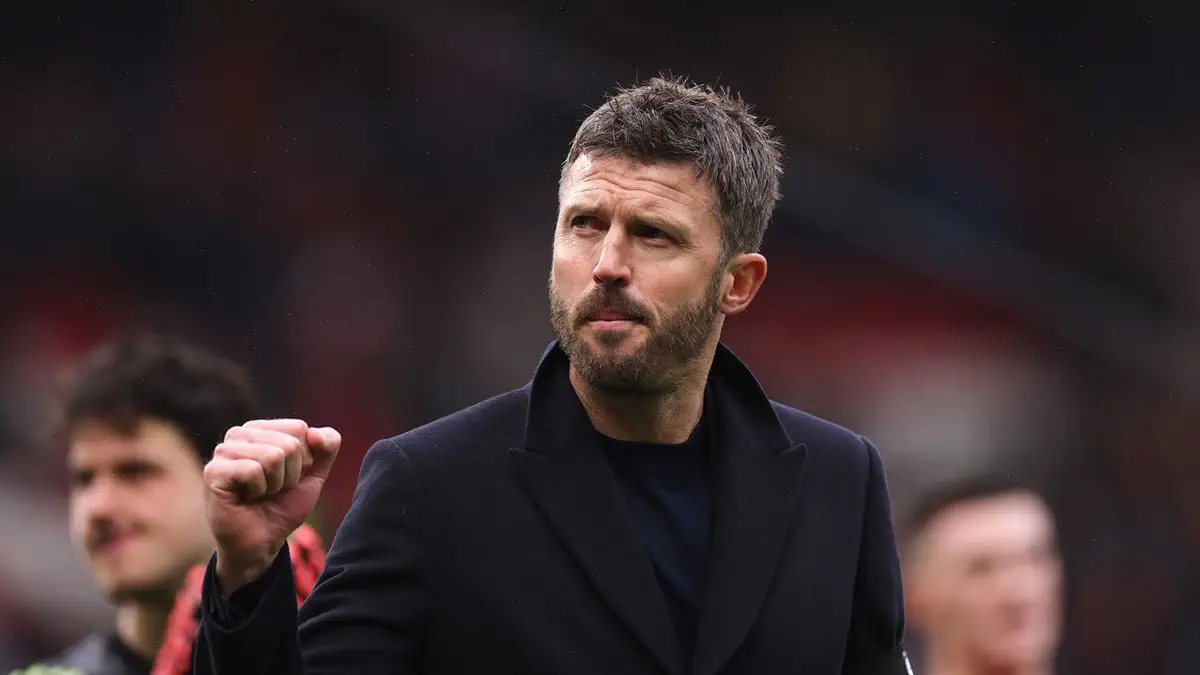
Six points from six matches, the club’s worst start in 40 years and yet another dropped lead against ten men. Manchester United are going through another crisis. But which of the eleven managers to take charge of the club since Alex Ferguson failed the most? We have compiled a ranking based on statistics, trophies, expectations and each manager’s impact on the team.
“If Michael Carrick had taken charge at the start of the season, we would be champions of England.”
Just a few months ago, Manchester United supporters could be heard making claims like that. Carrick took over in January 2026, won 12 of 17 Premier League matches, guided the team to third place and returned it to the Champions League. It seemed the club had finally found someone capable of restoring its greatness.
But only six matches into the new season, and almost none of that optimism remains.
On October 10, United drew 1-1 at home with Tottenham, who had not won a single league match before then. The Red Devils took the lead through Bryan Mbeumo, gained a numerical advantage in the 78th minute after Rodrigo Bentancur was sent off, but conceded an equalizer from Dominic Solanke in stoppage time.
What makes it particularly painful is that this is already the third consecutive Premier League match in which United’s opponents have received a red card, yet the Red Devils have been unable to win. Two of those instances have come this season: Manchester City even defeated Carrick’s side while down to ten men.
After six matches, United have just six points — one win, three draws and two defeats. It is the club’s worst start to an English league season since 1986/87. Symbolically, it was in the autumn of 1986 that Alex Ferguson arrived at Old Trafford.
He went on to build a football empire and win 13 league titles, but since his retirement in 2013, none of his successors have been able to replicate that success.
Over more than 13 years, Manchester United have endured a whole collection of failed projects: authoritarian tacticians, charismatic motivators, club legends and revolutionaries who promised to rebuild everything.
So who was the worst?
In our ranking, we considered win percentage, Premier League points, trophies, quality of football, the manager’s starting resources, length of tenure and the state in which he left the team.
Even short-term caretakers are included, although their handful of matches obviously cannot be assessed in the same way as a full managerial project.
We will begin with the least unsuccessful — and gradually work our way toward the main culprit.
- Also read: What happened to Dele Alli, Pogba, Sancho and Sterling? Top 13 forgotten football superstars
11. José Mourinho (2016–2018) — the most successful of the failures
Statistics: 144 matches, 84 wins, 32 draws, 28 defeats. Win percentage — 58.3%. Average of 1.89 points per Premier League match.
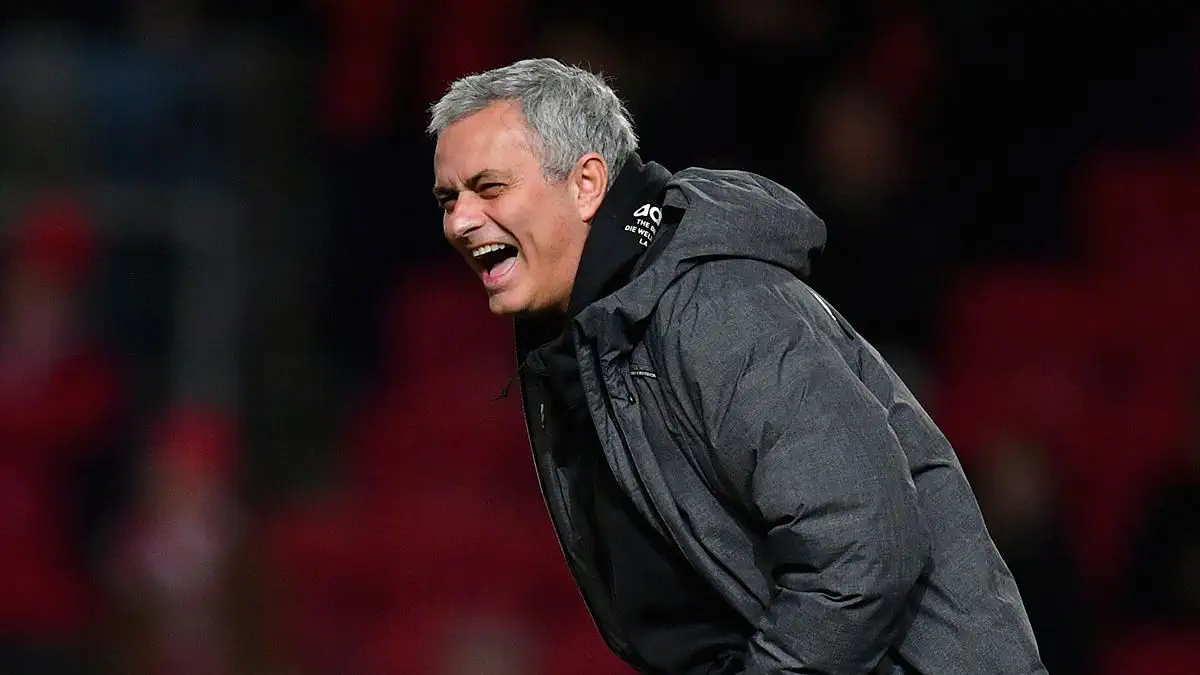
If we judge the post-Ferguson era by results, it is almost impossible to call Mourinho a failure.
The Portuguese won the Europa League, the League Cup and the Community Shield. In 2017/18, Manchester United finished second in the Premier League with 81 points — the club’s best tally since Ferguson’s departure.
Yes, the team finished 19 points behind Pep Guardiola’s Manchester City. But today, 81 points in a season looks like a result United supporters can only dream of.
Mourinho’s problem lay elsewhere. His pragmatic football increasingly frustrated the fans, conflicts with players damaged the atmosphere, and his third season turned into the familiar crisis associated with the Portuguese manager.
When he was dismissed in December 2018, United had collected only 26 points from 17 matches and had effectively dropped out of the title race.
Mourinho did not lay the foundations for sustained success. Yet he was arguably the only manager after Ferguson to consistently combine competitiveness with trophies.
The irony is that his famous description of finishing second in 2017/18 as one of the greatest achievements of his managerial career has become increasingly convincing with the passage of time.
10. Ruud van Nistelrooy (2024) — four matches without a defeat
Statistics: 4 matches, 3 wins, 1 draw, 0 defeats. Win percentage — 75%.
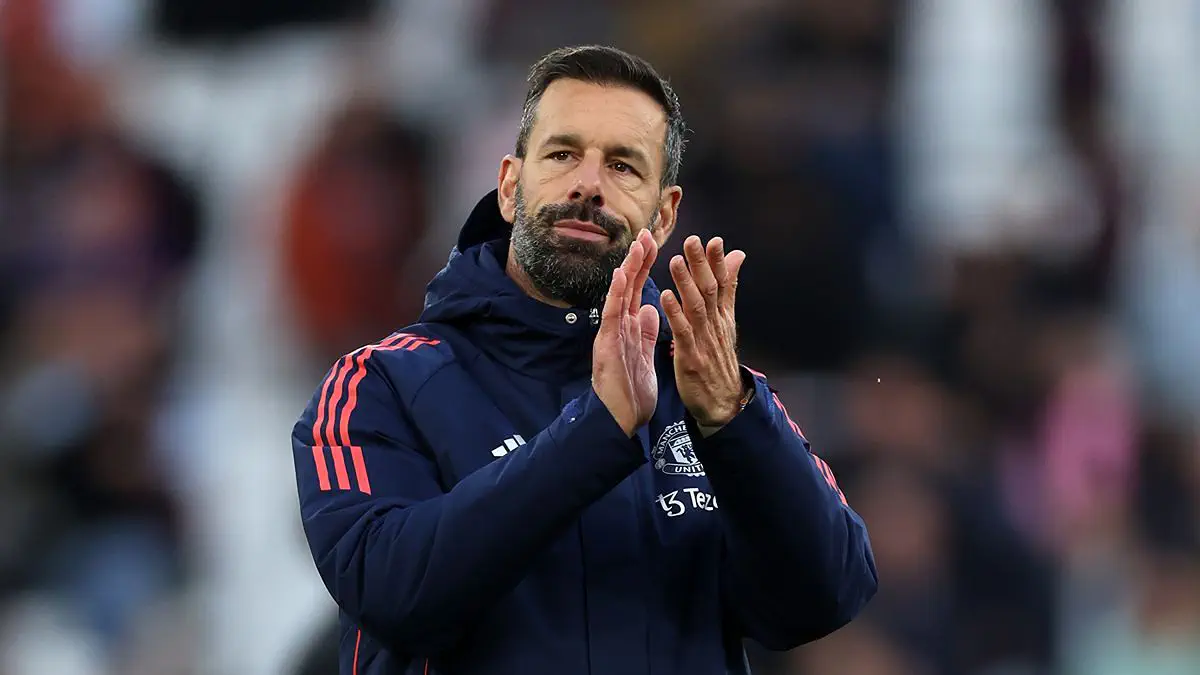
The Dutchman took charge of United after Erik ten Hag was dismissed in autumn 2024 and spent just four matches in the role.
But that brief spell was almost perfect.
There were two wins over Leicester — 5-2 in the League Cup and 3-0 in the Premier League — a Europa League victory over PAOK and a 1-1 draw with Chelsea.
Across those four matches, the team scored 11 goals and conceded just three.
Van Nistelrooy restored the players’ confidence and gave supporters the pleasure of winning again. However, it is impossible to seriously assess his managerial ability over such a short period.
He did not have to conduct a preseason, rebuild the squad or navigate a prolonged crisis.
Therefore, his high win percentage does not make the Dutchman Ferguson’s best successor. But there is equally no reason to call this brief period unsuccessful.
9. Ryan Giggs (2014) — the legend who temporarily put out the fire
Statistics: 4 matches, 2 wins, 1 draw, 1 defeat. Win percentage — 50%.
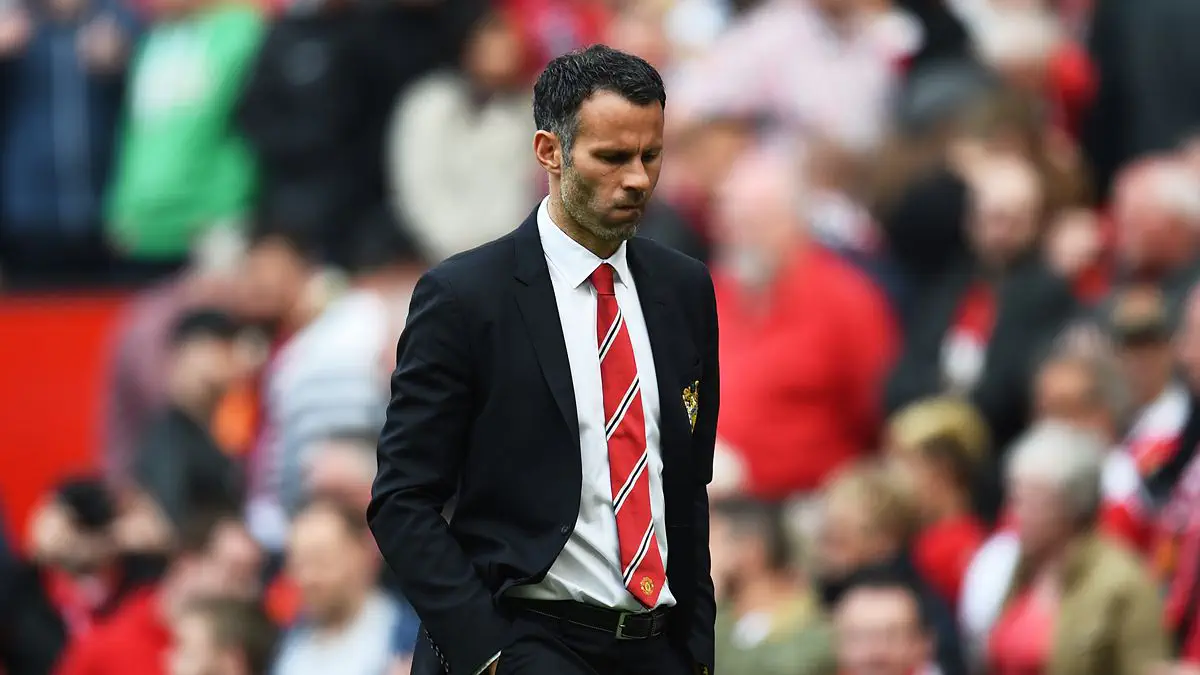
The first caretaker manager of the post-Ferguson crisis was Ryan Giggs.
The legendary Welshman took over in April 2014, after David Moyes had been dismissed and the season was effectively lost.
Giggs began with a 4-0 win over Norwich, but then lost to Sunderland, defeated Hull and ended the campaign with a draw against Southampton.
Seven points from a possible 12 was a respectable return for someone effectively acting as a crisis manager.
He was never given the chance to implement his own football project. Therefore, Giggs bears minimal responsibility for the club’s decline, and his place in this ranking is largely formal.
8. Ole Gunnar Solskjær (2018–2021) — plenty of emotion, but no trophies
Statistics: 168 matches, 91 wins, 37 draws, 40 defeats. Win percentage — 54.2%. Average of 1.81 points per Premier League match.
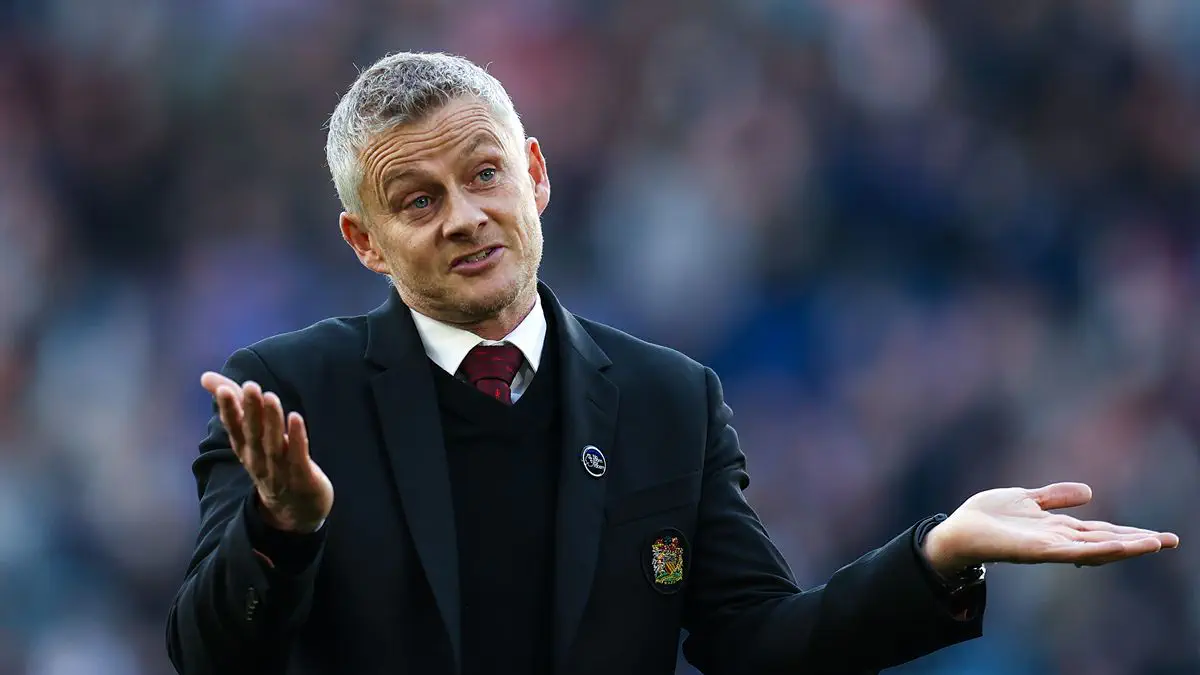
Perhaps the most controversial figure in this ranking.
When Solskjær replaced Mourinho, Manchester United experienced a genuine emotional surge. The players seemed to have shed their psychological shackles, the team began attacking much more boldly and the Norwegian quickly won back the support of the stands.
His defining moment was the incredible comeback against PSG in the 2019 Champions League.
But it was more than a brief upturn. In 2019/20, Solskjær led United to third place, and the following season to second with 74 points.
That means it would be unfair to describe him as merely a motivator.
At the same time, the Norwegian’s tactical limitations regularly emerged in matches where the opposition ceded possession to United. The team was excellent on the counterattack, but often had no idea how to systematically break down an organized defense.
The 2021 Europa League final, lost to Villarreal on penalties, became a symbol of unfulfilled potential.
And everything finally collapsed in autumn 2021: a 0-5 home defeat to Liverpool, a 0-2 loss to Manchester City and a 1-4 thrashing by Watford.
Solskjær left the club without a trophy, but with two consecutive top-three finishes in the Premier League.
His biggest mistake was failing to turn his emotional connection with the players into a sustainable football system. It was a problem that would reappear several years later under Carrick.
7. Louis van Gaal (2014–2016) — there was a system, but not enough football
Statistics: 103 matches, 54 wins, 25 draws, 24 defeats. Win percentage — 52.4%. Average of 1.79 points per Premier League match.
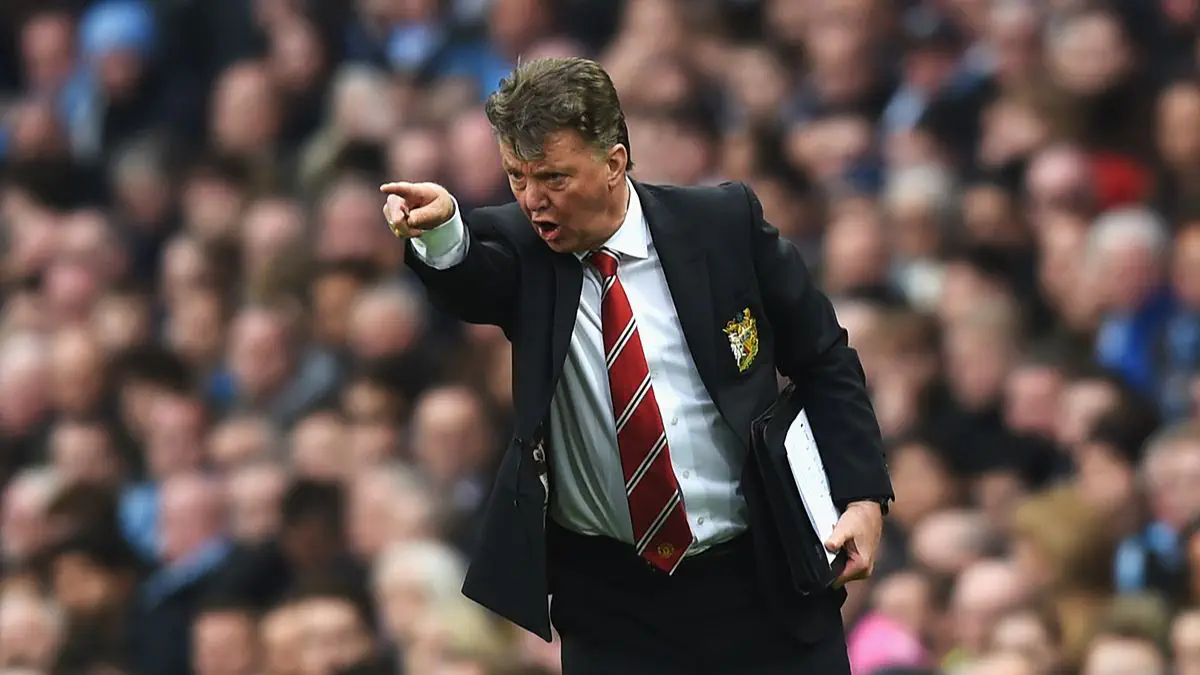
Unlike Solskjær, van Gaal knew exactly what kind of football he wanted to see.
The problem was that far from everyone wanted to watch it.
The Dutchman tried to build a team around possession, positional discipline and clear principles. But possession often became an end in itself, while United matches turned into endless sideways passing without any attacking edge.
In his first season, the team finished fourth; in his second, it finished fifth and missed out on the Champions League.
But van Gaal left behind the 2016 FA Cup and helped introduce Marcus Rashford, who made his first-team debut under him.
It is also important that van Gaal’s United at least had a recognizable structure. It could be too slow, conservative and ineffective, but the players knew their roles.
Today, that looks far more valuable than it did at the time.
6. Erik ten Hag (2022–2024) — two trophies, conflicts and the collapse of a promising project
Statistics: 128 matches, 70 wins, 23 draws, 35 defeats. Win percentage — 54.7%. Average of 1.72 points per Premier League match.
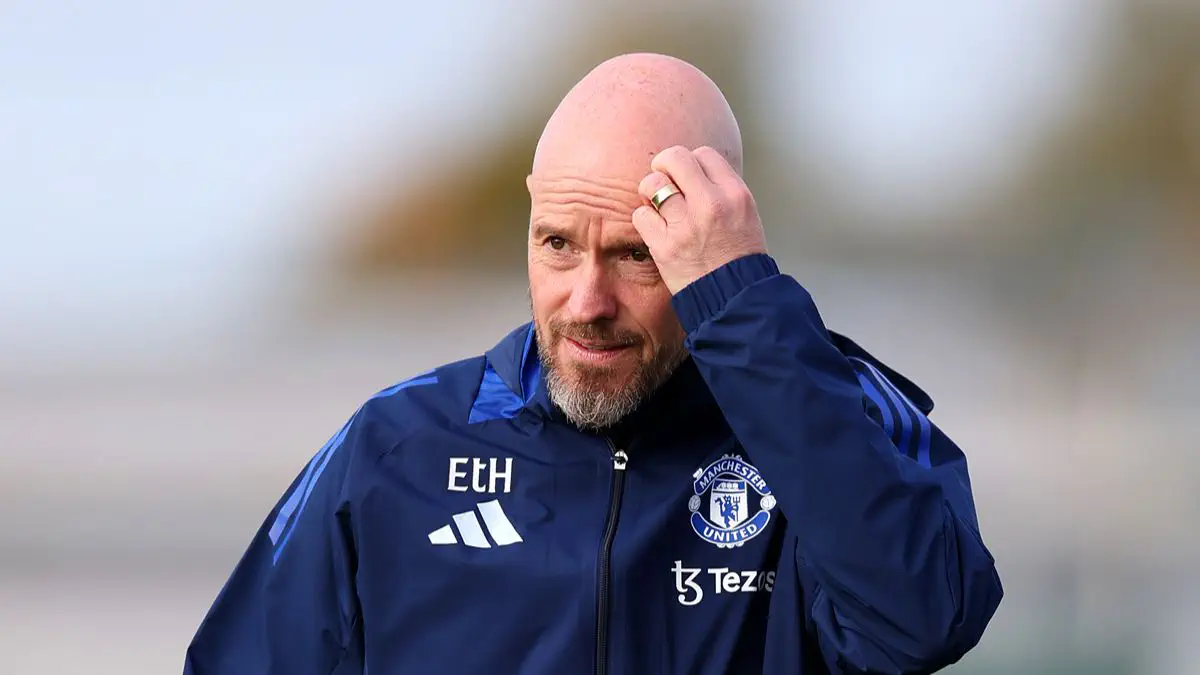
It would be a major mistake to judge ten Hag solely by the final months of his tenure.
After a poor start to 2022/23, the Dutchman gradually brought order to the team, while his conflict with Cristiano Ronaldo became a turning point.
After the Portuguese left in November 2022, United enjoyed a very strong spell. The team won the League Cup, knocked Barcelona out of the Europa League, reached the FA Cup final and finished third in the league with 75 points.
Marcus Rashford was enjoying one of the best periods of his career, Casemiro controlled the midfield and Bruno Fernandes was given a clearer role.
It seemed ten Hag had finally found the formula to revive United.
Then everything fell apart.
In 2023/24, the team finished eighth with 60 points — the club’s worst position in Premier League history at that time. An unbalanced structure, huge spaces between the lines and regular defensive collapses became the norm.
Even the victory over Manchester City in the FA Cup final did not change the overall trend. After a poor start to the 2024/25 season, the Dutchman was dismissed.
Particularly revealing were recent comments from former United midfielder Fred, who worked with ten Hag during the 2022/23 season.
In an interview with Charla Podcast, the Brazilian sharply criticized his personal qualities.
“Tactically, ten Hag was very good, but in his relationship with the team he behaved like a complete asshole.”
Fred also claimed that the manager constantly clashed with players, including Fred himself, Ronaldo, Casemiro and Rashford, and favored his Dutch players.
This is one player’s subjective assessment, but it illustrates a possible reason for the failure: it is not enough to develop the right tactics — you must also convince the team to believe in them.
Ten Hag was good enough to win two trophies. But he lacked the flexibility to ensure his project survived its first major crisis.
5. Darren Fletcher (2026) — statistically the worst, but only two matches
Statistics: 2 matches, 0 wins, 1 draw, 1 defeat. Win percentage — 0%.
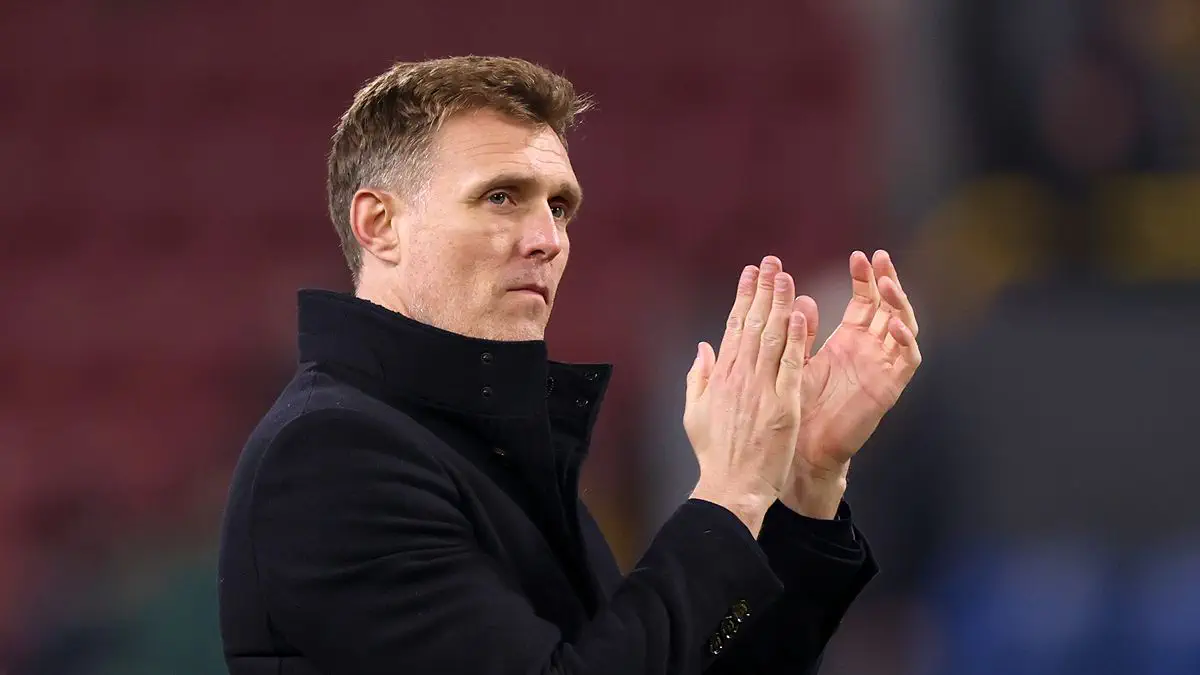
If managers were simply ranked by win percentage, Fletcher would be last.
The Scot temporarily took charge of United after Rúben Amorim was dismissed in January 2026.
The team first drew 2-2 with Burnley, then lost 2-1 to Brighton in the FA Cup.
That was the end of Fletcher’s managerial spell. He did not shape the squad, conduct a preseason or inherit a stable team.
Two matches are far too few even for statistical conclusions, let alone an assessment of managerial competence. Fletcher simply found himself in the wrong place at the wrong time.
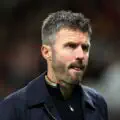
4. Michael Carrick (2021, 2026–present) — the most dangerous football illusion
Statistics: 28 matches, 16 wins, 7 draws, 5 defeats. Win percentage — 57.1%. Average of 1.96 points per Premier League match (as of October 11, 2026).
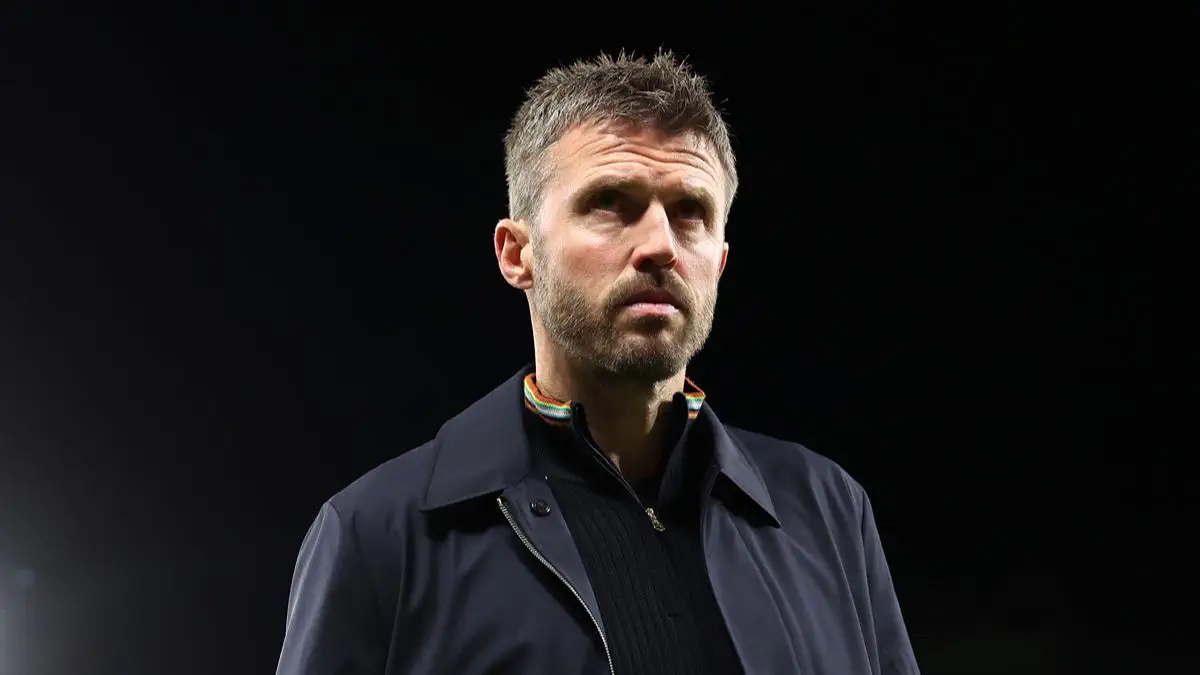
Carrick’s story is a perfect reminder of how deceptive results can be in football.
He first took charge of United on a caretaker basis in 2021 and did not lose any of his three matches.
When Carrick returned in January 2026 to replace Amorim, things started even better. Wins over Manchester City and Arsenal, a run of positive results and a rapid rise up the table followed.
United collected 39 points from 17 matches and eventually finished the season on 71 points in third place.
In May, the club’s hierarchy made Carrick the permanent head coach. Surely there could be no doubts? In reality, they had emerged long before the current crisis.
On April 20, 2026, statistical outlets compared Carrick’s first 12 Premier League matches with Amorim’s final 12.
The results looked excellent for the Englishman: 26 points versus 18.
But the quality-of-play statistics told a completely different story:
- Expected goals per match (xG): 1.37 under Carrick versus 1.70 under Amorim.
- Expected goals against (xGA): 1.30 versus 1.16.
- Big chances created per match: 2.58 versus 2.75.
- Possession: 50.58% versus 55%.
- Touches in the opposition box: 24.17 versus 29.25.
In other words, in this comparison, Carrick’s Manchester United collected significantly more points while creating less danger and allowing higher-quality chances near their own goal.
An Opta analysis published by the BBC in May confirmed the worrying trend. Across Carrick’s first 14 matches, the team overperformed: 27 goals from an xG of 20.06. Its conversion rate was 13.9% — the best in the Premier League over that period.
Carrick deserves credit for creating conditions in which the players began to maximize their strengths. However, Matheus Cunha, Benjamin Šeško and Casemiro could not keep scoring significantly more than the quality of their chances suggested.
And when extraordinary finishing stopped compensating for structural flaws, the results collapsed.
The current season has already brought defeats to Premier League newcomers Hull and Manchester City, as well as dropped points against Everton, Fulham and Tottenham.
Carrick is not yet the worst manager since Ferguson. He earned respect for last spring. But his story increasingly resembles Solskjær’s problem: a great atmosphere and eye-catching results masking the absence of a sufficiently reliable system.
3. Ralf Rangnick (2021–2022) — the revolutionary nobody listened to
Statistics: 29 matches, 11 wins, 10 draws, 8 defeats. Win percentage — 37.9%. Average of 1.54 points per Premier League match.
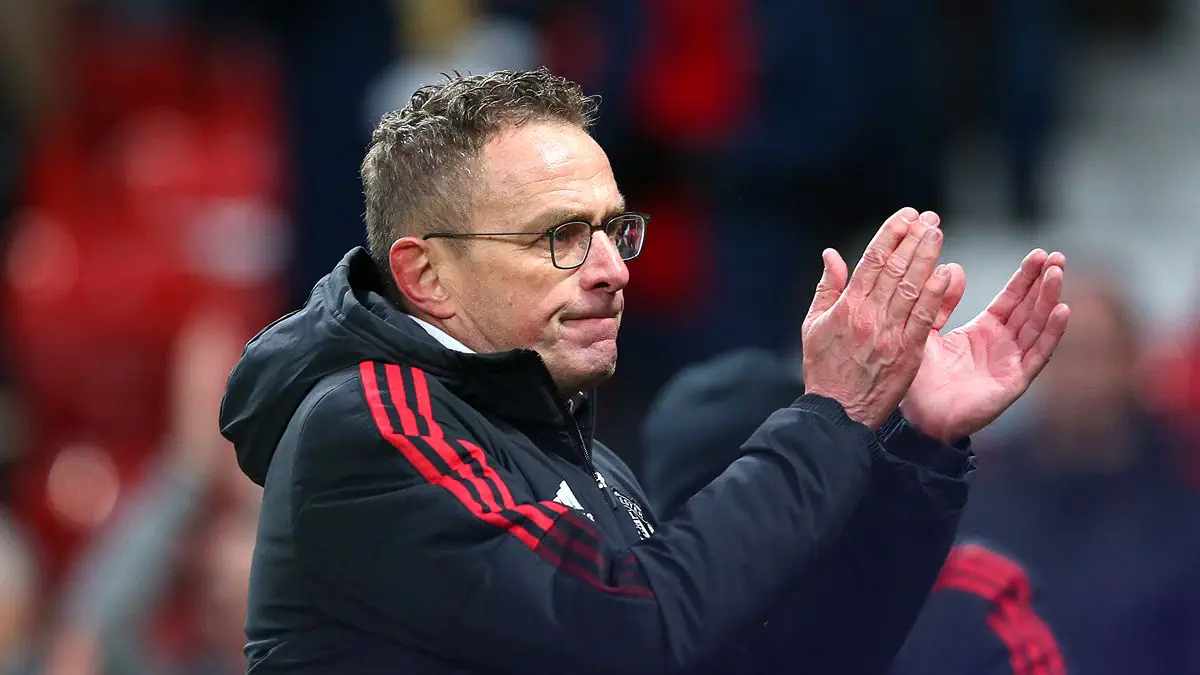
Rangnick’s overall win percentage is lower than even Amorim’s. But there is a crucial difference.
The German arrived in December 2021 as a caretaker manager. His main task was to stabilize the team after Solskjær’s dismissal, not to implement a full-scale, multi-year project.
From a specialist who had helped develop modern pressing in German football, a tactical revolution was expected.
However, United’s players were not ready for his demands. The press worked inconsistently, the team lacked intensity and discipline, and the results remained mediocre.
The outcome was sixth place in the Premier League and just 58 points in 2021/22.
Rangnick did, however, leave behind one of the most accurate diagnoses of the club’s problems.
He said Manchester United needed “open-heart surgery”, not cosmetic changes.
In effect, the German was the first to say publicly and so bluntly what later became obvious: the problem was far deeper than the identity of the head coach.
Rangnick failed as a crisis manager, but many of his conclusions about the state of the club proved correct.
2. David Moyes (2013–2014) — the man with whom it all began
Statistics: 51 matches, 27 wins, 9 draws, 15 defeats. Win percentage — 52.9%. Average of 1.68 points per Premier League match.
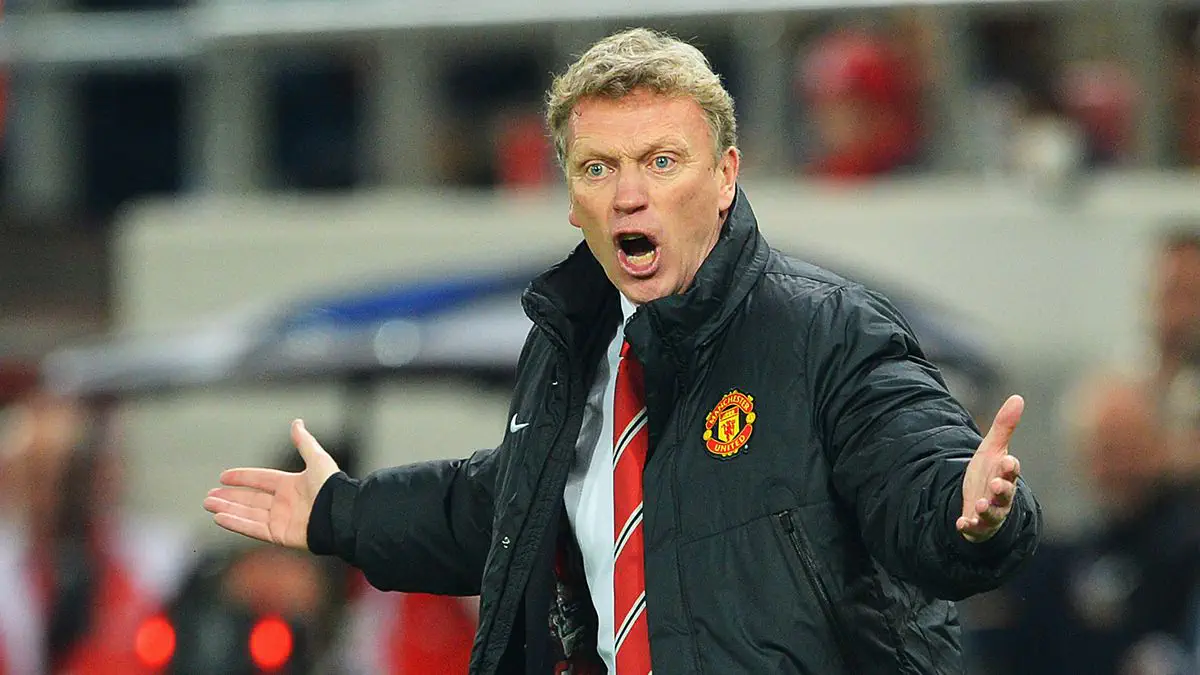
If we judge not the absolute quality of the results but the scale of the shattered expectations, Moyes could easily top this ranking.
He inherited a team that had just become champions of England with 89 points.
Ferguson had not left behind a perfect squad — many of the leaders were already veterans. But it was still a team with a championship mentality, authority and winning habits.
Moyes failed to preserve any of that. Within a few months, United had gone from title contenders to Premier League also-rans.
Home defeats to Everton, Newcastle, Liverpool and Manchester City became symbols of the club’s collapse in status.
The Scot lasted just ten months. In 34 league matches under his management, the team collected 57 points and finished the season seventh with 64 points — 25 fewer than the previous year.
Moyes’s only trophy was the Community Shield, won at the very beginning of his tenure.
Of course, it would be unfair to place all the blame on him. An outdated management structure, transfer problems and the inevitable transitional period after Ferguson’s 26-year reign also played a part.
But the gap between expectations and reality was catastrophic. Moyes did not create all of Manchester United’s modern problems, but under him the club first stopped looking like a giant on the football pitch.
1. Rúben Amorim (2024–2026) — Manchester United’s worst manager of the post-Ferguson era
Statistics: 63 matches, 24 wins, 18 draws, 21 defeats. Win percentage — 38.1%. In the Premier League — 31.9% wins and just 1.23 points per match.
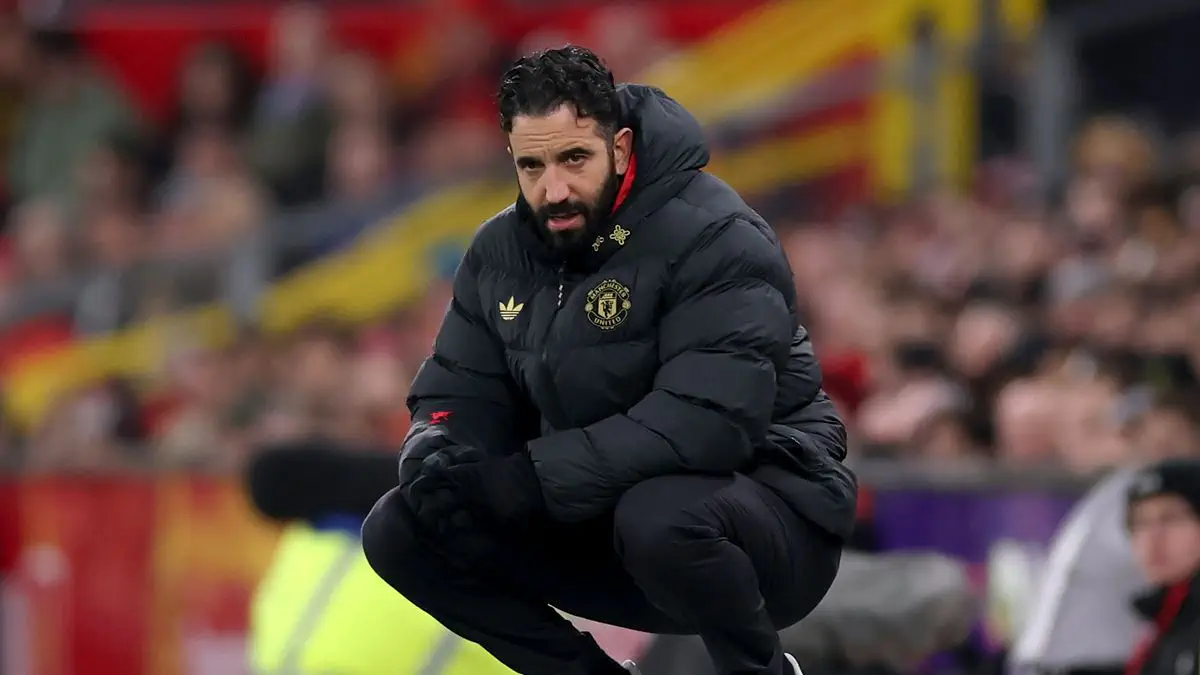
Here is our anti-ranking winner.
Paradoxically, Amorim was one of the few managers after Ferguson who genuinely tried to fundamentally rebuild Manchester United.
The Portuguese arrived from Sporting with a clear football philosophy. His 3-4-3 system was supposed to give the team clear principles for building attacks, pressing and transitioning between phases of play.
The problem was that Amorim proved almost incapable of adapting his idea to the players available to him. In 45 of 47 Premier League matches under his management, the team started with three center-backs.
Instead of gradually adapting the system to the squad’s strengths, the Portuguese too often demanded that the players adapt to the system.
He tried to make United’s football more modern, but overcomplicated his tactical demands to such an extent that the team lost even the advantages it had previously possessed.
The numbers are ruthless.
In 47 Premier League matches under Amorim, the Red Devils managed just 15 wins, drew 13 times and suffered 19 defeats.
Fifty-eight points from a possible 141.
An average of 1.23 points per match — the worst record of any Manchester United manager in Premier League history (excluding Darren Fletcher, who managed only three matches at the club).
The defensive statistics are even more alarming. The team conceded 72 goals in 47 matches — an average of 1.53 per game. Only seven matches ended with a clean sheet.
Under his management, United finished the 2024/25 season in 15th place — the club’s worst finish in a decade.
The low point was the 0-1 Europa League final defeat to Tottenham. That trophy could have saved the season and returned the team to the Champions League.
The following season brought another humiliating episode — an EFL Cup exit to Grimsby Town, a club from England’s fourth tier.
At the same time, it cannot be said that Amorim did nothing positive. By the time he was dismissed in January 2026, United were sixth in the Premier League, while some chance-creation metrics had already begun to improve.
Ironically, Amorim’s final 12 matches even looked better than Carrick’s first 12 in terms of xG.
But football exists beyond expected-goals tables. Amorim had enough time, received significant attacking reinforcements and was given the opportunity to implement his principles. Yet he never taught the team how to win consistently.
His United could produce a convincing performance against a strong opponent, then look completely helpless against an underdog just days later.
Worst of all, after 14 months under the Portuguese, the team had not developed a reliable mechanism capable of guaranteeing even a minimally consistent level of performance.
Rangnick had a slightly lower win percentage across all competitions — 37.9% compared with 38.1%. But the German was a caretaker manager. Amorim, by contrast, led a full-scale project, received transfer backing and still set an anti-record for average Premier League points.
There is no doubt that this club’s problems run far deeper than the work of its head coaches alone. But if we are talking specifically about the managers, then Moyes started the post-Ferguson decline, Rangnick failed to stop the crisis and ten Hag lost control of a promising project.
Amorim, however, took the failure to historic levels. That is why he is Manchester United’s worst manager since Alex Ferguson.
Why Carrick probably has no future at Manchester United
Yet today’s main question is not who failed most in the past, but whether the current manager is capable of changing the future.
In spring 2026, many people overestimated Carrick’s work.
Yes, he restored the team’s confidence, simplified the football and achieved excellent results. But it is becoming increasingly clear that a significant part of that progress was linked to the emotional lift following the managerial change, extraordinary finishing from certain players and a degree of luck.
Across Carrick’s first 14 matches, United were the Premier League’s most clinical team, but only ninth for total xG.
That does not mean every victory was fortunate. However, the number of wins did not fully correspond to the actual quality of the chances created.
Even more worrying is that during those months, United did not become a significantly more structured team. No powerful idea emerged that would allow the side to control matches regardless of the form of individual players.
And the current season has only highlighted those shortcomings.
According to Opta’s analysis, United have begun using a higher defensive block without the ball more often — 42% of the time compared with 26% last season. But the defensive line has not always supported the press properly, while huge gaps have appeared in midfield.
In terms of high turnovers, the team ranked only 15th in the Premier League.
The attacking picture is similarly contradictory. The Red Devils take plenty of shots and generate a respectable total xG, but the average value of a non-penalty shot was just 0.08. That is one of the league’s worst figures.
To be fair, United have also suffered from personnel problems, and some results were worse than the team deserved. Therefore, all six points cannot be explained solely by the manager’s shortcomings.
However, after a full summer under Carrick, the club should have displayed far greater tactical maturity.
Instead, we are seeing a team that cannot press consistently, does not always understand how to attack an organized defense and is unable to control a lead reliably even against ten-man opponents.
Amorim tried to create a new structure, although he often made the process too complicated. Carrick simplified the football and was initially rewarded for it, but so far he has not offered a convincing alternative system.
That is why the phrase “If Carrick had started the season, we would be champions” was primarily an emotional reaction from supporters to long-awaited victories, rather than a reasoned prediction.
And if Manchester United’s main objective is not merely to qualify for the Champions League occasionally but to become title contenders again, it is becoming increasingly difficult to imagine Carrick as the manager capable of achieving that.
Most likely, his appointment was another case of the club’s hierarchy confusing a short-term improvement in results with genuine team development.
In the 13 years since Ferguson, Manchester United have tried almost every type of manager. But the club still has not learned to distinguish temporary relief from a genuine recovery.
Until that changes, the question “Who is United’s worst manager?” will remain relevant — regardless of the name of the person on the touchline.
 Steven Perez
Dailysports's expert
Steven Perez
Dailysports's expert