
Paralympians could be disqualified for tattooing Olympic rings. What's the trouble?
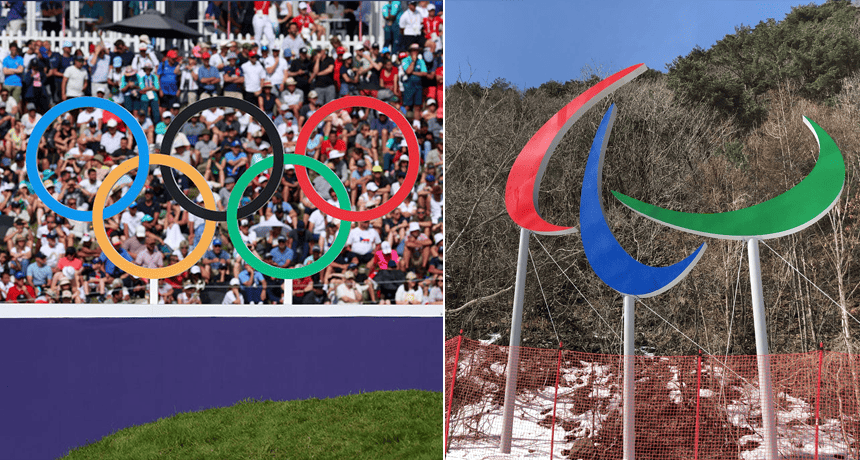
Five multicoloured rings, which symbolise the unity of continents, have become a symbol of the Olympic Games for a long time. While tattoos of these rings are allowed for Olympic participants, athletes at the Paralympic Games can be suspended from competition for displaying these images.
This was felt by British swimmer Josef Craig, who in 2016 was suspended from the European Swimming Championships, which were held under the auspices of the International Paralympic Committee. Craig then failed to cover his Olympic rings tattoo, and despite winning two silvers, he was suspended from the 100 metres.
The reason is that the International Olympic Committee and the International Paralympic Committee happen to be two quite independent entities from one another that use their own identities.
Whereas the Olympic symbol is five rings, the Paralympic symbol is three ‘crescents’ of red, blue and green colours framing a single dot on a white field. This symbol is called agito (‘I move’ from Latin).
That is, the use of the Olympic logo at the Paralympics (including in the form of tattoos) will be considered advertising, and since 2012 advertising in the form of tattoos at the Paralympic Games is prohibited.
 Yasmine Green
Dailysports's expert
Translated by the editors
Yasmine Green
Dailysports's expert
Translated by the editors



