
From Serie D to the Champions League in seven years: Como’s incredible rise
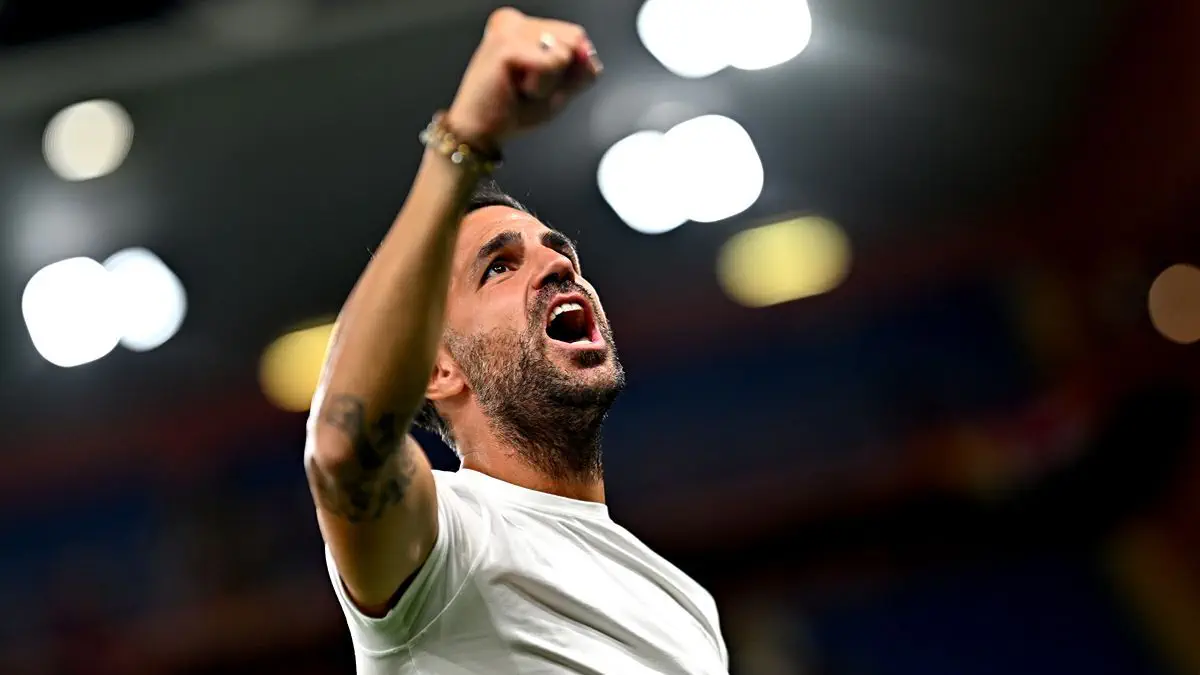
As recently as the 2018/19 season, Como were playing in Italy’s fourth tier. Today, Cesc Fàbregas’ side will compete in the Champions League proper for the first time in the club’s history. From Serie D to matches against RB Leipzig, Manchester United, PSG and Barcelona, the club from the shores of the famous lake has completed one of the most remarkable rises in modern European football.
The Giuseppe Sinigaglia Stadium, squeezed between the city and the picturesque Lake Como, has witnessed almost every kind of football imaginable during its nearly 100-year history. Serie A, Serie B, the lower divisions, bankruptcies, empty stands and endless attempts to restore the club to its former status.
But it has never experienced an evening quite like September 10, 2026.
Today, the Champions League anthem will ring out at the Sinigaglia. Como will play their first match in Europe’s premier club competition against RB Leipzig. What is more, the 2026/27 season marks the club’s first-ever appearance in a UEFA competition.
The most astonishing part is the speed of the transformation. Counting from Como’s most recent season in Serie D, it has taken the club just over seven years to reach the Champions League.
And this is not merely a story about enormous wealth. It is the story of a club that effectively had to be rebuilt from scratch, of three promotions, of Cesc Fàbregas arriving first as a player and later becoming the head coach, and of a project that has evolved from a footballing curiosity into one of the most exciting teams in Italy.
Bankruptcy and the fall to Serie D

To understand the scale of Como’s current success, we need to go back almost a decade.
In the mid-2010s, Como were living in a completely different reality. After earning promotion to Serie B in 2015, the team endured a disastrous campaign, finished bottom of the table and dropped back into the third tier.
Things then became even worse. The club went bankrupt. Its assets were purchased at auction by Akosua Puni Essien, the wife of former Chelsea and Ghana midfielder Michael Essien. However, the new organisation failed to complete the registration process required to compete in the professional leagues.
As a result, Como had to start again in Serie D in the 2017/18 season.
For a club that had once spent decades playing in Italy’s top two divisions, it represented something close to footballing oblivion.
And there was no immediate escape. In 2018, Como attempted to secure a place in Serie C, but their application was rejected due to problems with the required financial guarantees. That meant the 2018/19 season once again began among the semi-professional clubs of Serie D.
That is where the countdown to these incredible seven years can truly begin.
2019: new owners and the first step forward

On April 4, 2019, an event took place that would completely change the club’s future. Como were acquired by UK-registered media company SENT Entertainment.
Behind the company stood the Indonesian business empire of the Hartono family, owners of the Djarum Group. The new ownership provided exactly what Como had desperately lacked in previous years: financial stability, long-term planning and the ability to invest not only in the first team, but also in infrastructure, the academy, the stadium and the club’s brand.
At the time of the takeover, Como were already fighting for promotion. They finished the 2018/19 season in outstanding fashion, winning Serie D Group B with a club-record 89 points and returning to professional football.
The following years would reveal the true scale of the new owners’ ambitions.
Serie C: even the pandemic could not stop the rise

The first season back in Serie C was one of transition. Como needed to adjust to the new level, restructure their sporting operation and build a team capable of challenging for another promotion.
The breakthrough arrived in 2020/21.
Como started the campaign under Marco Banchini, but Giacomo Gattuso, a long-serving figure within the club’s system, took charge during the season.
Against the backdrop of the pandemic and matches played without the usual atmosphere in the stands, Como won Serie C Group A with 23 victories from 38 games and 75 points, securing automatic promotion.
Just two years after playing in Serie D, Como were already in Serie B. More importantly, this time the club had no intention of stopping.
Fàbregas came to finish his career. Instead, he changed the entire club

In the summer of 2022 came a transfer that initially looked, above all, like a brilliant marketing move.
Cesc Fàbregas joined Como.
A World Cup winner and two-time European champion with Spain, as well as a former Arsenal, Barcelona and Chelsea star, Fàbregas arrived in Serie B to see out the final chapter of his playing career. At the same time, he acquired a minority stake in the club.
His time on the pitch in Italy proved brief. But it soon became clear that Como had gained much more than simply a famous footballer approaching retirement.
In the summer of 2023, Fàbregas announced his retirement and immediately moved into coaching with the club’s youth teams.
Only a few months later, he was given his opportunity with the first team.
In November 2023, Como dismissed Moreno Longo and Fàbregas took temporary charge. Welshman Osian Roberts was subsequently appointed head coach until the end of the season, while Cesc remained an important member of the coaching staff.
Together, they completed the job.
Back in Serie A after 21 years

The 2023/24 season became the next historic milestone.
Como finished second in Serie B, behind only Parma, and secured automatic promotion to Serie A. The decisive moment came in the final round against Cosenza, when a 1-1 draw guaranteed their return to the top flight.
Twenty-one years. That was how long Como supporters had waited to see their club play another match in Italy’s highest division.
A few weeks after promotion, the club took the next logical step by officially appointing Fàbregas as head coach. The Spaniard signed a four-year contract.
It was Cesc’s first full-time job as a head coach and represented a major gamble for the club. Yet it paid off almost immediately.
The first goal in Serie A was survival. Como achieved much more
Ahead of the 2024/25 season, the obvious question was whether a project that had climbed through the lower divisions so quickly could survive among Italy’s elite.
But Como were preparing to do much more than simply fight relegation. Fàbregas’ side finished their first season back in Serie A in 10th place with 49 points. For a newly promoted team, that was already an impressive achievement.
But even more important than their final position was the way they achieved it.
Como did not turn into the stereotypical promoted side that gives the ball away, drops everyone behind the ball around its own penalty area and hopes to survive through counter-attacks.
Fàbregas wanted something completely different.
His team wanted to control possession, build from the goalkeeper, create numerical advantages in midfield, invite the opposition press and then play through it using short combinations.
That was also the season in which Nico Paz truly emerged. The Real Madrid academy graduate, who moved to Italy in the summer of 2024, recorded six goals and nine assists in his first Serie A campaign.
Como no longer looked like merely a wealthy newcomer. The club had developed a clear and recognisable footballing identity.
2025/26: from mid-table to Italy’s fourth-best team

If 10th place could be considered a successful debut season, the following campaign moved Como into an entirely different category.
Fàbregas’ team made an enormous leap forward.
Thirty-eight matches, 20 victories, 71 points and 65 goals scored. And fourth place in Serie A. It was Como’s best-ever season in the Italian top flight.
On May 10, 2026, a 1-0 victory over Verona mathematically guaranteed the club’s first-ever qualification for European competition. Symbolically, it came exactly two years after Como had secured their return to Serie A.
Then, on the final matchday, a 4-1 victory over Cremonese sealed fourth place and direct qualification for the Champions League league phase.
Nico Paz took another step forward, contributing 12 goals and 7 assists in Serie A.
Just two years after earning promotion, a team whose original objective had simply been to establish itself in the top flight had become Italy’s representative in the Champions League.
Why Como are not simply a story about money

It is impossible to ignore the financial factor behind Como’s rise.
The new owners gave the club opportunities it simply did not have before. Como can compete for talented players, offer them long-term contracts and build a squad not around the need to survive, but around a specific footballing philosophy.
Yet money alone would not have been enough to produce these results.
The defining feature of Como’s transfer strategy has been their focus not simply on established stars, but primarily on players capable of developing significantly within the system.
Nico Paz, Assane Diao, Martin Baturina, Jesús Rodríguez, Jacobo Ramón and Máximo Perrone have formed the core of a project built around young, technically gifted players with room to improve.
Experienced players such as Pepe Reina, Sergi Roberto and Álvaro Morata have performed a different role at various stages: helping a young team adapt more quickly to the demands of top-level football.
Fàbregas himself has described Como’s transfer philosophy in very simple terms: the club looks for hungry and humble players who still have something to prove.
A team built in Fàbregas’ image

Como’s transformation cannot be explained without Fàbregas himself.
During the 2025/26 season, his side became one of the most possession-oriented teams in Italy. Como averaged more than 60% possession over the course of the campaign and also employed one of the most aggressive pressing systems in Serie A.
In many ways, it is the type of football Fàbregas himself studied throughout his playing career.
Stretch the opposition’s first line of pressure. Create numerical advantages around the ball. Draw the opponent forward. Find the free player between the lines. After losing possession, immediately compress the space and try to win the ball back.
In positional attacks, the nominal 4-2-3-1 can change after almost every movement. The full-backs move inside or push higher, the attacking players interchange positions, while Nico Paz is given freedom between the opposition midfield and defensive lines. Without the ball, Como frequently drop into a compact 4-4-2 and attempt to force the opposition’s build-up towards the touchline, where their pressing trap is activated.
The result was just 29 goals conceded across the entire previous league campaign. For a team that had not even been in Serie A two seasons earlier, it was a remarkable figure.
Como prepared for the Champions League like a major club
Qualifying for the Champions League also changed the level of Como’s summer recruitment.
One of the biggest arrivals was Trevoh Chalobah, a centre-back with extensive Chelsea experience, including 17 Champions League appearances.
Como’s squad for the league phase also includes Moise Kean, Samuele Ricci, Yan Couto, Robert Sánchez and Luis Milla. Alongside the already established Nico Paz, Diao, Baturina, Perrone, Jesús Rodríguez and Jacobo Ramón, it is now a squad built to compete near the very top.
And the opening results of the new season have only increased expectations.
Immediately before the historic meeting with Leipzig, Fàbregas’ team thrashed Genoa 4-1 away from home. Baturina and Nico Paz scored, Diao struck twice, while Kean and Ricci made their debuts for the club.
The Champions League will stay on the shores of Lake Como

Another important question emerged immediately after qualification: where would Como play their home matches?
The Giuseppe Sinigaglia is one of the most picturesque stadiums in Europe, but its compact size and infrastructure created obvious problems when it came to meeting UEFA requirements.
The club carried out the necessary redevelopment. A new stand was built, while infrastructure, security systems and operational areas were upgraded.
In the end, UEFA approved the Sinigaglia to host Como’s Champions League home matches. That makes today’s occasion even more symbolic. Como will not have to move to Milan or another major city. The Champions League anthem will be heard for the first time in the very place where the club experienced all of its setbacks and comebacks.
From Leipzig to Barcelona: a new chapter for the club
The draw immediately showed Como just how big a step they had taken.
After their home debut against Leipzig, Fàbregas’ side will face Feyenoord, Manchester United, Lens, AEK, Real Betis, PSG and Barcelona.
Their final match of the league phase will be away against Barcelona.
For Fàbregas, that is particularly symbolic. He made 104 Champions League appearances as a player for Arsenal, Barcelona and Chelsea. Now the 39-year-old Spaniard returns to the competition in a completely different role — as the coach of a club he took charge of only three years ago, despite having virtually no significant experience at senior level.
Now his opponents will be teams that, not long ago, Como could realistically have faced only in pre-season friendlies.
Seven years that completely changed the club’s status
Spring 2019 — Serie D.
Spring 2021 — promotion to Serie B.
Spring 2024 — back in Serie A after a 21-year absence.
Spring 2025 — 10th place in the top flight.
Spring 2026 — fourth place and qualification for the Champions League.
September 10, 2026 — Como’s first match in Europe’s premier club competition.
There was once a time when the biggest problem facing this club was its very existence. Today, its problems are of an entirely different scale: how to stop Leipzig, how to compete with PSG, how to play against Manchester United and how to prepare for a trip to Barcelona.
Yes, enormously wealthy owners stand behind the project. Yes, without major investment, such a rapid rise would have been virtually impossible. But money merely created the opportunity.
What turned that opportunity into results was a well-built sporting structure, a commitment to young players, a consistent transfer strategy and a coach who was given enormous trust before he had even had the chance to prove himself at the highest level.
Seven years ago, Como were playing in Serie D. Today, the Champions League anthem will be heard over Lake Como for the first time.
And perhaps that sound will explain better than anything else just how extraordinary this journey has been.
 Steven Perez
Dailysports's expert
Steven Perez
Dailysports's expert