
From a TV Quiz to the Champions League: How Valdas Dambrauskas led Sabah into Europe’s elite
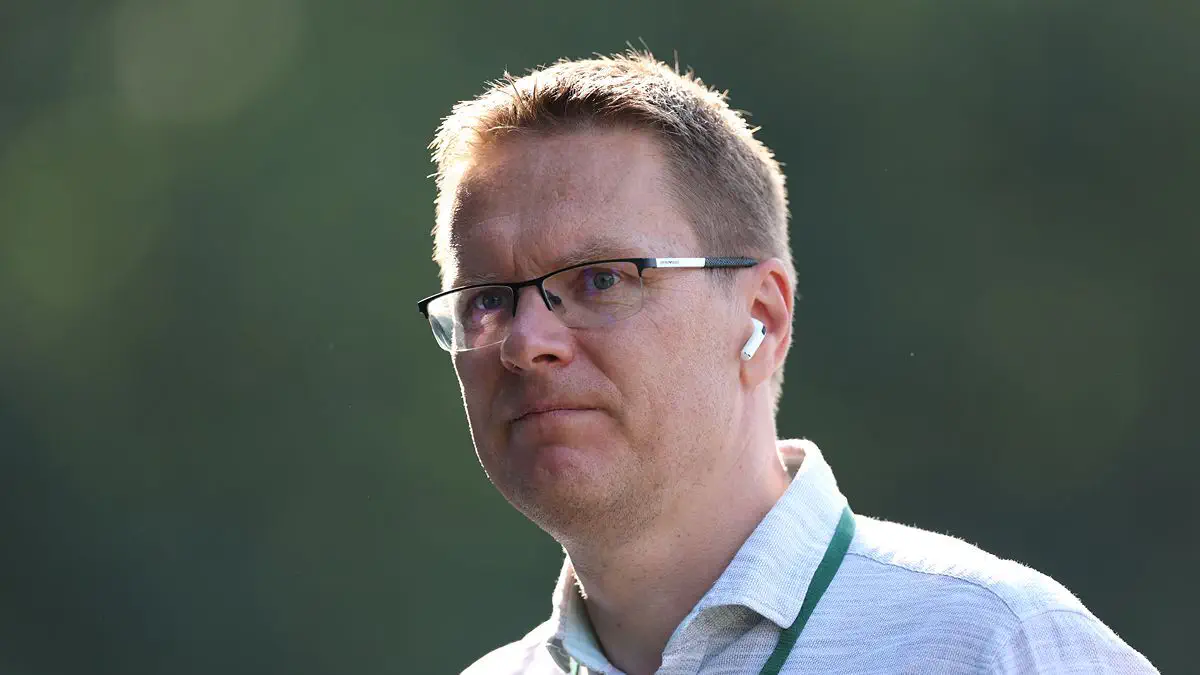
The Lithuanian spent his TV quiz winnings on a trip to England, began his coaching career in the ninth tier and for years could not overcome the final hurdle on the road to the Champions League. Sabah, meanwhile, has existed for just nine years and until recently had never even played in European competition. On August 25, those two stories converged at one point — the Azerbaijani club reached the league phase of Europe’s premier club competition for the first time.
Just a few years ago, such a scenario would have seemed far too improbable. Valdas Dambrauskas was never a professional footballer, while the money that helped him take his first steps towards a coaching career in England came from a television quiz show. His first senior team played at the ninth level of the English football pyramid.
Sabah was founded only in 2017. The club made its European debut six years later and won its first trophy only in the spring of 2025.
But on the evening of August 25, 2026, at the Tofig Bahramov Republican Stadium in Baku, Sabah defeated Hapoel Be’er Sheva 5-2 after extra time and reached the Champions League league phase for the first time in their history. The aggregate score was 6-4. Sabah became only the second Azerbaijani club after Qarabag to reach the main stage of Europe’s premier club competition.
And on August 27, Dambrauskas’ team will discover which members of Europe’s elite they will face.
The TV quiz that changed his career
After the historic victory, a photograph of a young Dambrauskas in a television studio once again went viral on social media. In viral posts, the story is usually told like this: in 2000, he appeared on the Lithuanian version of Who Wants to Be a Millionaire?, won some money and spent it on coaching courses in England.
The story is essentially true, but some details have become distorted over time.
Lithuanian sources clarify that Dambrauskas appeared on the television quiz “Šeši nuliai – milijonas” (“Six Zeros — a Million”) in 2002, when he was 25. It was not an official Lithuanian edition of the Who Wants to Be a Millionaire? franchise, although the show was indeed built around general knowledge questions and a cash prize and was often compared to Millionaire.
Dambrauskas won 4,000 Lithuanian litas. Years later, he himself confirmed that he invested that money in a trip to England. Modern publications often turn this into a neat legend suggesting that his TV winnings paid for his entire education, but it is more accurate to describe the money as start-up capital — a sum that helped him decide to move abroad and begin a new life.
Before that, his biography hardly resembled the path of a future Champions League coach. Dambrauskas never played professionally. In Lithuania, he worked, among other places, at the Pakruojo Parketas company while studying philosophy and social sciences by correspondence. Football was his greatest passion, but there was no obvious route into the professional game.
The television winnings helped him create one.
England: university, academies and the ninth tier

In England, Dambrauskas enrolled at London Metropolitan University, where he studied sports science and coaching. When congratulating its former student on reaching the Champions League, the university specifically recalled this unusual story: the money from the TV game helped the Lithuanian move to the United Kingdom, where his professional career ultimately began.
Dambrauskas combined his studies with work and gradually made his way into English football. He gained experience within the youth structures of Manchester United, Fulham and Brentford.
In 2007, he received his first opportunity to take charge of a senior team — Kingsbury London Tigers, who competed in the ninth tier of English football.
That episode perhaps illustrates better than any other just how far Dambrauskas has travelled on his way to the Champions League.
In the 2008/09 season, Kingsbury London Tigers finished fifth in their league, winning 18 of 40 matches and collecting 66 points. For a club that had finished only 14th the previous year, it was one of their best results of that period. Dambrauskas’ work later received public recognition as well — in 2010, he won the Active Westminster Awards in the coaches and instructors category.
Real Madrid, Bayern Munich and Barcelona seemed almost infinitely far away at the time. But the first foundations had already been laid.
Lithuania, titles and the first failed attempts to reach the Champions League

The next stage of Dambrauskas’ career brought him closer to home. He worked with Lithuania’s youth national teams before joining one of the country’s strongest clubs at the time — Ekranas. He initially served as an assistant before being given the head coach’s job.
The real breakthrough came at Zalgiris.
With the Vilnius club, Dambrauskas won two Lithuanian league titles, three domestic cups and several Super Cups. It was there that the Champions League first transformed from a distant dream into a concrete sporting objective.
And almost every time, it left behind the painful feeling of having come close.
In 2015, Zalgiris lost just 1-0 on aggregate to Malmo. A year later, the Lithuanians came close to eliminating Astana, only to concede the decisive goal in stoppage time of the second leg. In 2017, they beat Ludogorets 2-1 at home, but the Bulgarian side responded with a 4-1 victory in the return match.
Then Dambrauskas’ genuine European career as a travelling coach began.
With RFS, he won the Latvian Cup. From Riga he moved to Croatian side Gorica, before receiving an offer from Ludogorets and becoming Bulgarian champion.
And once again, he found himself one step away from the Champions League.
In the summer of 2021, Ludogorets progressed through several qualifying rounds, including eliminating Olympiacos, but Malmo appeared again in the play-offs. The Bulgarian club lost the tie 3-2 and dropped into the Europa League.
Dambrauskas later won the Croatian Cup with Hajduk — the club’s first such trophy in nine years — before working at OFI, Omonia and Hungarian side Diosgyor. By the summer of 2025, his CV already included league titles, cups in several countries and numerous matches in European qualifying.
Only one thing was missing — participation in the main stage of the Champions League.
What was Sabah before Dambrauskas?
Sabah’s story is no less unusual, simply because the club does not have a long history.
It was founded on September 8, 2017. Sabah spent their first season in the Azerbaijan First Division and finished fifth, but after meeting licensing requirements, they were granted the right to compete in the Premier League the following year.
Their debut season in the top flight ended with a seventh-place finish. Sixth place and two fifth-place finishes followed. Nothing yet suggested a future Champions League participant.
The rapid rise came later.
In the 2022/23 season, Sabah collected 81 points, finished second behind Qarabag, won league medals for the first time and simultaneously qualified for European competition for the first time.
The first memorable European nights
Sabah’s European debut in the summer of 2023 proved far more successful than might have been expected from newcomers.
In Conference League qualifying, the Azerbaijani side beat RFS twice — 2-0 and 2-1. Then came a 2-0 home victory over Partizan Belgrade. Sabah lost by the same scoreline in Serbia and, after extra time, were eliminated on penalties.
So even in their first European season, the club came within a few successful penalty kicks of advancing another round.
A year later came perhaps Sabah’s greatest international success before Dambrauskas’ arrival.
In the second qualifying round of the Conference League, the team faced Maccabi Haifa and stunned the Israeli club with a 3-0 away victory. The return leg turned into chaos: Maccabi won 6-3 after extra time, making the aggregate score 6-6, but Sabah prevailed 3-2 in the penalty shootout.
It was the first time an Azerbaijani club had won a European tie on penalties.
Two 1-0 defeats to St Patrick’s Athletic in the next round ended their run, but the season still entered the club’s history. In the spring of 2025, Sabah defeated Qarabag 3-2 in the Azerbaijan Cup final to claim the first trophy since the club’s foundation.
So Dambrauskas did not arrive in a footballing wasteland. He inherited a young, ambitious project that was already progressing rapidly.
His achievement lies elsewhere: he took that project to an entirely new level.
Dambrauskas arrives — and Sabah break Qarabag’s monopoly
Dambrauskas was officially appointed Sabah head coach on June 20, 2025, signing a three-year contract.
His first European summer was mixed. In Europa League qualifying, Sabah played out a high-scoring tie with Celje but lost 6-5 on aggregate. After dropping into the Conference League, the Azerbaijani side thrashed Petrocub 6-1 on aggregate before losing twice to Levski — 1-0 and 2-0.
Domestically, however, a historic breakthrough followed.
In the 2025/26 season, Sabah became Azerbaijani champions for the first time, securing the title with four rounds to spare and ultimately finishing nine points ahead of Qarabag.
The significance of that achievement is difficult to overstate. In Azerbaijani football, Qarabag had been virtually untouchable for more than a decade: since 2013, only Neftchi had managed to interrupt their title hegemony before Sabah.
One championship was not enough for Dambrauskas. In the Azerbaijan Cup final, Sabah defeated Zira 2-1, retained the trophy and completed the first domestic double in the club’s history.
For the coach himself, those two trophies took his career collection to 13.
But the greatest reward for the league title awaited in the summer.
Four rounds to the dream

Because of their low European coefficient, Sabah were given no short route into the Champions League. The Azerbaijani champions had to start in the first qualifying round and overcome four opponents.
The first were Welsh side The New Saints. Sabah won both matches — 2-0 and 2-1 — progressing comfortably with a 4-1 aggregate victory.
Next came Finland’s KuPS. This time Dambrauskas’ team did not concede at all: 1-0 at home and 2-0 away — 3-0 on aggregate.
The first genuine test came from Danish side Aarhus. Sabah lost the first leg 2-1 before producing perhaps the finest European night in their history up to that point — a 4-0 victory in the return match. The aggregate score was 5-2.
Only Hapoel Be’er Sheva remained.
And the scenario repeated itself.
The 94th minute, extra time — and history
Sabah again lost the first leg of the play-off — 2-1.
And on August 25, the situation became even worse: just ten minutes into the return leg, Igor Zlatanovic put Hapoel ahead. The Azerbaijani side now needed to recover a two-goal deficit on aggregate.
Christian Nwachukwu equalised before half-time, but in the 61st minute Guy Mizrahi scored again for the visitors. At that moment, Sabah were in an extremely difficult position.
Umarali Rakhmonaliev restored hope in the 74th minute.
Then came a finale that will forever remain part of the club’s history.
Deep into stoppage time, Tellur Mutallimov scored Sabah’s third goal following a corner — 3-2. The aggregate score became 4-4, sending the match into extra time.
There, Hapoel could not hold on. Djibril Diop was shown a red card, Orphe Mbina scored the hosts’ fourth goal, and in the 115th minute Joy-Lance Mickels completed the scoring — 5-2. Soon afterwards, the Israeli side were reduced to nine men.
6-4 on aggregate. Sabah are in the Champions League.
Across eight qualifying matches, Dambrauskas’ team recorded six wins and two defeats while scoring 18 goals. Moreover, in each of the final two rounds, they advanced despite losing the first leg.
For a club that did not even exist nine years ago, the speed of that development is remarkable.
Now — Real Madrid, Barcelona or Arsenal?
Today, August 27, the draw for the Champions League league phase will take place in Monaco.
Sabah are in Pot 4 alongside Slavia Prague, Slovan Bratislava, Stuttgart, AEK Athens, LASK, Como, Lens and Viking.
But the modern Champions League format means this does not protect the newcomers from Europe’s biggest clubs. Each team receives eight different opponents — two from each pot, playing one of them at home and the other away.
Therefore, Sabah are guaranteed to face two teams from Pot 1.
That pot contains PSG, Bayern Munich, Real Madrid, Liverpool, Inter, Manchester City, Arsenal, Barcelona and Atletico Madrid.
In other words, the man who once used several thousand litas won on a television quiz show to travel to England and search for an opportunity to learn how to coach footballers could now genuinely be preparing his team for a match against Real Madrid or Barcelona.
It is difficult to imagine a more symbolic ending to the story — at least for now.
Two stories that met at the right moment
It would be too simplistic to portray the current success as a fairy tale created by Dambrauskas alone.
Sabah had been growing before him. Under Murad Musayev, the club won league medals for the first time and qualified for European competition. Before the Lithuanian arrived, Sabah had already beaten RFS, Partizan and Maccabi Haifa, while under Vasili Berezutski they won the first Azerbaijan Cup in their history.
Dambrauskas did not build this club from scratch. But he took the next — and most difficult — step.
In his first full season, the Lithuanian turned the cup holders into national champions, completed a domestic double, ended Qarabag’s long-standing dominance and then guided Sabah through all four rounds of Champions League qualifying.
At the same time, he completed his own unfinished story.
With Zalgiris, he repeatedly came close. With Ludogorets, he reached the play-offs and lost to Malmo again. Then came Croatia, Greece, Cyprus, Hungary and more twists in his career.
Twenty-four years after that television quiz show, Dambrauskas finally reached the place that had inspired him to go to England and study coaching in the first place.
And Sabah reached it for the first time alongside him.
On August 27, the club from Masazir will be handed eight opponents. Two of them are guaranteed to come from Pot 1 — the genuine elite of European football.
For Sabah, this is the beginning of an entirely new chapter. For Dambrauskas, it is the moment when an extraordinary story has finally come full circle.
 Steven Perez
Dailysports's expert
Steven Perez
Dailysports's expert