

Coaches versus superstars: 8 of the dirtiest scandals in football history — from physical altercations to leaving the club
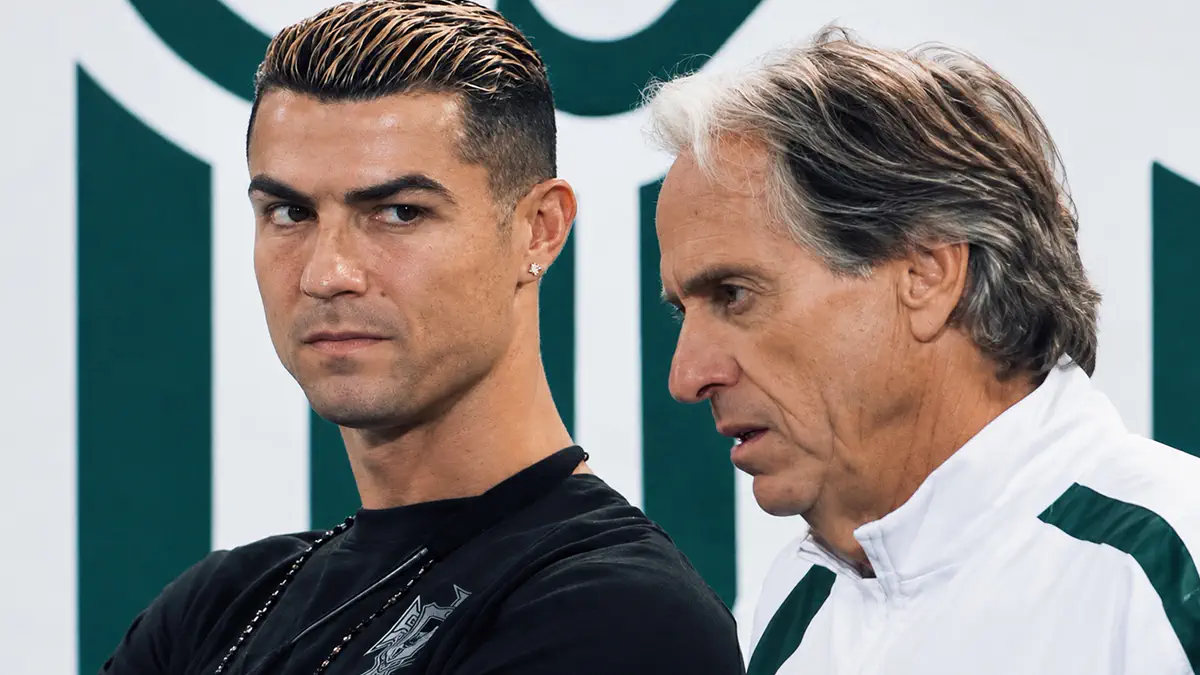
Football is not just about goals, trophies and beautiful success stories. Behind the closed doors of dressing rooms, conflicts regularly unfold — conflicts that fans learn about only months or even years later. Situations become especially explosive when the head coach finds himself at odds with one of the team’s leaders.
A coach has authority over the squad, tactics and discipline. A star footballer has enormous influence inside the dressing room, a powerful connection with the fans and often a special status at the club. As long as the interests of both sides align, everything works perfectly. But once serious disagreements emerge, an ordinary workplace problem can quickly turn into a public scandal.
The recent conflict between Cristiano Ronaldo and Jorge Jesus has once again brought such stories to mind. But world football has already seen plenty of situations in which relations between players and coaches escalated into open warfare, the loss of the captain’s armband, exclusion from the squad, a departure from the club and even a physical confrontation.
Here are the most explosive examples.
David Beckham — Alex Ferguson: the famous boot and the end of an era at Manchester United
One of the most famous conflicts between a footballer and a coach remains the story of David Beckham and Alex Ferguson.
For many years, their relationship was almost exemplary. Ferguson made Beckham a key part of his Manchester United side, while the footballer became one of the team’s biggest stars and one of the most famous players in world football. Together, they won numerous trophies, including the Champions League in 1999.
However, serious disagreements gradually began to emerge between them.
Ferguson became increasingly irritated by the fact that Beckham was turning into more than just a footballer — he was becoming a global celebrity. The manager believed that the growing focus on Beckham’s appearance, advertising commitments and public life was beginning to affect him as a player. Beckham, meanwhile, felt that his manager had started treating him far more harshly.
The breaking point came in February 2003, after Manchester United lost 2-0 to Arsenal in the FA Cup.
Ferguson was furious with Beckham’s involvement in the second goal conceded and subjected the team to a brutal post-match dressing-down. An argument broke out between the coach and the player. According to Beckham himself, he came under such pressure that he began arguing with Ferguson and insulted his manager.
Ferguson then approached the footballer. A boot was lying on the floor. The coach kicked it, sending it into the area of Beckham’s left eyebrow and leaving him with a cut. Beckham later said that he lost control and wanted to charge at Ferguson. Other players had to restrain him.
Ferguson later insisted that the boot striking Beckham had not been intentional — he said it had been sent in the player’s direction in a moment of extreme frustration.
The incident became a symbol of the final collapse of their relationship.
By spring, Beckham was no longer guaranteed his usual place in the team. The clearest example came in the return leg against Real Madrid in the Champions League quarter-finals, when he was left on the bench. Although Beckham later came on and scored twice, it had become clear that his future at Old Trafford was in doubt.
In the summer of 2003, Beckham joined Real Madrid.
That brought an end to one of the most successful partnerships in English football. Ferguson would later acknowledge Beckham’s immense talent, while the former player also spoke about his ex-manager with great respect in the years that followed.
But the famous boot remained one of the defining symbols of their conflict.

news.bbc.co.u
Zlatan Ibrahimovic — Pep Guardiola: when personality proved stronger than the footballing system
If there was ever a footballer who was practically incapable of disappearing into someone else’s system, it was Zlatan Ibrahimovic.
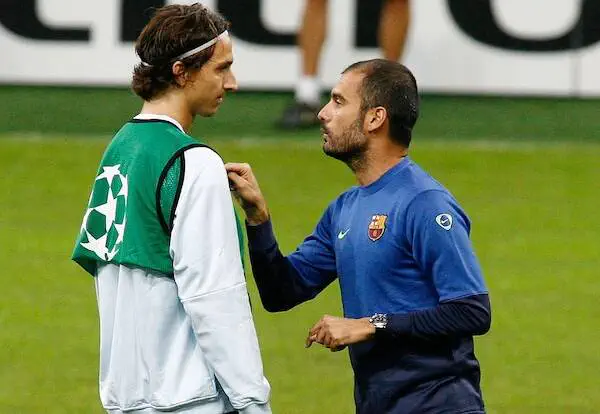
In 2009, the Swede joined Barcelona from Inter. It was a blockbuster deal: the Catalan club expected Ibrahimovic to become the central figure in Pep Guardiola’s attack.
On paper, everything looked perfect. Barcelona were the reigning European champions, Guardiola was regarded as one of the most promising coaches in the world, and Ibrahimovic had just won another league title in Italy.
But the personalities of the two men proved too different.
Guardiola demanded strict discipline and complete obedience to the team structure. Ibrahimovic, meanwhile, was used to being the central figure in both the dressing room and on the pitch. The Swede was particularly frustrated by the change in his role and the feeling that the coach was gradually favouring other attacking options.
The situation became especially tense after Barcelona’s semi-final clash with Inter in the 2009/10 Champions League.
Ibrahimovic later said that, after Barcelona’s elimination, he confronted Guardiola in a fierce verbal exchange. In his autobiography, the Swede described the coach in extremely harsh terms and claimed that he shouted: “You’ve got no balls!”
Ibrahimovic also said that Guardiola barely responded and simply walked away, later even
stopping speaking to him during the second half of the season, avoiding eye contact and any conversations together.
The Swede later admitted that he felt like an outsider in Barcelona and believed the coach had stopped communicating with him properly. Guardiola, for his part, said that he preferred to resolve such matters personally rather than through the media.
A year later, Ibrahimovic left Barcelona.
He initially joined Milan on loan before the Italian club made the transfer permanent. There was something symbolic about it: one of the best strikers in the world had been unable to find common ground with one of the most successful coaches of his generation.
Ibrahimovic returned to the story repeatedly, comparing Guardiola with José Mourinho, with whom he had enjoyed an excellent relationship.
https://www.ilnapolista.it
Iker Casillas — José Mourinho: the conflict that split Real Madrid
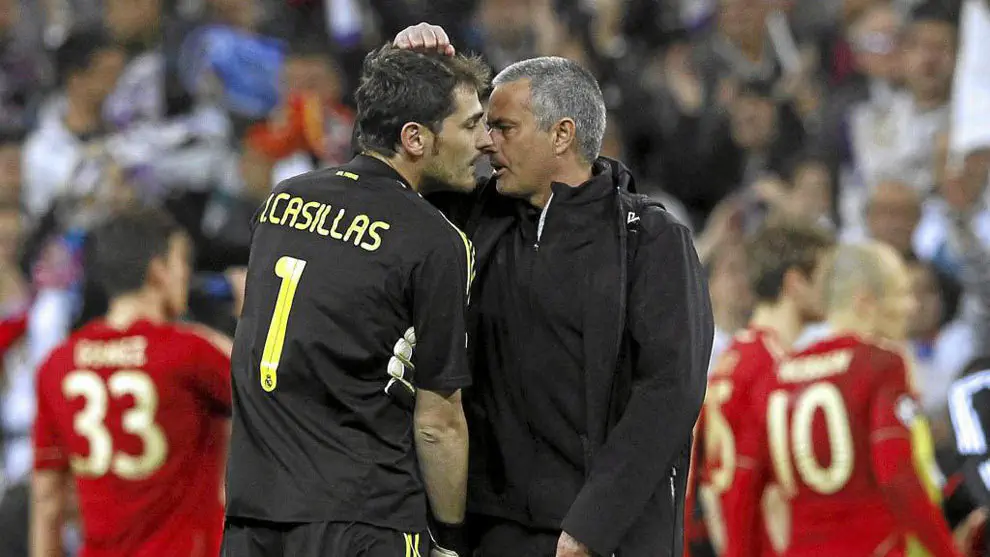
Perhaps none of Mourinho’s conflicts with his players had such an impact on the atmosphere at Real Madrid as his battle with Iker Casillas.
At first glance, the situation seemed almost impossible to believe.
Casillas was Real Madrid’s captain, a product of the club’s academy, a World and European champion with Spain and one of the most respected figures in the dressing room.
Mourinho arrived in Madrid in 2010 with the task of ending Barcelona’s dominance. The Portuguese did win La Liga and the Copa del Rey, but his relationship with part of the dressing room gradually deteriorated.
Particular tension arose from the rivalry between Real Madrid and Barcelona.
Casillas remained in contact with some Barcelona players, including Xavi, with whom he played for the Spanish national team. Mourinho saw those relationships differently: he believed the rivalry between the clubs was so intense that Real Madrid players should keep as much distance as possible from their opponents.
At the same time, problems emerged over leaks from the dressing room.
Mourinho suspected that information from inside the team was reaching the press, while the tension between him and Real Madrid’s Spanish leaders continued to grow.
The decisive moment came when Mourinho dropped Casillas to the bench.
On 22 December 2012, in a La Liga match against Málaga, the coach unexpectedly left his captain out of the starting XI, choosing Antonio Adán instead. It marked the beginning of one of the most heavily scrutinised periods of Casillas’ career.
Casillas’ injury later changed the situation even further. In January 2013, Real Madrid signed Diego López, who continued to receive the coach’s backing even after Casillas returned to fitness.
As a result, the legendary goalkeeper found himself on the bench at a time when he was physically ready to play.
The conflict divided Madrid supporters. Some backed Mourinho and believed the coach had to retain the right to select the team. Others saw the Portuguese’s actions as a personal war against the captain.
The situation became so toxic that the conflict stopped being purely sporting and turned into one of the club’s biggest internal political dramas.
Mourinho left Real Madrid in the summer of 2013. Casillas stayed for another two seasons.
https://www.marca.com
Sergio Ramos — José Mourinho: the vice-captain versus the coach
If Casillas was the main symbol of Mourinho’s confrontation with part of the dressing room, Sergio Ramos was another figure with whom the Portuguese became embroiled in open disputes.
And Ramos was no ordinary player. He was one of the team’s leaders and a man with enormous authority inside the dressing room.
The tension became especially visible at the start of the 2012/13 season.
Real Madrid made a poor start to the campaign, while Mourinho increasingly criticised his players in public. After the defeat to Sevilla, Madrid were already eight points behind Barcelona after just five rounds.
Then came a revealing episode.
Before the match against Deportivo, Mesut Özil was substituted at half-time. Ramos, who was nearby, put on Özil’s number 10 shirt underneath his own jersey.
Formally, Ramos explained that it was a gesture of friendship towards the German and the fulfilment of a long-standing promise to dedicate his first goal of the season to him. But at that moment, the situation looked completely different.
Özil and Ramos were among the players whose relationships with Mourinho were considered strained, and the show of support for a teammate could be interpreted as a challenge to the coach.
It is worth noting that, shortly beforehand, Ramos had been left out of the starting XI for the Champions League match against Manchester City.
Mourinho insisted that the decision was purely sporting. However, amid the overall tension within the team, many saw it as a punishment.
Another major episode occurred in training, when a conversation between Mourinho and Ramos after another defeat to Barcelona was leaked to the press.
The coach criticised the defender for his role in the first goal conceded. Ramos explained why the players had changed their marking scheme during the match.
The most telling moment came when Ramos remarked that Mourinho had never been a full-fledged footballer and therefore could not always understand certain situations on the pitch the way the players themselves did.
Ultimately, Mourinho’s conflict with Ramos and Casillas became part of a far wider split within the Madrid dressing room.
By the end of the season, the coach’s relationships with several of the team’s leaders had effectively been destroyed.
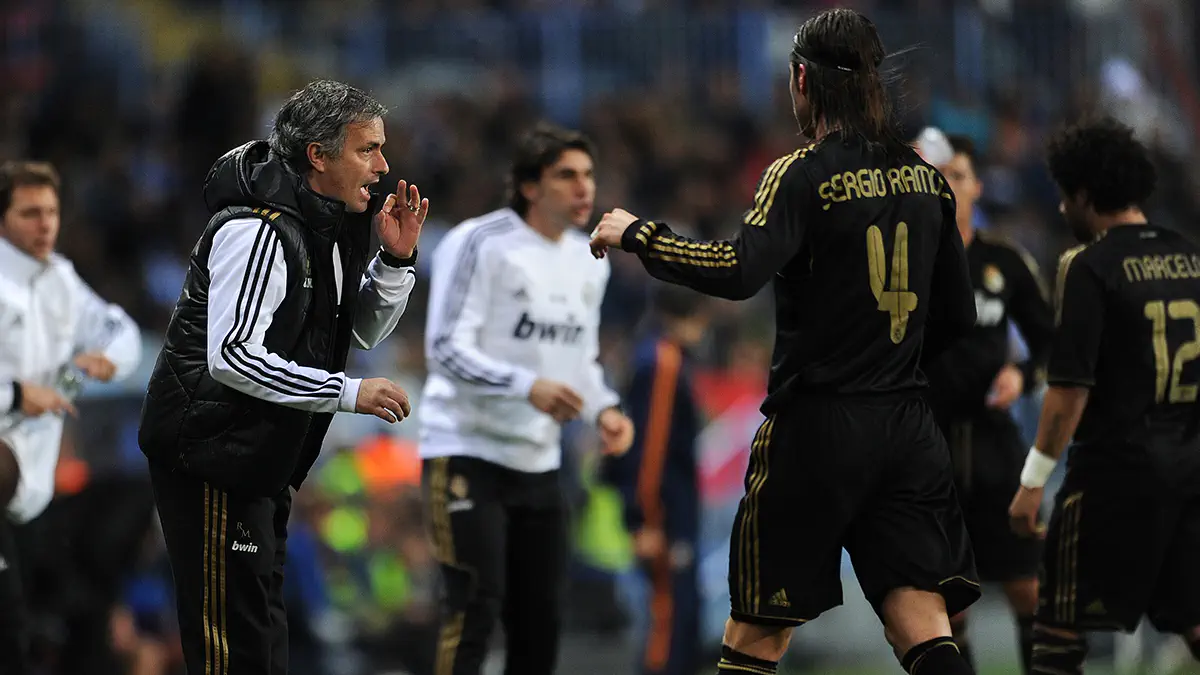
Photo by Jasper Juinen/Getty Images
Carlos Tevez — Roberto Mancini: the scandal witnessed by millions
In September 2011, one of the most famous scandals in Premier League history unfolded.
Manchester City were playing Bayern Munich in the Champions League. The English club were 2-0 down, and Roberto Mancini decided to strengthen the attack.
After making his first substitution, the coach planned to send Carlos Tevez onto the pitch.
But what followed instantly became an international scandal.
According to Mancini, Tevez refused to follow the coach’s instructions and come on. The Italian was so furious after the match that he declared the Argentine would never play under him again.
“For me, it’s over” — that was roughly how Mancini’s position could be summed up after the final whistle.
The coach also said he could not accept a situation in which a footballer earned an enormous salary and refused to help his team in a crucial Champions League match.
But there is one crucial detail that cannot be overlooked in a serious account of the story.
Tevez denied refusing to play.
The following day, the Argentine said what happened had been a misunderstanding. He claimed he had been ready to play, but there had been confusion on the substitutes’ bench.
Later, the Professional Footballers’ Association also concluded that there was insufficient evidence that Tevez had specifically refused to come on. As a result, Manchester City’s initial punishment was significantly reduced.
Nevertheless, the relationship between the player and the coach was irreparably damaged.
Tevez remained with the team for a while longer before joining Juventus in the summer of 2013 for €9 million.
The story became one of the clearest examples of how a single incident on the touchline can destroy the relationship between a coach and a star footballer in a matter of minutes.
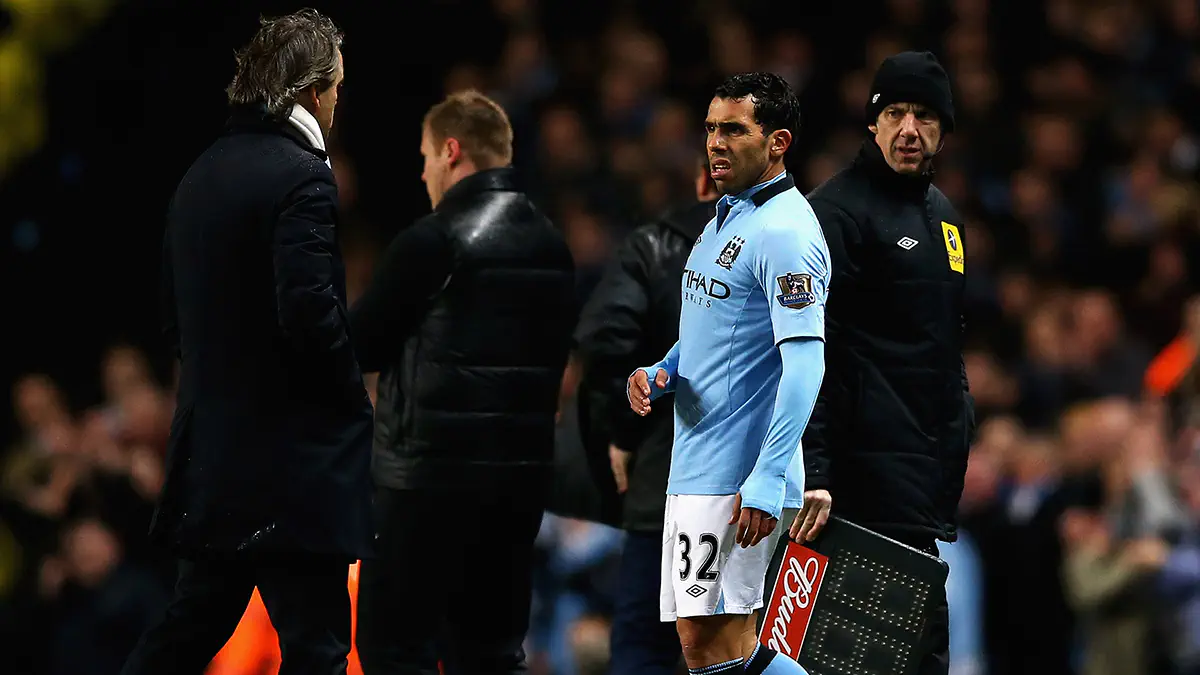
Photo by Matthew Lewis/Getty Images
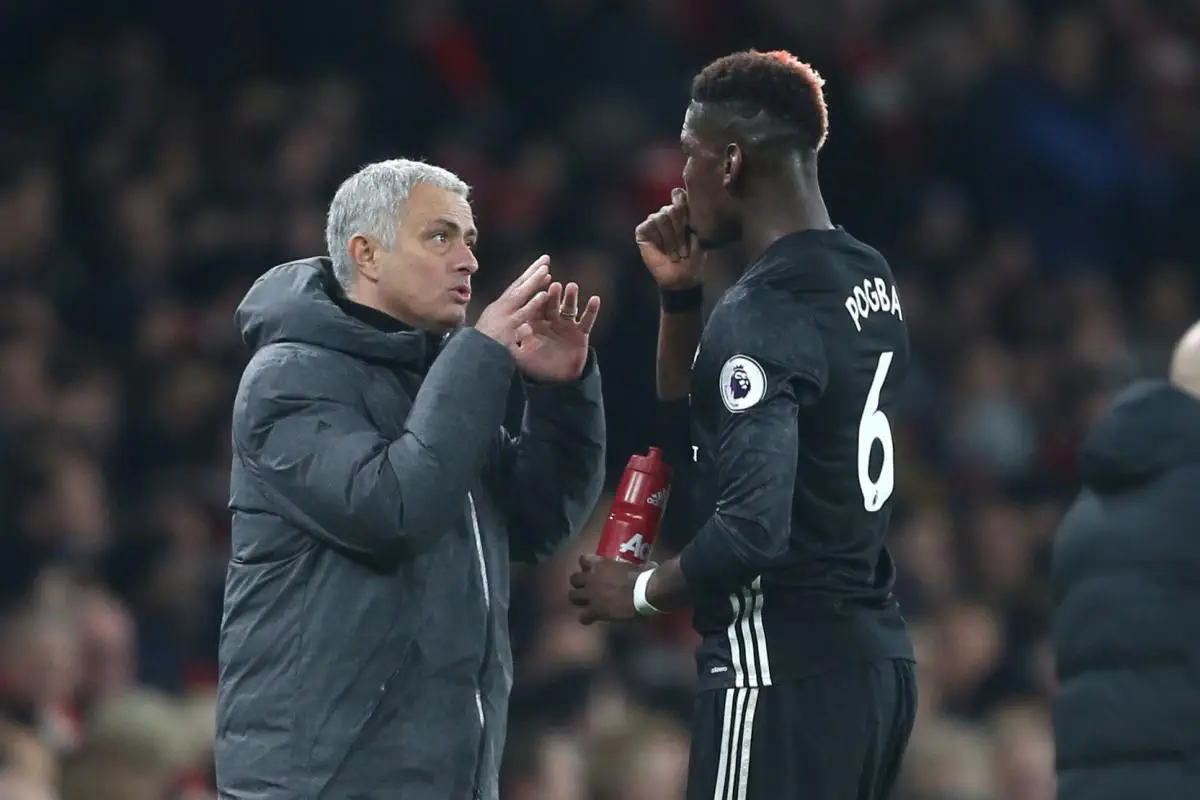
Paul Pogba — José Mourinho: a cold war at Manchester United
The conflict between Pogba and Mourinho was completely different.
There was no single famous fight or one defining incident after which everything ended. Instead, the tension built up gradually.
Pogba returned to Manchester United in 2016 for a huge fee by the standards of the time and was expected to become one of the symbols of the club’s new project.
However, serious disagreements gradually emerged between the player and Mourinho over the Frenchman’s role on the pitch.
Pogba did not always play where he wanted, while the coach regularly demanded greater discipline and consistency from him.
In the 2017/18 season, rumours of a rift became so strong that Mourinho publicly described reports of a serious falling-out as “a big lie”, while also admitting that the footballer needed to improve his performances.
However, the following season showed that the problems had not gone away.
Pogba was made the team’s vice-captain, but in September 2018 Mourinho stripped him of the role.
The coach stressed that it was his decision and that he was under no obligation to explain the reasons publicly.
After that, the relationship turned completely cold.
Cameras captured tense exchanges between the player and the coach in training. Pogba was increasingly left on the bench or substituted before the final whistle.
One particularly high-profile incident occurred during training, when cameras recorded a conversation between Pogba and Mourinho. The video spread around the world and became a symbol of their collapsing relationship.
In December 2018, Mourinho was sacked.
Pogba later openly criticised the Portuguese manager’s methods. In 2021, the Frenchman said Mourinho had a way of making players feel as though they no longer existed to him, contrasting his approach with Ole Gunnar Solskjær’s management style.
What makes this story especially striking is that the conflict took place between two men who were initially expected to become the faces of a new Manchester United.
In the end, both sides lost.
Mourinho failed to restore the club to championship-winning status, while Pogba never became the undisputed superstar many had envisaged after his return from Juventus.
https://www.lequipe.fr/
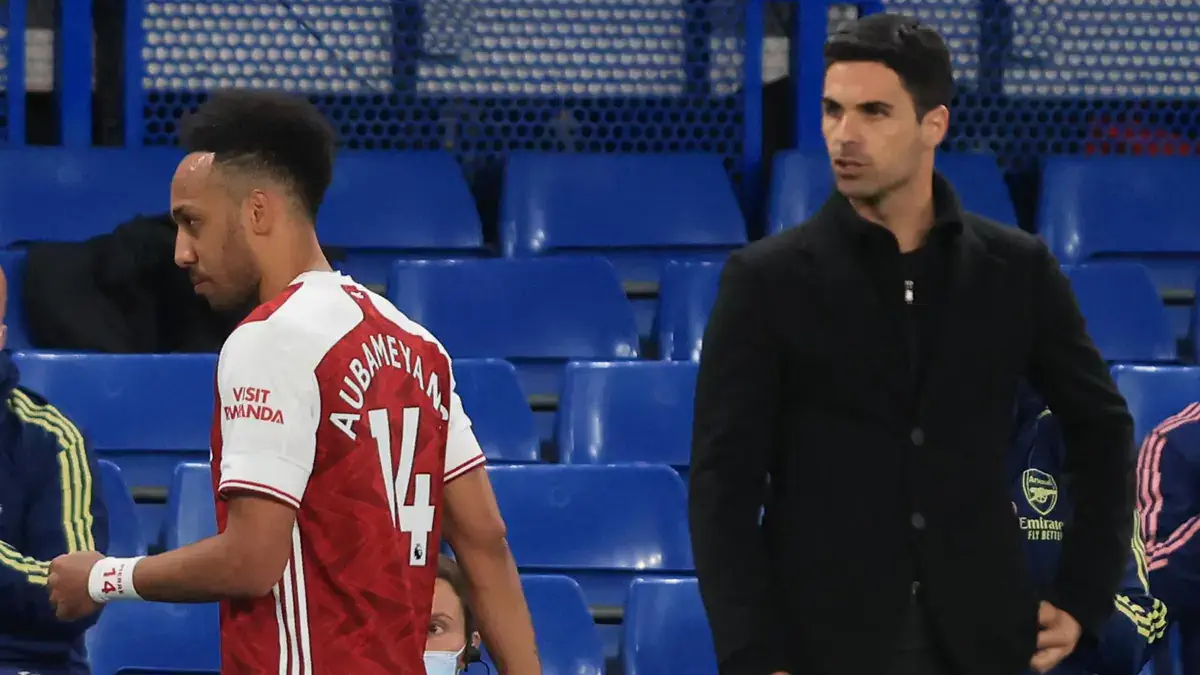
Pierre-Emerick Aubameyang — Mikel Arteta: when discipline mattered more than the captain
The story of Aubameyang and Arteta shows that a conflict does not necessarily have to begin with tactics or playing time.
Sometimes, everything comes down to discipline.
When Mikel Arteta became Arsenal’s head coach, Aubameyang was one of the team’s biggest stars and its captain. The Gabonese striker scored crucial goals and was regarded as one of the dressing room’s leaders.
However, a serious disciplinary incident occurred in December 2021.
Arsenal announced that the footballer had breached the club’s internal rules and standards. Arteta did not go into detail about the nature of the breach, but confirmed that the decision to punish the player had been made after a face-to-face conversation.
On 14 December 2021, Arsenal officially announced that Aubameyang had been stripped of the captaincy and would not be considered for the upcoming match. Arteta explained that the decision had been taken in the club’s best interests.
For a player of Aubameyang’s stature, it was a serious blow.
Aubameyang never returned to his former role in the team.
In January 2022, the two sides effectively went their separate ways, and shortly afterwards the player’s contract with Arsenal was terminated by mutual consent. Aubameyang then joined Barcelona.
Arteta later cited the episode repeatedly as an example of how team rules must apply to absolutely everyone, regardless of a player’s status.
It is also telling that the coach’s decision received support inside Arsenal. Mohamed Elneny later said that Arteta’s actions helped remove the feeling that certain players were untouchable in the dressing room.
For Aubameyang, meanwhile, the conflict effectively marked the end of his Arsenal story.
https://www.bbc.co.uk
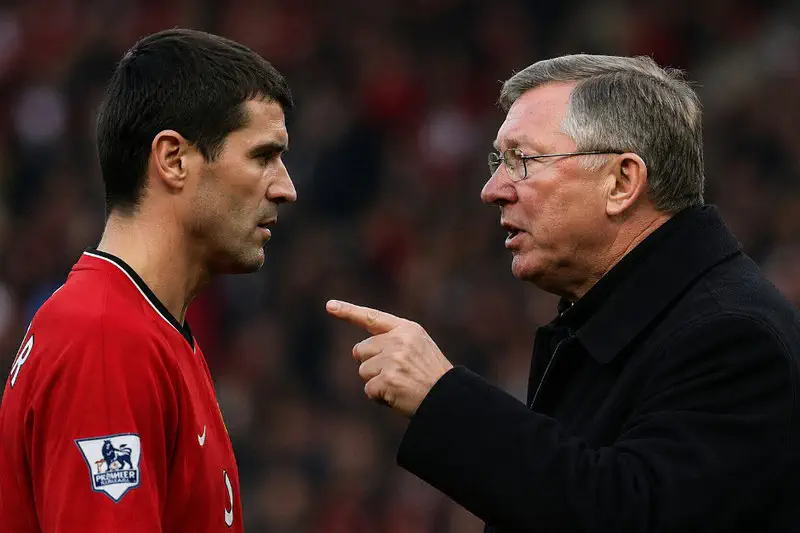
Roy Keane — Alex Ferguson: when the captain stopped being untouchable
Ferguson knew how to part ways even with players who seemed irreplaceable.
Roy Keane was exactly that kind of player.
The Irishman spent more than 12 years at Manchester United, eight of them as captain. He was one of the team’s leading figures during the greatest period in its history and played a huge role in the 1998/99 treble. UEFA later described him as a central figure in the club’s success for more than a decade.
But by 2005, Keane’s relationship with Ferguson had begun to unravel.
The captain became increasingly critical of his teammates and the state of the team. His famous willingness to say exactly what he thought eventually began to work against him.
The biggest blow came after an interview for the club’s MUTV channel.
Following the match against Middlesbrough, Keane harshly criticised his teammates. So harshly that the club’s management, together with Ferguson, decided not to broadcast the interview.
But the problem ran deeper.
Keane did not limit himself to criticising the players. He increasingly questioned the decisions and demands of the coaching staff.
The Irishman later recalled that, during one meeting, he effectively confronted Ferguson, arguing that the team needed more from the manager himself.
Ferguson had no intention of allowing his captain to put pressure on him in that way.
In November 2005, Manchester United announced that Keane was leaving the club with immediate effect.
It was the end of one of the greatest careers in the club’s history.
Keane later admitted that, by the time he left, he already understood that his relationship with Ferguson had been irreparably damaged. Even years later, however, he spoke of the coach with enormous respect, while making no secret of his bitterness over the way their shared story had ended.
Ferguson, for his part, called Keane one of the greatest players he had ever coached.
That is what makes this story so distinctive: sometimes a conflict can end a partnership without destroying the respect built over more than a decade.
https://www.manunited.uk
What do all these conflicts have in common?
The stories of Beckham, Ibrahimovic, Casillas, Ramos, Tevez, Pogba, Aubameyang and Keane are all completely different.
In one case, it began with tactics. In another, with discipline. Somewhere, the cause was the player’s personality; elsewhere, the coach simply decided to show that even the biggest star could not be bigger than the team.
But almost all of these stories share one common pattern.
The problem begins when a player stops seeing the coach as the person with the final say, while the coach stops seeing the footballer as an ordinary member of the team.
That is when the battle for influence begins.
For the coach, the question is usually simple: who runs the team?
For the star, it is no less straightforward: why should I accept a decision made by someone if I believe it is wrong?
As long as both sides can leave their emotions outside the dressing room, the team continues to function.
But once the conflict becomes public, restoring normal relations becomes far more difficult.
Beckham left Manchester United. Ibrahimovic left Barcelona. Casillas lost his place in Real Madrid’s starting XI. Tevez became embroiled in a prolonged dispute with Mancini. Pogba endured several years of instability in his relationship with Mourinho. Aubameyang lost the captaincy and ultimately left Arsenal. Keane left the club after more than a decade in Manchester.
That is why every new conflict between a coach and a superstar generates so much interest.
A footballer may be the greatest player in the team.
A coach may be one of the finest specialists of his generation.
But if they can no longer work together, the story almost always ends the same way — someone has to leave.
 Kenley Ward
Dailysports's expert
Kenley Ward
Dailysports's expert