

All of Jorge Jesus' scandals: the man who got rid of Ronaldo and Neymar
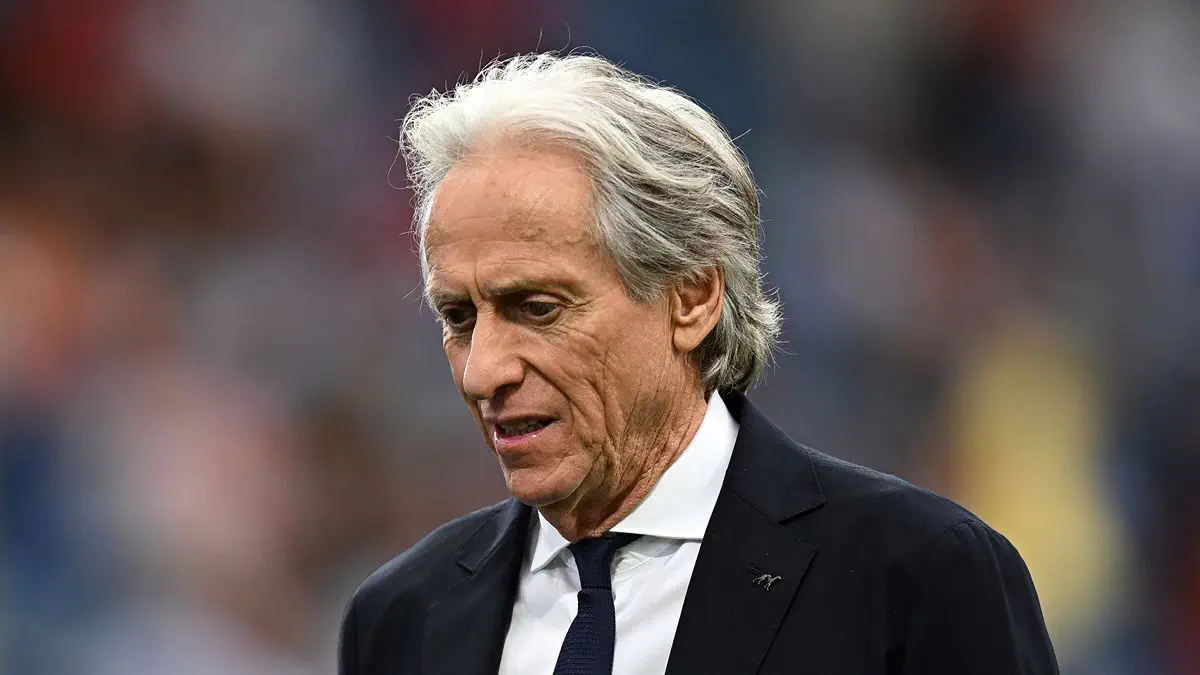
Jorge Jesus' conflict with Cristiano Ronaldo has become another episode in the coach's long career — one in which he refuses to let even the biggest stars influence his decisions. As a result, he has already fallen out with, dropped and lost a host of famous footballers.
“There is no Cristiano, and there will never be any player who can make me change my coaching decisions. Never! Not him, not anyone else in football. Not even the president. Never. Zero!”
That phrase from Jorge Jesus at a press conference could serve as the epigraph for his entire coaching career.
The Portuguese has never hidden his philosophy: a footballer's status may bring popularity, a huge contract, authority among fans and even a special place in football history — but it does not give him the right to decide the lineup.
That same determination has now put Jesus on a collision course with Cristiano Ronaldo.
Not long ago, they appeared to be allies. Ronaldo played an important role in bringing Jesus to Al-Nassr in the summer of 2025. The coach later admitted that without Cristiano's call, he probably would not have returned to Saudi Arabia at all. In May 2026, they won the domestic championship together, and that summer Jesus landed the top coaching job in his home country — taking charge of Portugal.
Several months later, their relationship was virtually on the brink of collapse. And this is far from the first such episode in Jesus' career.
Neymar, Pizzi, Óscar Cardozo, Islam Slimani, Michael, Mesut Özil and other footballers have experienced the Portuguese coach's central principle at different times: the final decision in the team always belongs to him.
Sometimes the footballer left after the conflict.
Sometimes Jesus himself did.
And sometimes they nearly came to blows, only to win trophies together a few months later.
Ronaldo: from a personal invitation to Al-Nassr to boycotting the national team
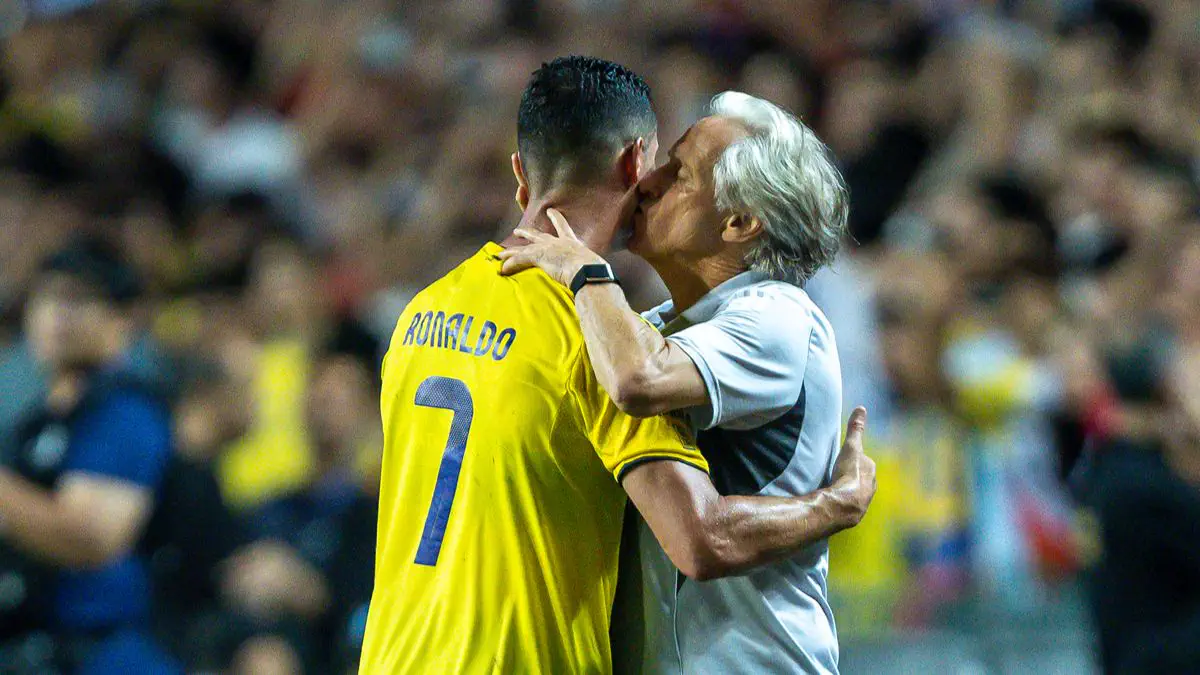
When Jesus took charge of Portugal, the question of Ronaldo's status was unavoidable.
Cristiano was already 41 at the time, but he remained captain, record-holder and the main symbol of the national team. On top of that, the two had just worked together at Al-Nassr.
Jesus immediately drew the line.
He called Ronaldo a great footballer and said he knew him extremely well, while repeatedly stressing one point: sporting decisions are made by the coach.
“Status is one thing, but the rules are the same for everyone,” Jesus explained.
He then delivered words that now look almost like a prediction of the conflict to come:
“No player will ever change my ideas. Neither him nor anyone else in football. Not even a president. Never. Zero.”
Ronaldo initially appeared ready to accept the new rules. On September 23, he publicly said he could be named in the starting lineup, remain on the bench or not play at all — and that he had to respect the head coach's decision.
But the theoretical agreement was soon put to a real test.
Against Wales, Ronaldo started, but was replaced by Gonçalo Ramos around the 67th minute.
A few days later, against Norway, he was left on the bench.
Ronaldo was sent out to warm up. According to Jesus, they had discussed in advance the possibility that Cristiano would play around 30 minutes. But the situation on the pitch changed, the coach decided not to make the planned substitution, and Ronaldo never entered the game.
For one of the greatest players in the history of the national team, it was an extraordinary episode: he spent an entire competitive Portugal match on the bench.
After the final whistle, Cristiano immediately headed to the dressing room and did not join his teammates as they thanked the supporters.
That was the moment when the story stopped being an ordinary coaching decision.
Ronaldo spoke with Jesus and soon afterward left the national team's training camp.
The coach, meanwhile, refused even to entertain the idea that he should apologize to his captain.
After Portugal's victory over Norway, a journalist directly asked Jesus about a possible reconciliation with Ronaldo. The coach's response was unequivocal:
“I don't apologize to anyone. Apologize for what? To whom? What should I apologize for?
They criticize me for sending him out to warm up. So who should I apologize to, and for what?
How many players warmed up today but never came onto the pitch? How many? Will there be a problem because of any of them? No.”
This is the fundamental difference between the two sides.
For Ronaldo's camp, the situation may have looked like a question of respect for the captain and national-team legend.
For Jesus, it was the perfectly ordinary right of a coach to change a substitution decision depending on how the match develops.
The Portuguese admitted only one mistake of his own: he sent Ronaldo out to warm up too early. But he did not consider the decision to leave him on the bench a mistake.
Then the situation became even more complicated.
Amid the dispute, Cristiano liked a post featuring comments from Felipe Melo, who criticized the Portuguese treatment of their captain.
The central message was highly revealing:
“None of them comes even remotely close to Cristiano.”
Portugal's players, the post suggested, should treat Ronaldo the same way Argentina's players treat Lionel Messi.
In modern football, liking such a specific statement can essentially be viewed as a public declaration — especially since this is not the first time Cristiano has done it.
And this is no longer just a problem between Ronaldo and Jesus.
The post concerned other Portugal players.
In effect, it argued that his teammates should recognize Cristiano's special status and treat him differently from any other player. That is precisely the approach Jesus publicly opposes.
So even if the two sides eventually reach an agreement, simply bringing Ronaldo back may no longer be enough to resolve the situation fully.
If Cristiano returns on his own terms, receiving special guarantees over a starting spot, playing time or status, it would effectively mean the defeat of Jesus' central principle — “the rules are the same for everyone.”
But if Ronaldo simply returns to the team without an explanation or any gesture toward his teammates after his demonstrative departure and his like under criticism of other Portuguese players, it could destroy the atmosphere in the dressing room.
Especially now. Without Ronaldo, the national team looks more dangerous, and the players can feel it. Portugal beat Denmark 4-2, then defeated Norway 2-1 and became the first team to secure a place in the Nations League quarter-finals.
Those results significantly strengthened Jesus' position.
It is now much easier for the coach to argue that his decisions are dictated by football rather than a personal feud. Gonçalo Ramos was given an opportunity and took it — three goals in three matches without Ronaldo. Younger players saw that even Ronaldo's status does not guarantee him a place on the pitch.
That means a possible return for the captain now requires a much more delicate balance than a simple conversation between two people.
After the Norway match, Jesus left the door open. He said that Ronaldo could be called up again if he played for Al-Nassr and wanted to return himself.
But on October 6, respected CNN Portugal journalist Rui Santos reported a new detail: according to his information, Ronaldo had made it clear to those around him that he does not plan to return to the national team while Jorge Jesus is in charge.
Cristiano himself has not publicly issued such an ultimatum, so these words remain a media report, not an official statement from the player.
However, if the information is confirmed, Portugal will face an almost impossible conflict.
Either one of the greatest legends in the country's history accepts the coach's rules.
Or the coach abandons his principles for the greatest player in the history of Portuguese football.
Knowing Jesus' career, the second option is far from obvious.
Neymar: “You're finished”
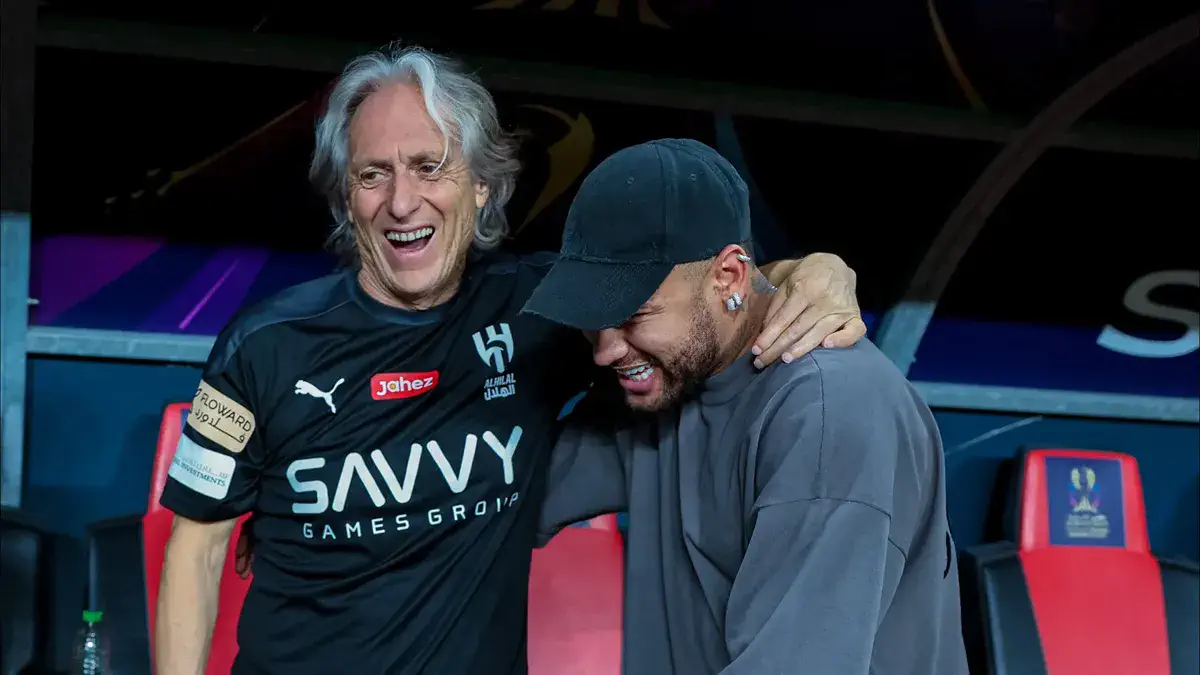
That is why Neymar is so often mentioned when discussing Ronaldo's story.
In September 2023, shortly after the Brazilian joined Al-Hilal, Spanish media reported that after an AFC Champions League match Neymar clashed with Jesus in the dressing room and even demanded that the club's management sack him.
Neymar himself called the report false at the time. But where there's smoke, there's fire.
The real problem emerged later.
In October 2023, Neymar suffered a serious knee injury — tearing his ACL and damaging his meniscus. His recovery lasted almost a year, and after returning, the Brazilian encountered further fitness problems.
The marquee transfer effectively failed: Neymar made just seven official appearances for Al-Hilal.
At the beginning of 2025, Jesus publicly said something that effectively determined the Brazilian's future. The coach acknowledged Neymar's immense talent but said that physically he was no longer capable of matching the team's tempo.
Al-Hilal did not register him for the second half of the Saudi league season. The foreign-player limit also played a role, but Jesus' sporting stance was clear.
Later, after returning to Santos, Neymar admitted that the Portuguese coach's words had deeply hurt him. According to the footballer, he had shown sufficient form in training and simply needed regular playing time.
In January 2025, Al-Hilal and Neymar mutually agreed to terminate his contract early.
Jesus later used the episode himself as an example when explaining his attitude toward superstars.
Speaking about his work with Neymar, the coach said that at one point he had effectively told the Brazilian:
“For me, you're finished.”
The coach made the key sporting decision: Neymar's name no longer guaranteed him a place in the team.
Jesus has now applied the same rule to Ronaldo.
Pizzi: the conflict that saw Jesus himself leave
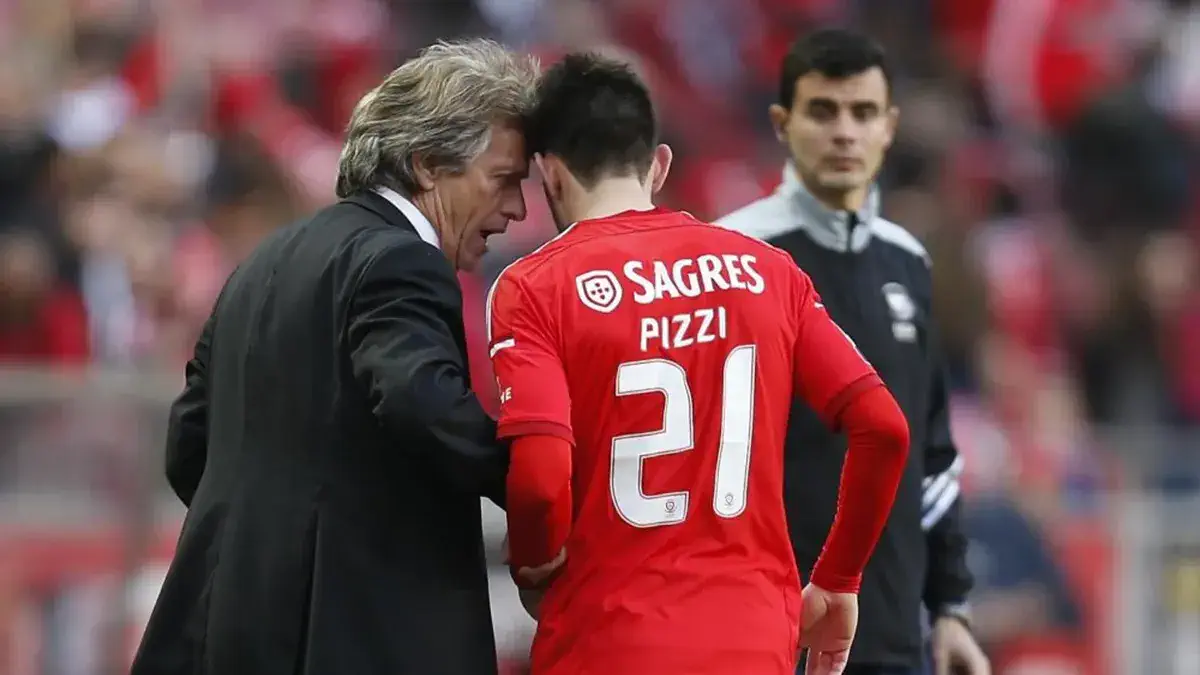
Sometimes this management model worked against the Portuguese himself.
At the end of 2021, Benfica lost 3-0 to Porto in the Portuguese Cup.
After the match, one of the team's most influential players, Pizzi, criticized Benfica's performance in the dressing room.
Jesus was not directly present at the match because of a suspension, but he learned about the player's comments.
A serious argument erupted between them.
The coach banished Pizzi from the first-team group, but the situation spiraled out of control: Portuguese media reported that part of the squad sided with one of their leaders and did not want to train without him.
Benfica president Rui Costa had to intervene.
The problem went beyond a single argument. Reports spoke of Jesus having tense relationships with several experienced players, as well as dissatisfaction with the way he communicated with the squad.
On December 28, 2021, Benfica and Jesus terminated their contract.
This time, the dressing room won. It is probably the most important counterexample of the coach's career.
Jesus can repeat that “he is the one in charge of the team,” but this model works only as long as the club's management and a sufficient portion of the players support his authority.
Óscar Cardozo: he pushed Jesus after the final, but returned three months later
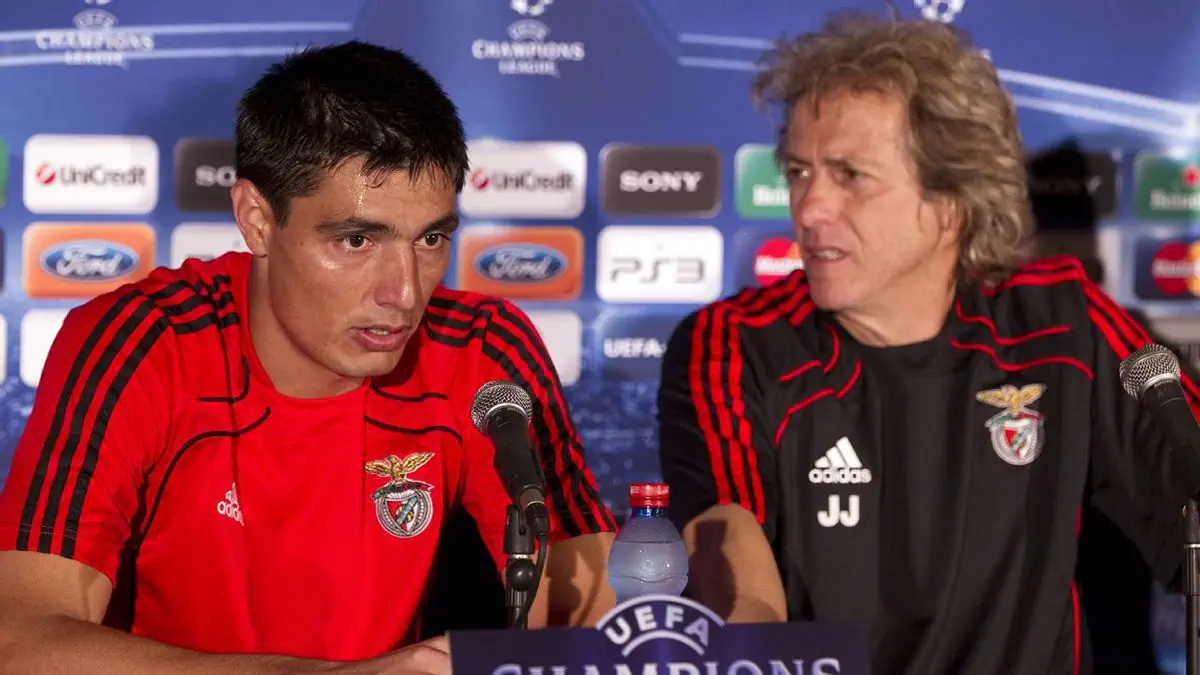
On May 26, 2013, Benfica lost the Portuguese Cup final to Vitória de Guimarães, 2-1.
Lisbon's side were leading, Jesus substituted Óscar Cardozo, and his team conceded twice late in the match.
After the final whistle, the Paraguayan striker approached the coach on the pitch. Cardozo first explained something to him emotionally, then began pointing a finger and eventually pushed Jesus. It all happened in front of television cameras.
Benfica opened disciplinary proceedings. Cardozo trained separately from the first team for a time, publicly apologized to the club, the supporters and the coaching staff, and received a substantial fine.
It seemed his Benfica career was over. But 91 days later, the striker was returned to the first-team group.
It is one of the clearest examples of how Jesus' personality works. He can be extremely ruthless in the heat of a conflict, but he does not always hold a personal grudge — at least not enough to completely rule out future cooperation.
Cardozo remained at Benfica for another season. The team won the league, the Portuguese Cup and the League Cup. Only in the summer of 2014 did the striker move to Trabzonspor.
In other words, the footballer literally pushed his coach after a final — yet later they managed to keep working together.
Slimani: “What the player thinks doesn't matter. I'm in charge here”
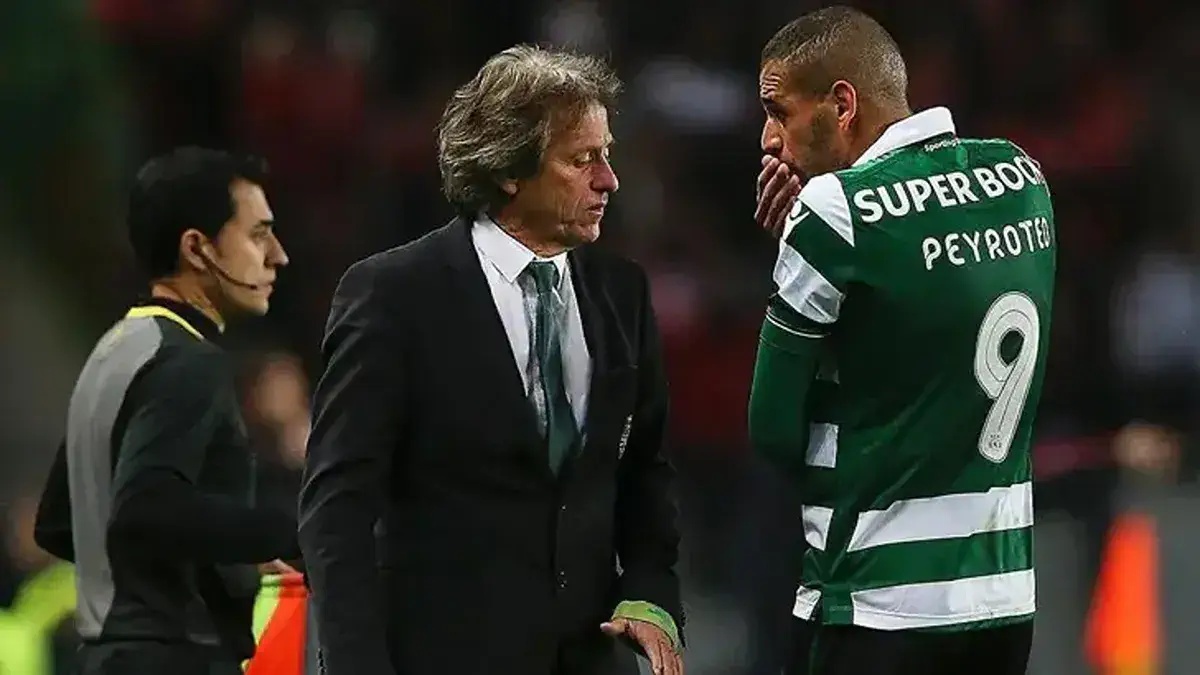
To find a historical parallel to Jesus' current comments about Ronaldo, one need only go back to March 2016.
Sporting thrashed Arouca 5-1. But one of the team's biggest stars, Islam Slimani, left the pitch unhappy after being substituted around the 60th minute.
Jesus could have defused the situation with a standard comment about a striker's emotions. Instead, at his press conference, he publicly put the player in his place:
“What the player thinks doesn't matter. Zero! I'm in charge here.”
Jesus even joked that if Slimani had “heartburn” over the substitution, the coach could give him the appropriate medication.
But in his very next sentence, the coach made it clear that the conflict was over and the striker would continue to play.
And so it proved. Slimani scored 27 league goals, enjoyed his best season in Portugal, and Leicester signed him that summer for around £29 million — at the time, a club-record transfer for the English side.
Jesus won the battle for the hierarchy, but did not destroy his relationship with the player.
Michael: it all ended with a hug
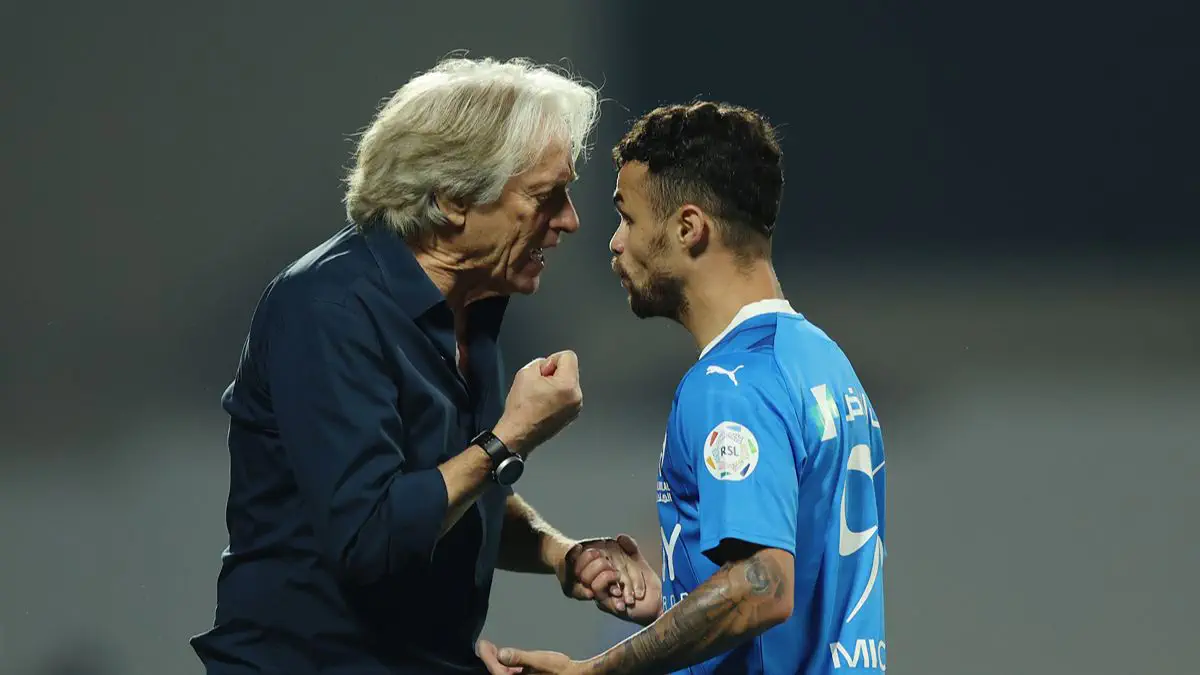
Another characteristic episode took place at Al-Hilal in 2023. During a match against Al-Khaleej, Brazilian winger Michael was substituted late in the game. The footballer demonstratively threw a bottle.
Jesus saw it and immediately headed toward him.
The situation looked so aggressive that assistant coach João de Deus had to step between them.
It seemed Michael could lose his place in the team after that.
Exactly the opposite happened. The Brazilian remained one of the players Jesus trusted most at Al-Hilal. He regularly started and won the Saudi league, the Cup and the Saudi Super Cup alongside the coach.
When Michael left the club to return to Flamengo, the two parted on warm terms.
Another piece of evidence that for Jesus, a loud argument does not always mean a personal war.
Mesut Özil: Jesus did not start the conflict, but refused to bring the superstar back

Mesut Özil's story is somewhat different. The German had been excluded from Fenerbahçe's first team before Jesus arrived in 2022.
When the Portuguese took charge of the Istanbul club, many expected the new coach to start with a clean slate and bring back the team's biggest star.
Jesus did not do that. At his presentation, he acknowledged Özil's immense status but backed the club's decision. He once again used a very familiar argument: the most important thing is not Jorge Jesus, Mesut Özil or any other footballer. The club is what matters most.
A few weeks later, Özil's contract was terminated, and he moved to İstanbul Başakşehir.
This was not a classic personal feud between Jesus and a player, but the principle remained the same: a star's reputation must not alter sporting decisions.
Filipe Luís: “We argued 20 or 30 times”

At Flamengo, Jesus' confrontational nature manifested itself somewhat differently. He worked there from 2019 to 2020.
His team dominated Brazil, won the Copa Libertadores and the national championship, and the Portuguese became a cult figure at the club.
But the atmosphere in the dressing room could hardly be called calm.
Filipe Luís later said that during their relatively short time working together, he and Jesus could argue 20 or 30 times.
There is an important nuance here. The Brazilian spoke about those conflicts without bitterness.
On the contrary, he admitted that the coach was ultimately right in more than half of their arguments, and called Jesus one of the coaches he had learned the most from:
I disagree with many things Jesus does. We had around 20 or 30 arguments, and in more than half of them he was right. On the pitch he was explosive, pure passion, while off the pitch he had the softest heart in the world.
I joined Flamengo at 34, thinking I would be the one teaching — of course, with all due humility — but in the end I became student number one. I have never learned so much about football in my life as I did with that old man.”
Emotional arguments also arose with other experienced Flamengo players.
But the team did not fall apart. On the contrary — it was one of the most successful periods in the club's history.
Why does Jesus keep clashing with stars?
There is one common thread running through all these stories. Jesus does not merely want to be the head coach.
He wants everyone inside the team to understand clearly who makes the final decision.
That is why his conflicts often arise not because of a player's performance, but because of the player's reaction to a coaching decision.
Slimani disliked being substituted — Jesus publicly reminded him who was in charge. Cardozo got physical — he was punished, apologized and only then returned. Pizzi questioned the situation at Benfica — the conflict grew into a confrontation with part of the dressing room, and this time the coach was the one who lost. Neymar believed he was ready to play — Jesus decided otherwise, and the Brazilian soon left Al-Hilal.
Now Cristiano Ronaldo is in front of him. And this is likely the most difficult case of its kind in Jesus' career.
Ronaldo is not merely a famous footballer. He is the national team's record-holder, its longtime captain, Portugal's most recognizable athlete worldwide and the man around whom the national team built its identity for roughly two decades.
However, in recent years he has not shown his former level. And that creates the challenge Jesus must solve.
Not long ago, it was Cristiano who helped Jesus get the job at Al-Nassr.
Now one refuses to give up his status, while the other refuses to give up his coaching authority.
The most interesting part is that the sporting results are currently working in Jesus' favor.
Without Ronaldo, Portugal continued to win and became the first team to reach the quarter-finals of the Nations League.
That puts the coach in a very strong position.
At the same time, however, a possible return for Cristiano is now a problem not only for Jesus.
The entire squad will need an explanation of the exact terms on which the captain is coming back.
If an exception is made for him, the coach risks undermining his own rule of equality.
If there is no exception, Ronaldo will have to accept the possibility of being left on the bench again, being sent out to warm up and not entering the pitch, or giving way to Gonçalo Ramos.
After his demonstrative departure from the national team and his like under comments saying that other Portuguese players should treat him the way Argentines treat Messi, a return without resolving the situation risks creating new tension inside the dressing room itself.
Jesus knows how to handle situations like this better than anyone.
Now all that remains is to discover which of the past scenarios from his career will be repeated with Cristiano Ronaldo.
Because there is one thing Jorge Jesus has already made perfectly clear:
“No player will ever make me change my coaching decisions. Never.”
 Steven Perez
Dailysports's expert
Steven Perez
Dailysports's expert